VIP Industries Ltd Q4 FY26: Massive ₹4,160 Million Annual Loss Meets Prominent Corporate Restructuring and Radical Balance Sheet Clean-up
Spotted a factual error — a wrong number, date, or fact? Tell us and we will check the source.
1. At a Glance
The financial year 2026 has been an absolute reckoning for Asia’s leading luggage titan, VIP Industries Ltd. For a company that once enjoyed an unassailable grip on the organized Indian luggage market, the latest numbers paint a sobering picture of deep structural stress, intense market share erosion, and operational vulnerability. The company reported a consolidated revenue of ₹18,580 million for the full fiscal year 2026, dropping significantly from ₹21,780 million in the previous fiscal year. More alarmingly, the net profit line has completely collapsed into a deep, painful deficit, printing a staggering consolidated net loss of ₹4,160 million for FY26.
This financial distress did not build up overnight. A combination of intense competitive pressure from aggressive peers, severe disruption in high-growth e-commerce channels, and massive miscalculations in internal inventory planning left the company deeply bloated. The company’s market share in the organized sector, which historically sat comfortably above 40%, collapsed to a stark 29% by December 2025. This rapid descent sparked an unprecedented corporate restructuring. In July 2025, the founding Dilip Piramal family staged a dramatic exit, selling a 32% control stake to Multiples Private Equity Group. Now officially reclassified as the new promoters, Multiples has initiated a radical, high-impact transformation to salvage the ship.
To put the operational pain into perspective, the company’s operating profit margin (OPM) slid into deeply negative territory at -13% for the full year. The cash conversion cycle and working capital management became structural bottlenecks, forcing the new management to aggressively write off and provision for slow-moving, aged inventory. Over the course of the fiscal year, a total inventory provisioning of approximately ₹1,300 million was taken directly on the chin. This massive write-down, while clearing out warehouse deadwood, completely pulverized near-term profitability.
The Operational Breakdown Chain
Phase
Description
Strategic Impact
Phase 1
Bloated Channel & Internal Inventory
Outdated design stock stuck across warehouses and retail channels.
Phase 2
Heavy Discounting & Price Wars
Severe hit to brand premiumization and average realizations.
Phase 3
Topline De-growth & Margin Collapse
Every single unit of revenue transforms into an operational loss.
Phase 4
₹1,300 Million Inventory Provisions
Complete erasure of near-term paper profitability to clear out the rot.
Phase 5
Severe FY26 Bottom-line Deficit
Staggering annual net loss of ₹4,160 million reported.
Yet, beneath this rubble of restructuring costs and operational losses, a highly aggressive balance sheet stabilization program is underway. The new management has completed a massive clean-up exercise in the second half of FY26. Gross channel inventory was drastically cut down from 4.5 million units to 2.8 million units, successfully bringing channel days down from a bloated 90+ days to a much leaner sub-60-day level. Net debt was concurrently optimized down to ₹2,950 million from ₹3,670 million. While the income statement currently looks like a corporate battleground, the critical underlying question remains: has the management successfully removed the core rot, or is this luggage major facing a structural decline that a simple brand facelift cannot fix?
2. Introduction
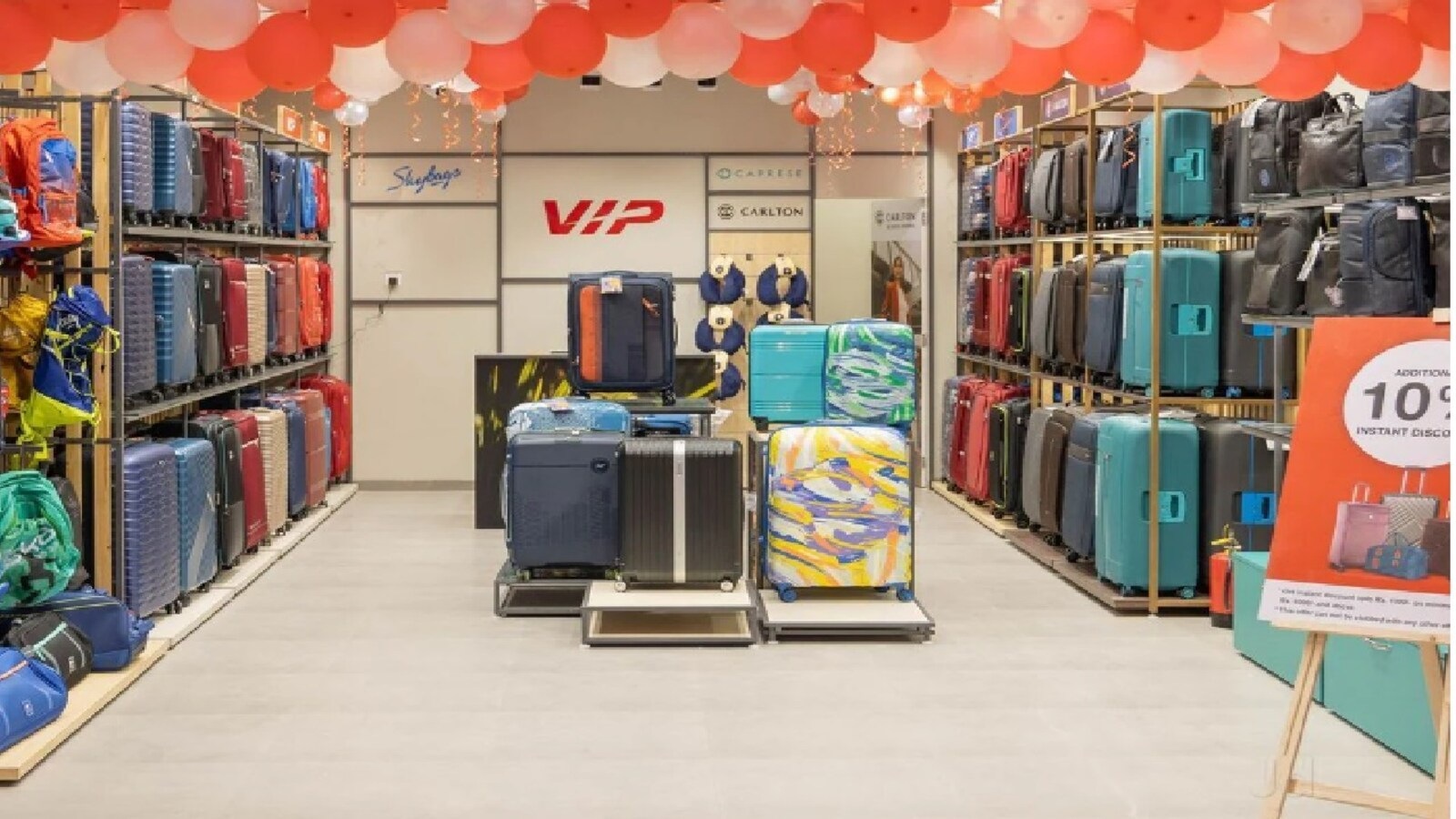
When an iconic household name that practically invented the organized travel gear segment in India begins to lose its wheels, the financial community watches with absolute rapt attention. VIP Industries operates a truly massive footprint, commanding over 14,000 points of sale across 1,400 towns. Yet, its vast physical distribution network proved to be a double-edged sword when nimble digital-first competitors and hyper-aggressive organized players began weaponizing e-commerce channels.
The narrative surrounding VIP Industries over the last twelve months is a classic corporate thriller. It features a legendary promoter family checking out, an aggressive private equity consortium checking in, a revolving door of top-tier executive talent, and an absolute bloodbath in the premium and value product mixes. The incoming management group inherited a broken forecasting mechanism that had systematically induced incorrect raw material indents and overstocked retail channels with obsolete designs.
To rectify this, the newly installed leadership team—headed by CEO Atul Jain and recently appointed Chief Sales Officer Alok Pathak—has chosen to rip off the bandage entirely. Instead of masking the pain, they have front-loaded all operational liabilities, non-moving stock write-downs, and distribution channel liquidation supports into the FY26 financial statements. While this strategy builds a clean base for future financial projections, it leaves the current retail investor staring at a deeply bruised balance sheet with severely constrained debt-protection metrics and an agonizing near-term return profile.
At its core, VIP Industries is in the business of selling utility and aspiration packaged as travel gear. They design, manufacture, and market hard luggage, soft luggage, backpacks, duffel bags, and ladies’ handbags. The operational model relies on a mix of domestic manufacturing facilities in India and a highly critical cluster of eight wholly owned manufacturing facilities in Bangladesh.
The company tries to be everything to everyone via a deeply fragmented brand architecture:
The Elite Vanguard (Carlton): Capturing 7% of revenue, targeted at premium corporate jetsetters.
The Core Legacy (VIP & Skybags): Contributing 18% and 30% respectively, acting as the historical volume and value muscle.
The Value Warriors (Aristocrat & Alfa): Dominating 42% of the mix, engineered to fight the brutal price wars at the lower end of the market.
The Accessory Side-Hustle (Caprese): Accounting for a tiny 3% slop of the total revenue pie.
The real breakdown occurred because VIP completely lost its pricing guardrails. On e-commerce platforms—which once represented the absolute growth frontier—VIP became dangerously over-reliant on its value brand, Aristocrat, which brought in a scary 90% of all e-commerce revenues. When aggressive digital competitors initiated a brutal race-to-the-bottom price war, offering cabin luggage at absurdly uneconomic sub-₹1,100 price points, VIP’s primary sales took a direct hit. E-commerce channel revenue collapsed by a painful 17% year-on-year.
Are you a retail investor who believes a premium brand can easily defend its turf simply via legacy recall? Think again. If your value segment is getting absolutely thrashed online and your premium segment is locked in intense litigation, your massive manufacturing engines will quickly start eating your cash reserves.
4. Financials Overview
A clinical examination of the latest financial performance confirms that the company is undergoing an absolute operational transition. The priority update locks the latest announcement as Quarterly Results, requiring a disciplined assessment of the trailing exit run-rate.
Consolidated Financial Performance Matrix
(Figures in ₹ Millions)
Metric
Latest Quarter (Mar ’26)
Same Quarter Last Year (YoY Mar ’25)
Previous Quarter (QoQ Dec ’25)
Total Revenue
4,362.3
4,942.3
4,541.2
EBITDA
-818.1
114.7
-771.5
PAT
-1,289.0
-123.6
-532.5
Calculated EPS (₹)
-9.07
-0.87
-3.72
Annualized EPS (₹)
-36.28
-3.48
-14.88
The Corporate Forensic Commentary
The trendlines are stark. Revenue for the latest quarter ending March 2026 came in at ₹4,362.3 million, down 11.73% compared to ₹4,942.3 million in the same quarter last year. The operational engine suffered massive damage, with EBITDA sliding into a deep loss of ₹818.1 million. This includes heavy gross margin compromises of 6% to 8% driven entirely by aggressive liquidation discounts and a massive ₹300 million chunk of direct channel inventory liquidation support handed out to external distributors in Q4 FY26.
When tracking old concall commitments against reality, the management’s previous stance was that old inventory liquidation would happen smoothly during the festive quarter without requiring severe incremental provisions. While they technically paused incremental accounting provisions in Q4, the structural hit was instead taken directly through a severe gross margin compromise and painful cash outlays to support channel partners. The annualized EPS run-rate of -₹36.28 signals that the financial ship is still heavily taking on water.
9,000.0
Other Liabilities
5,770.0
4,890.0
4,890.0
Total Liabilities
16,040.0
18,560.0
20,670.0
Balance Sheet Autopsy Notes
The Vanishing Equity Base: The net worth of the company collapsed from ₹6,160 million to ₹2,89
One Response
excellent