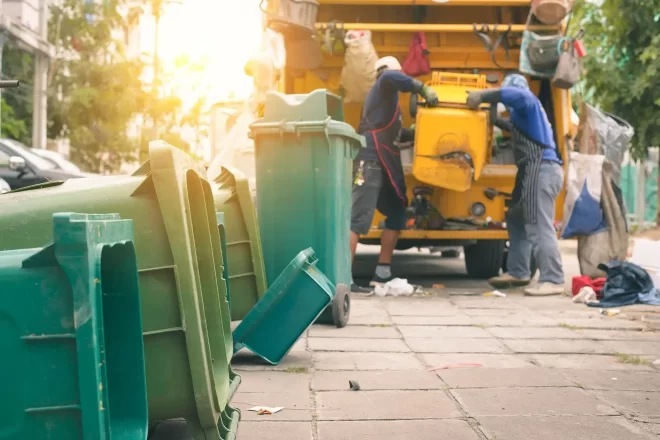
The waste management sector is rarely glamorous, but the numbers coming out of Urban Enviro Waste Management Ltd are demanding serious attention. In a fiscal year where the company has scaled its operations to manage over 2,000 MT of waste daily, the financial footprint has expanded just as aggressively. With a portfolio of 36 projects and a fleet that has ballooned to 844 vehicles, the company is no longer a small regional player but a hungry mid-tier contender. However, beneath the surface of the ₹182 crore annual revenue lies a complex web of rising working capital requirements and a massive surge in debtor days that could potentially choke the very growth investors are cheering for.
While the “Urban 2.0” strategy promises entry into new states and a ₹75 crore fundraise through QIPs and warrants, the immediate reality is a business grappling with the inefficiencies of municipal contracts. We are seeing a company that has grown its revenue more than 5x in a mere two-year window, yet its cash flow from operations remains a fickle beast, often swallowed by the black hole of trade receivables. The intrigue here isn’t just about the garbage they collect; it’s about whether they can collect the cash from the local bodies they serve.
1. At a Glance
Urban Enviro Waste Management Ltd is currently operating at a scale that is both impressive and terrifying. Managing 2,000 MT of waste per day is no small feat, but the financial mechanics required to sustain this are showing signs of strain. The company has successfully diversified its geographical mix, moving from a heavy reliance on Rajasthan to a more balanced spread across Chhattisgarh (42%) and Gujarat (18%). This diversification is a double-edged sword; while it reduces regional risk, it multiplies the bureaucratic hurdles of dealing with multiple state-level local bodies.
The most glaring red flag is the Debtor Days, which have skyrocketed from 105 to 130 days. In simple terms, the company is doing the work today but waiting more than four months to see the money. For a business that is capital-intensive—requiring a constant influx of new vehicles and manpower—this delay in payments is a ticking time bomb. The company reported a Net Profit of ₹14.88 crore for FY26, a significant jump from the previous year, yet the Cash Flow from Operations (CFO) to EBITDA ratio is under pressure.
Management is now pivoting to “Urban 2.0,” a strategic rebrand aimed at capturing the tailwinds of the Swachh Bharat Mission 2.0. They are eyeing a ₹75 crore infusion to fuel this expansion. However, the market must ask: is this capital being raised to fund growth, or to fill the hole created by unpaid bills from municipal corporations? The company’s Return on Equity (ROE) stands at a robust 37.8%, but high returns mean nothing if the cash is locked in a balance sheet entry labeled “Trade Receivables.”
The audit report for FY26 brings up a curious “change in accounting policy” regarding GST capitalization and a write-back of liabilities worth ₹31.64 lakh. While these are technical adjustments, they highlight a management team that is actively “cleaning up” the books as they prepare for a major QIP. The question remains: can they sustain a 33.2% ROCE when their borrowing costs are likely to rise in a tighter credit environment?
2. Introduction
Urban Enviro Waste Management Limited, incorporated in 2011, has spent the last decade and a half figuring out the logistics of India’s trash. What started as a modest operation has transformed into a comprehensive waste management engine. They don’t just pick up garbage; they handle the entire lifecycle—collection, transportation, segregation, and increasingly, processing.
The company’s listing on the NSE Emerge in June 2023 marked a turning point. Since then, the scale has exploded. They now serve 6.30 lakh households daily. Think about the logistics of that: 844 vehicles navigating the chaotic streets of Tier-2 and Tier-3 cities every single morning. It is a business of grit and mechanical endurance.
The revenue transition is equally fascinating. In FY22, “Collection & Transportation” was the primary breadwinner at 62%. By FY24, “Door-to-Door Garbage Collection” took the lead at 57%. This shift represents a move toward more integrated, long-term municipal contracts. While these contracts offer “sticky” revenue, they also bring the company into the direct line of fire of municipal budget constraints.
Geographically, the company has shown it can win outside its home turf of Maharashtra. The heavy lifting is now being done in Chhattisgarh and Rajasthan. With 10 ongoing projects in Maharashtra alone, the home base remains a core pillar, but the growth is clearly coming from aggressive bidding in other states.
As we look at the FY26 results, the company is at a crossroads. It has the scale, it has the