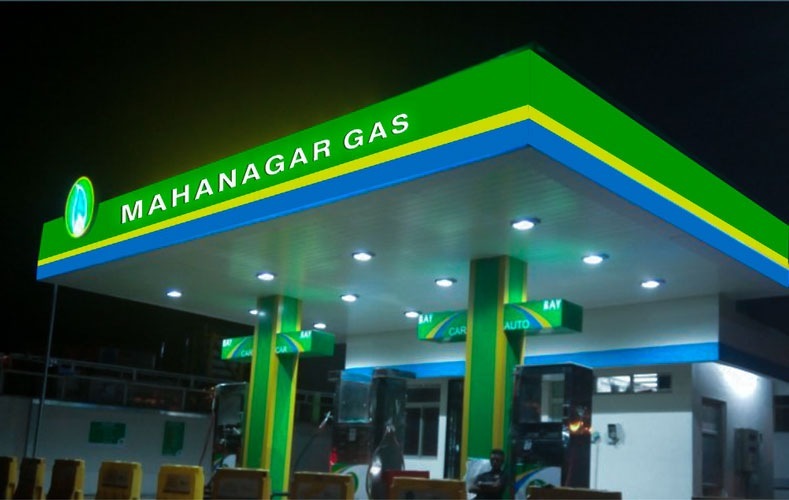
The gas is still flowing, but the cash is leaking. Mahanagar Gas Limited (MGL) just wrapped up its financial year 2025-26, and the numbers are a cold shower for anyone expecting a repeat of last year’s record-breaking performance. While revenue showed a double-digit uptick, the bottom line tells a story of systemic stress, geopolitical fallout, and the harsh reality of “margin normalization.”
The market had been warned about the shrinking margins, but a 45.6% year-on-year crash in quarterly PAT is enough to make even the most seasoned auditor pause. The company is currently navigating a perfect storm: domestic gas allocations are being slashed, international LNG supply chains are breaking due to conflicts in West Asia, and their biggest customer in Mumbai—the BEST bus fleet—is dumping gas for electricity.
1. At a Glance
Mahanagar Gas is currently a textbook study in infrastructure exclusivity meeting operational volatility. On paper, the company looks like a fortress. It holds a dominant position in the Mumbai Metropolitan Region (MMR), supplying compressed natural gas (CNG) to nearly 1.28 million vehicles and piped natural gas (PNG) to over 3.21 million households. However, the fortress is showing structural cracks.
The most glaring red flag is the Profit After Tax (PAT). In the quarter ended March 2026, PAT stood at ₹132 crore, a massive drop from the ₹242 crore reported in the same period last year. This isn’t just a minor fluctuation; it is a fundamental shift in profitability. The Operating Profit Margin (OPM) has plummeted from 24% a year ago to a measly 13% this quarter.
Why is the money disappearing? Look at the gas sourcing. The Ministry of Petroleum and Natural Gas has been playing around with Administrative Price Mechanism (APM) allocations. In April 2025, MGL faced an 18% reduction in APM gas allocation. When the cheap government gas stops coming, MGL has to buy expensive imported LNG from the spot market.
Then came the geopolitical hammer. In February 2026, conflict in West Asia blocked the Strait of Hormuz. Since 50% of India’s LNG passes through that narrow strip, supplies were disrupted and global prices spiked. For a company that relies on imported gas for its Industrial and Commercial (I&C) segments, this was a direct hit to the solar plexus.
Investors are also watching the BEST bus situation. Historically, BEST was MGL’s anchor customer. At its peak, there were 3,000 CNG buses on Mumbai roads. Today, that fleet is shrinking as the city pivots toward Electric Vehicles (EVs). Management admits this shift has resulted in a loss of nearly 1 lakh kgs of gas sales per day.
While the company is trying to diversify by acquiring Unison Enviro (UEPL) and venturing into battery cell manufacturing, these are long-term bets. In the short term, the company is fighting a war on two fronts: rising raw material costs and a maturing market where volume growth is getting harder to find.
2. Introduction
Mahanagar Gas Limited (MGL) is essentially the “gas utility” of Mumbai. Established in 1995, it has enjoyed decades of near-monopoly status in the city. If you see a rickshaw, a taxi, or a BEST bus in Mumbai, it is likely running on MGL’s gas.
The company operates through an extensive network of over 8,320 km of pipelines and 518 CNG stations. It divides its operations into three primary Geographical Areas (GAs):
- GA1: Greater Mumbai (The core cash cow)
- GA2: Thane, Mira-Bhayander, and surrounding urban clusters
- GA3: Raigad district
The business is split into two main buckets: CNG (Automotive) and PNG (Domestic, Commercial, and Industrial). CNG is the heavy lifter, contributing nearly 72% of sales volume. Domestic PNG provides the stability, while the Industrial/Commercial (I&C) segment provides the “alpha,” albeit with higher risk due to price volatility.
The ownership structure is straightforward. GAIL (India) Limited is the promoter, holding 32.5%. The Government of Maharashtra holds a 10% stake, and the rest is distributed among institutional and public investors.
In recent months, the company has attempted to grow out of its Mumbai-centric identity. The acquisition of Unison Enviro Pvt Ltd (UEPL) for ₹562 crore has extended MGL’s footprint into Ratnagiri, Latur, and parts of Karnataka. This was a strategic move to secure future growth as the Mumbai market nears saturation and faces competition from EVs.
However, the recent financial results suggest that “size” does not always equal “stability.” The transition from a