Tilaknagar Industries FY26: 20 Million Cases, One Massive Catch
General information and entertainment, not investment advice. The author is not a SEBI-registered adviser or research analyst. No recommendation, no promised returns. Markets carry risk including loss of capital. Figures may not be current. Consult a registered adviser before acting.
1. At a Glance
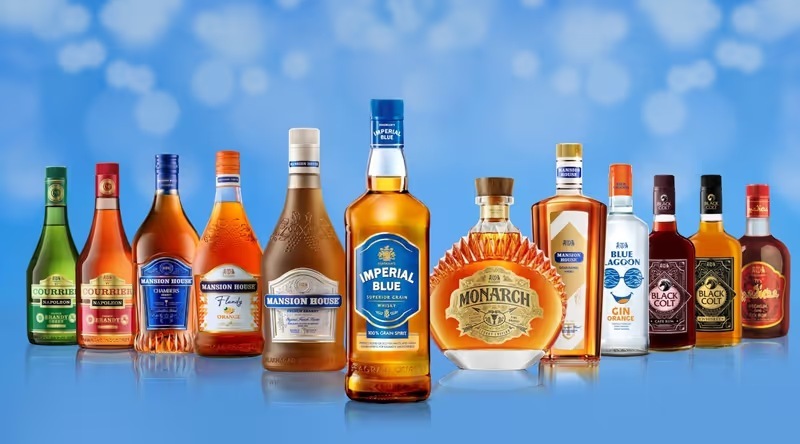
Tilaknagar hit 20 million cases in FY26, a 68% volume surge dragged almost entirely by Imperial Blue in the final four months post-acquisition. Mansion House Brandy crossed the 10 million case milestone—India’s largest P&A brandy, cementing a legacy.
But numbers hide friction. Net profit landed at ₹21 crore on ₹2,346 crore revenue. The margin hit was real: exceptional costs of ₹232 crore (TSMA exit, integration, labor code changes) gutted reported earnings. Strip those, adjusted PAT sits at ₹253 crore—still a soft land after 68% volume growth.
Debt surged to ₹2,301 crore (from ₹44 crore a year prior) to fund the Imperial Blue acquisition at ₹4,150 crore. The company now carries net debt of ₹1,911 crore on an EBITDA base of ₹419 crore. Margin guidance for the combined business: 16–18% EBITDA over 24–36 months.
The real story: execution risk on integration, commodity headwinds clouding Q1 FY27, and whether a 68% volume pop can convert to sustained double-digit growth once Imperial Blue settles.
Brandy remains the revenue engine at 17.9% OPM. P&A saliency (prestige & above) has climbed to 80%+ post-Imperial. What the company is building is a pan-India two-brand platform. What the market pays reflects a 42.5x P/E multiple.
2. Introduction
Tilaknagar is an Indian spirits manufacturer and the custodian of Mansion House Brandy—India’s largest-selling brandy and the world’s second-largest by volume. The company has historically concentrated in South India (85%+ of ex-Imperial volumes).
In November 2025, the company acquired Imperial Blue (the third-largest IMFL brand in India) from Pernod Ricard for ₹4,150 crore. Imperial Blue brought 6.4 million cases in FY26 (four months of ownership). The integration is live: 75% of Imperial Blue volumes have exited the Transition Services & Manufacturing Agreement (TSMA) by March 2026. Manufacturing footprint now spans 40+ units across India; the company has hired 500+ people in a year and appointed senior operational leadership across sales, manufacturing, and finance.
FY25 was a quiet year: volumes of 11.9 million cases ex-Imperial, revenue of ₹1,434 crore, net profit of ₹230 crore, and negligible debt. The balance sheet was clean enough for a ₹2,100 crore term loan and ₹530 crore working capital facility, negotiated at ~10–11% all-in post-moratorium.
FY26 weaponized scale. Prag Distillery in Andhra Pradesh (the company’s heartland, 40% P&A IMFL share) came online with 6x capacity expansion—from 6 lakh to 36 lakh cases per annum. Cost synergies from Imperial Blue packaging, bottling, and customs duty reduction under India–UK FTA are flagged as 250–400 basis points of margin expansion within 24 months.
3. Business Model: WTF Do They Even Do?
Tilaknagar manufactures Indian Made Foreign Liquor (IMFL) across five categories: brandy (94% of pre-Imperial revenue), whisky, gin, rum, and craft spirits via Spaceman Spirits Lab (SSL).
Brandy is the spine.
Mansion House Brandy is available in vanilla, lemon, and orange variants across four price points. It ships 10 million cases annually. Courrier Napoleon, a luxury brandy, is the second-fastest-growing brandy globally and the third-fastest-growing spirits brand worldwide. The category represents a peculiar arbitrage: brandy faces less taxation in Southern India than whisky, regulatory tailwinds in select states are newer, and brand affinity runs deep in Telugu and Kannada regions.
Whisky is the growth lever. Mansion House Whisky is semi-premium; Seven Islands Pure Malt (launched November 2025 at ₹5,200 per 750ml in Maharashtra) is a luxury play—Indo-Scottish malts from Himalayan, Vindhyan, Speyside, and Lowland distilleries. Management flagged expansion to 10+ states by FY28.
Imperial Blue (pre-acquisition) was India’s third-largest IMFL brand, a 65+ million case annual business (as of FY25). It dominates the mass-prestige segment: ₹100–150 MRP whiskey, distributed pan-India. The brand skews male, on-trade heavy (bars, restaurants), and seasonal (H2-heavy).
Spaceman Spirits Lab (SSL) is a craft play: Samsara Gin, Sitara Rum, Amara Vodka, plus RTD cocktails. It shipped 46,000 cases in FY26 (+55% YoY revenue). TI holds a 10+ year usership agreement on SSL brands; the company deepened its stake in 2025.
Distribution: TI sells via state corporations (roughly 40% of volumes), direct wholesale, and ~40,000 retail outlets across India. Exports touch East/Southeast Asia, Africa, Middle East, Europe. Karnataka excise policy cut consumer prices for brandy by ₹20 per nip in Q4 FY26—management expects incremental demand uplift. Telangana (a swing factor) has stabilized receivables timing (from January 2026 onwards); a price hike is flagged as material but timing uncertain.
Geographic tension: South India is 86% of legacy business. North is barely 5%. Imperial Blue has a foothold across India, but non-Maharashtra states are growth white-space.
Manufacturing: 19 owned/contracted units as of March 2025; Prag expansion took total capacity to 36 lakh cases per annum. Shrirampur (Maharashtra) hosts the company’s core grain- and molasses-based distilleries. The supply chain is a mix of asset-light contracting (third-party bottling units in 15+ states) and controlled scale (owned plants). Management guided capex at ₹25 crore per annum post-integration, implying shift from growth capex to maintenance.
The business model is branded volume disguised as premium—margins on Mansion House and Courrier are decent, but scale is anchored to sub-premium Imperial Blue.
4. Financials Overview
Figures are consolidated, in ₹ crore, full-year basis.
Metric
FY24
FY25
FY26
YoY (FY25→FY26)
Revenue
1,394
1,434
2,346
+63.6%
EBITDA
255
299
419
+40.1%
PAT (adjusted)
230
230
253
+10.0%
EPS (full year)
7.16
11.86
0.84
-92.9%
OPM
13.3%
18.5%
17.9%
-59 bps
Revenue jumped 64% on combined-business volumes of 20 million cases (versus 11.9 million ex-Imperial in FY25). NSR per case stood at ₹1,165 in FY26 (₹1,282 in FY25). The drop reflects Imperial Blue’s entry at lower unit realisations (mass-prestige positioning) and a Karnataka excise policy price cut (₹20 per nip, flagged in Q3 FY25).
EBITDA grew 40%, but margin compressed 59 basis points (18.5% to 17.9%). Management repeated guidance: adjusted EBITDA margin for Q4 and full FY26 stands at 15.5% (netting subsidy and exceptional costs). For the combined business, target is 16–18% EBITDA over 24–36 months; management anchored the base at 15.5%, not 14–15%.
Adjusted PAT (excluding ₹63 crore exceptional items in Q4 FY26 and ₹35 crore amortization on intangible assets from Imperial Blue acquisition) grew just 10%. Reported PAT was ₹21 crore—the difference: ₹232 crore in exceptional charges across the year. Q4 alone carried ₹63 crore in TSMA fees, integration costs, and labor code changes. Q3 carried another ₹169 crore, mostly transaction costs and hedging loss.
EPS collapsed from ₹11.86 to ₹0.84 (per announced basis, not TTM). The share count moved from 193.6 crore (FY25) to 247 crore (FY26)—dilution from the preferential issue to acquire Imperial Blue. On a reported basis, this is noise; on an ROIC basis, it matters when working capital turns negative and free cash flow inverts.
Q4 FY26 deep-dive:
Volumes hit 8 million cases (135% YoY)—4.6 million Imperial Blue, 3.4 million ex-Imperial (+0.2% legacy growth, a stall). Revenue was ₹949 crore (148% YoY). NSR per