Thirumalai Chemicals FY2026: When Spreads Burn, Capex Doesn’t Pause
General information and entertainment, not investment advice. The author is not a SEBI-registered adviser or research analyst. No recommendation, no promised returns. Markets carry risk including loss of capital. Figures may not be current. Consult a registered adviser before acting.
1 — At a Glance
Thirumalai Chemicals swung to a ₹168 Cr net loss in FY2026, from ₹46 Cr loss in FY2025—a 266% deterioration.
Revenue slid 15.3% year-over-year to ₹1,736 Cr. The operating profit turned negative at ₹35 Cr loss versus ₹49 Cr profit a year earlier.
The core tension: a $255 million USA facility came online in December 2025, promising new geographies and product mix, yet landed into weak PAN-Ortho-xylene spreads and bloated capex bills. Debt rose to ₹2,175 Cr from ₹1,786 Cr.
ICRA reaffirmed ratings at BBB+ Negative in June 2026—flagging that coverage remains under pressure and the company breached financial covenants in FY2026 (lenders waived). The question: does the US plant stabilize margins before liquidity burns through?
2 — Introduction
Thirumalai Chemicals is a 50-year-old specialty chemicals maker, founded in 1973 at Ranipet, Tamil Nadu.
The company manufactures phthalic anhydride (PAN, ~85% of product mix in FY25)—a feedstock for plasticizers, pigments, and unsaturated polyester resins. It also makes malic acid, fumaric acid, and maleic anhydride derivatives, serving paint, pharma, food, and construction sectors across 60+ countries.
In December 2025, TCL Specialties LLC—the company’s US subsidiary—began first-phase commercial operations at New Martinsville, West Virginia. The facility is designed to produce maleic anhydride, malic acid, and fumaric acid. Full stabilization is targeted for H1 CY2026.
The Malaysian facility (Optimistic Organic, 84% held) produced maleic anhydride but has faced headwinds: the company closed its Malaysia operations in FY2026 due to poor economics.
In November 2025, promoters raised ₹56.14 Cr through a preferential share allotment at ₹296 per share (18,96,614 shares). In April 2026, the company raised a further ₹65 Cr unsecured loan from promoter entity Ultramarine & Pigments Limited at 10% interest for 3 years. Fund-raising remains ongoing to support US capex and debt repayment.
3 — Business Model: WTF Do They Even Do?
Phthalic Anhydride is the company’s bread and butter: a building block for plasticizers (which make plastics flexible), pigments, dyes, coatings, and unsaturated polyester resins (critical for fiberglass boats and wind turbine blades). TCL is the second-largest PA producer in India and ranks in the top 3 globally.
The process is vertically integrated: the company starts with ortho-xylene (OX), a feedstock supplied by Reliance Industries under a long-term offtake agreement. OX is oxidized to produce PAN; PAN is sold directly or converted downstream into derivatives like diethyl phthalate (DEP) and phthalimide (PID).
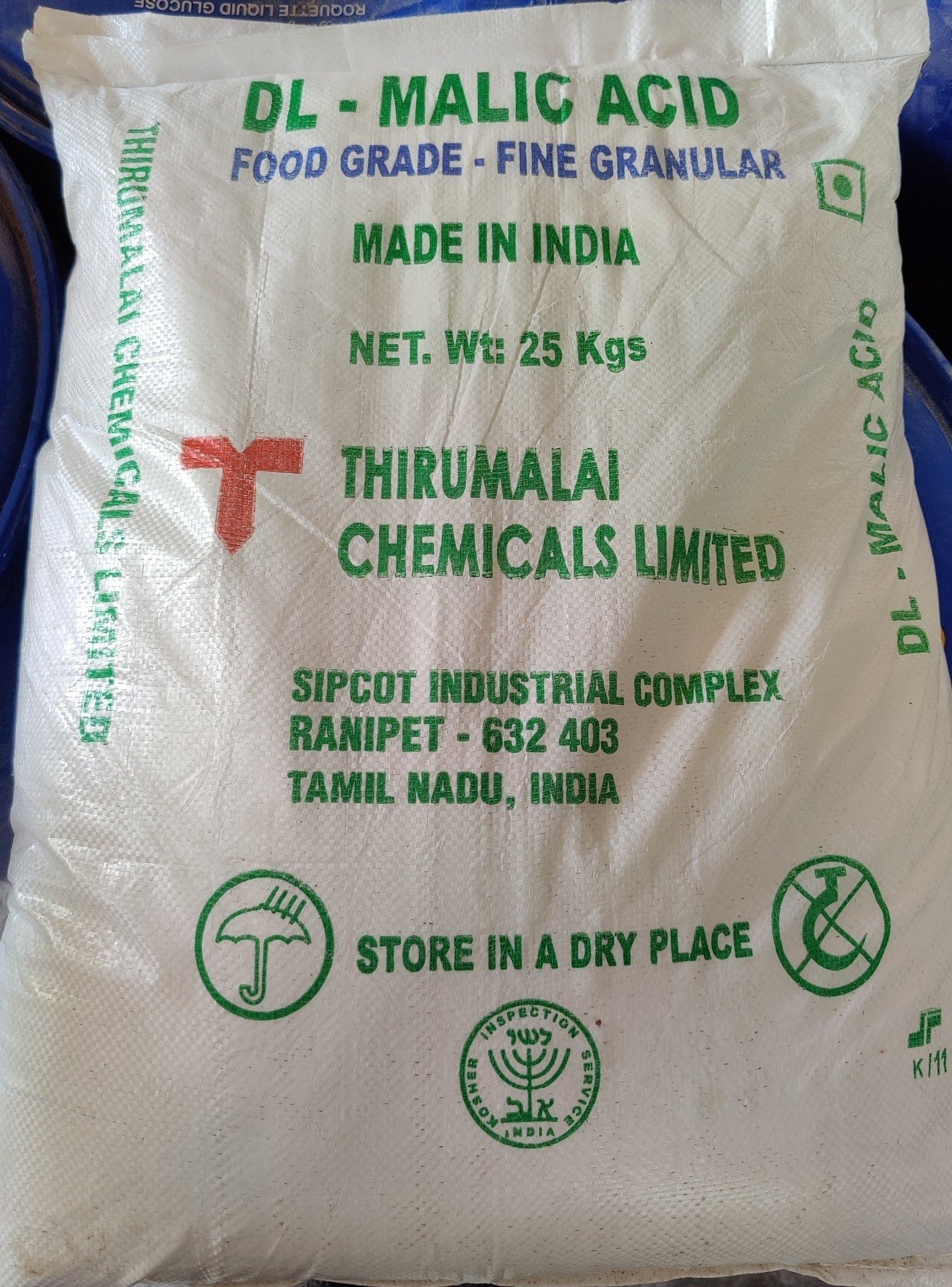
Food ingredients (Malic Acid, Fumaric Acid) are produced from vegetable feedstocks and serve beverage, confectionery, pharma, and personal care industries. TCL holds a rare advantage: it is the sole producer of malic acid in Southeast Asia and the largest fumaric acid producer in the region.
Manufacturing footprint spans two Indian sites: Ranipet, Tamil Nadu (165,000 TPA PAN capacity + 34,000 TPA food acids) and Dahej, Gujarat (24,000 TPA PAN via TCL India + 94,000 TPA PAN + 10,000 TPA fumaric acid via TCL Intermediates Pvt Ltd, commissioned in FY2025). The USA facility adds 40,000 TPA maleic anhydride and 30,000 TPA food acids.
Revenue mix in FY2025: PAN 85%, Maleic Anhydride & Downstream 15%. Export mix (FY25): Europe 43%, North America 25%, Asia 19%, Africa 13%. Domestic demand exists but is secondary—this is a global commodity exporter with concentration risk (one client contributed 11% of revenue in FY24).
4 — Financials Overview
Figures are consolidated, in ₹ crore.
Metric
FY2024
FY2025
FY2026
YoY Change
Revenue
2,083
2,050
1,736
-15.3%
Operating Profit/(Loss)
51
49
(35)
NM
EBITDA
—
—
53
—
PAT
(39)
(46)
(168)
-266%
EPS (₹)
(3.79)
(4.50)
(13.93)
NM
Q4 FY2026 (Three months ended 31 Mar 2026):
In the final quarter, revenue was ₹424 Cr (down 3% from ₹450 Cr in Q3 FY2026). Operating loss narrowed to ₹6.17 Cr profit from operating loss of ₹15.09 Cr in Q3—a minor recovery as PAN-OX spreads temporarily widened. Net loss remained ₹28 Cr.
The company recorded an operating loss in FY2026 despite a ₹10.73 Cr other income boost. Interest expense nearly doubled to ₹89 Cr from ₹49 Cr in FY2025, reflecting debt accumulation from the US capex and elevated borrowing rates. Depreciation spiked to ₹88 Cr from ₹61 Cr as the Dahej plant (commissioned mid-FY2025) and early-stage USA facility began depreciating.
Key drags:
Reduced PAN-OX spreads (the delta between PAN price and OX feedstock cost) due to global oversupply and tariff uncertainty. Distributor inventories remained elevated; buyers negotiated aggressively on price. Fixed costs during the ramp-up of Dahej plant compressed margins. One-time expenses related to the Malaysia facility closure also weighed.
5 — Market Expectations & Historical Multiples
This section describes how the market is currently pricing the company and how that compares with its own history and peer group. It is descriptive, not predictive.