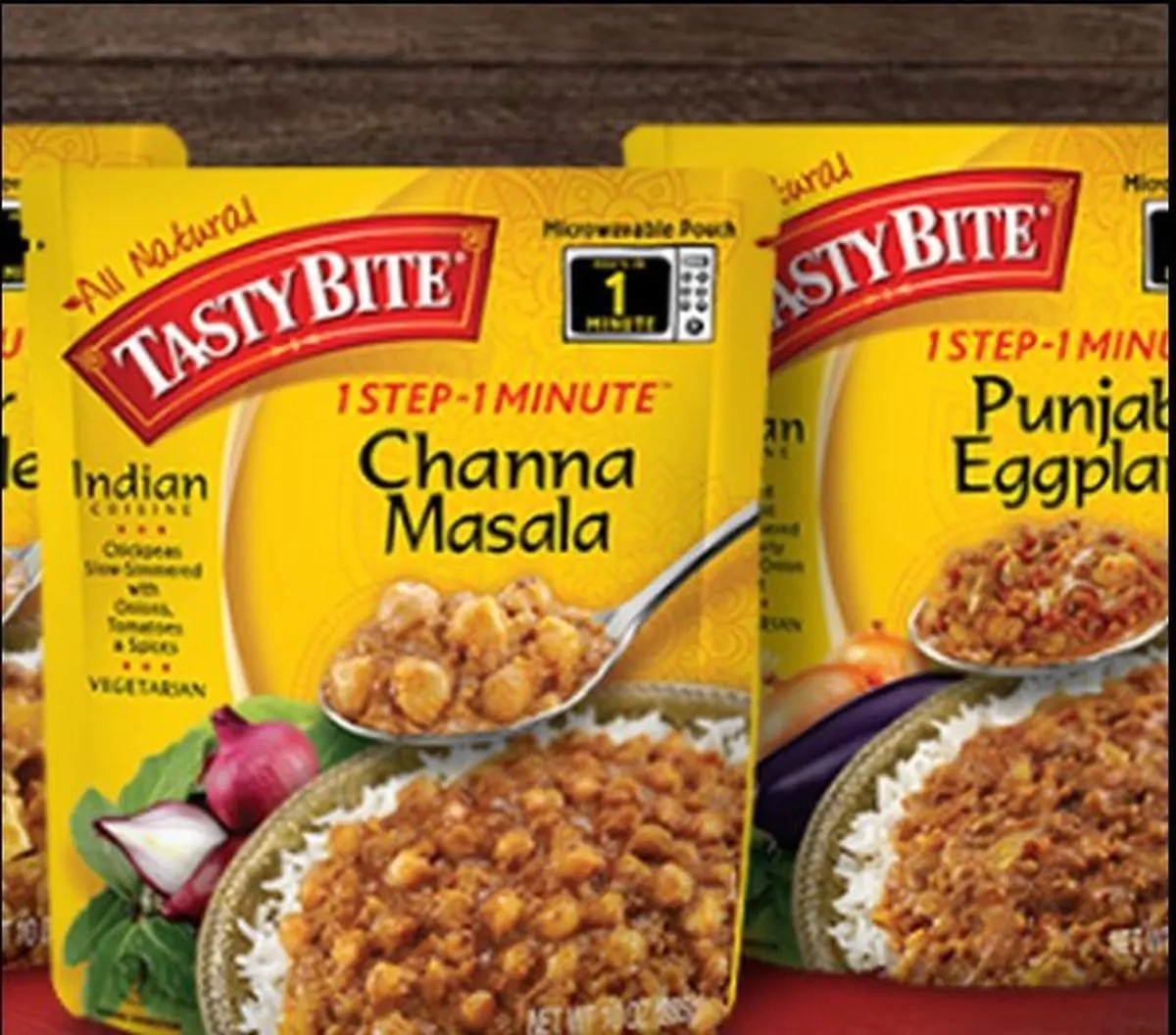
Tasty Bite Eatables FY26: The Organic Darling Meets Reality
General information and entertainment, not investment advice. The author is not a SEBI-registered adviser or research analyst. No recommendation, no promised returns. Markets carry risk including loss of capital. Figures may not be current. Consult a registered adviser before acting.
1. At a Glance
Revenue inched to ₹571.62 Cr, a 2% decline from the prior year’s ₹554.41 Cr—the company’s first absolute contraction in half a decade. Earnings fell 37% YoY to ₹35.3 Cr from ₹25.61 Cr, but benefited from a ₹22.52 Cr other income pile (largely unrealised gains on mark-to-market swaps and foreign currency fluctuations). Strip that out, operational profit came in at ₹48 Cr, down 30% from ₹70 Cr the year prior.
The auditors issued a qualified opinion. The company failed to obtain prior approval for related-party transactions worth ₹48.92 Cr and failed shareholder approval for another ₹94.47 Cr in RPT, which shareholders subsequently rejected via postal ballot in May 2026. Management changes have been steady—the CFO and People Director resigned in early 2024, the Chairman resigned in February 2026, and a new Chairman from Bharti/PepsiCo took charge on 1 April 2026.
Promoter Mars holds 74.2% of the equity. The share trades at ₹8,179, implying a P/E of 59.4x on annualised earnings, a multiple that sits well above the peer median of 50x. The question is whether a 72% export-heavy, organic-skewed, cash-generative business in a competitive segment justifies that premium—or whether it’s finally priced for perfection.
2. Introduction
Tasty Bite Eatables manufactures ready-to-eat and ready-to-cook ethnic vegetarian food under the “Tasty Bite” brand. It is headquartered near Pune and operates a 30-acre manufacturing campus with 14,000 MT capacity in retail and 10,000+ MT in foodservice. The company is a subsidiary of Preferred Brands International, a Mars, Inc. entity.
Since the brand was acquired by Mars (then Preferred Brands) in 1999, Tasty Bite has built a strong presence in North America—the US shelf of Indian prepared foods is largely owned by it. The business grew by an average of 7% a year over the past five years and 11% over the past decade. But growth has stalled. Over the trailing twelve months to March 2026, revenue shrank 1%; profit (TTM) rose 39% only on the back of a one-time ₹22.5 Cr other income and the prior year’s depressed base.
The company also sells foodservice products (TFS) to quick-service restaurants and cloud kitchens in India—a domestic play sitting inside a largely offshore export engine. In FY23, consumer business was 70% of revenue; foodservice, 30%. The geographic split was 28% India, 72% rest of world, centered on the US.
3. Business Model: WTF Do They Even Do?
Tasty Bite makes two things: consumer products (organic rice, ready-to-eat meals, sauces, spices) and foodservice items (prepped meals for restaurant chains, cloud kitchens, QSRs).
The consumer retail play is the star. The company had 60+ organic SKUs as of FY21, a line that became the brand’s identity. By FY21, 70% of its branded business volume came from organic products. The brand markets itself as a premium, clean-label Indian food play in Western supermarkets—Whole Foods, Kroger, Albertsons, and specialty retailers in the US, Tesco and Sainsbury in the UK, and major chains in Canada, Australia, Germany.
Foodservice is the domestic wildcard. Tasty Bite Food Service (TFS) supplies unique sauces, meals, and frozen ready-to-eat items to leading QSRs, cloud kitchens, and HORECA brands. This segment was built over the last decade and sits at 30% of revenue. It is less mature, less capital-intensive, and more labour-intensive. In FY23, it clocked 11,000 MT.
Xclusive is a third line—snacks made of grains and vegetables sold through modern retail and online.
The business model is straightforward: take commodity raw material, add value through processing and packaging, sell at a premium to Western retailers. Organic certification and the “Indian ethnic food” positioning command a margin. Distribution is dense (400+ suppliers, 5,000+ farmers, 25+ export customers, 20+ domestic customers). R&D is in-house via a DSIR-accredited center in Pune. New products—14% of revenue came from products launched in the prior two years—keep the shelf fresh.
But the model is also fragile. It depends on US retail shelf stability, on organic price premiums not collapsing, on the company’s ability to absorb freight inflation, on tariffs not shifting, and on the foreign exchange helping (72% of revenue is in foreign currency, a tailwind when the rupee weakens, a headwind when it doesn’t). The company has few moats. Organic rice and pulses are commoditised. Competitors like Spice Routes, Aashirvaad, and local South Asian ethnic brands sit on the same shelf. The difference is scale, brand equity, and certification—but those are expensive to maintain.
Q4 revenue slipped 12% YoY to ₹117.7 Cr (vs ₹133.74 Cr in Q4 FY25). Net profit eased 2.9% to ₹6.01 Cr. Operating margin compressed to 9.5% from 8.2% year-on-year. The quarter was weak—seasonal patterns suggest some pre-summer inventory drain in export markets, and pricing pressure may have weighed.
The Story in the Numbers
Revenue fell for the first time in five years, yet earnings rose 37%. The disconnect is entirely other income. Unrealised gains on foreign exchange swaps added ₹22.5 Cr; take that out, and operational earnings were ₹12.8 Cr, down 50% YoY. This is not a story of operational leverage; it’s a story of FX tailwinds masking operational fatigue.
Margins have compressed. Operating profit margin (EBITDA) stood at 15.4% in FY26, better than the 12.1% in FY25, but only because revenue fell more slowly than the prior-year contraction. OPM at 11.3% (operating profit ÷ revenue) sits near the lowest in a decade. Depreciation (₹31 Cr) is elevated—the company has been investing heavily in capex (P&L shows ₹54 Cr capital work in progress as of March 2025). If capex stabilises, depreciation will too. But for now, it’s eating into reported net profit.
The dividend increased sharply—₹10 per share proposed for FY26, up from ₹2.50 last year. At an annual run-rate, that’s a payout of ₹257 Cr against net profit of ₹35.3 Cr. This appears to be a special dividend, likely triggered by a one-time gain in the prior year or a large repatriation from foreign operations. Scrutiny required.
From Concalls & Guidance (August 2024, if available)
No formal guidance. The company has signalled focus on emerging markets, especially India, and on expanding foodservice in the domestic segment. The organic food line remains the strategic priority in export markets.
5. Market Expectations & Historical Multiples
This section describes how the market is currently pricing the company and how that compares with its own history and peer group. It is descriptive, not predictive.
Metric
Current
5-Yr Avg
Peer Median (Food)
P/E
59.4x
99.9x
49.8x
EV/EBITDA
25.0x
—
~18x
P/B
6.14x
—
4.8x
ROE
10.9%
10.9%
~11.7%
ROCE
13.9%
—
~13.4%
The market currently pays 59.4x earnings, down sharply from the 5-year average of 99.9x. This looks like multiple compression—the stock has fallen 25% over the past year and 12% over three years. The peer median is 49.8x, suggesting that Tasty Bite trades at a modest premium to large-cap food peers (Britannia 49x, Bikaji 65x, Bombay Burmah 8.8x).
The P/B of 6.14x is above the peer median of 4.8x, indicating the market still attaches a brand and growth premium to the equity.
ROCE at 13.9% sits in line with the peer median and the company’s