Chandan Healthcare FY26: ₹276 Cr Revenue, 20% Growth, But Debtor Days Say “Government Pays When It Wants”
General information and entertainment, not investment advice. The author is not a SEBI-registered adviser or research analyst. No recommendation, no promised returns. Markets carry risk including loss of capital. Figures may not be current. Consult a registered adviser before acting.
1. At a Glance
Chandan’s FY26 revenue hit ₹276 crore, up 20% from ₹230 crore in FY25—consistent with the previous two years’ rhythm.
Net profit grew 22%, ₹27 crore in FY26 vs ₹22 crore a year ago, but the company wears two hats: diagnostics doing the heavy lifting, pharmacy dragging the margin down to 9.6% PAT margin (10.6% reported).
The real tension sits in working capital. Debtor days have ballooned from 74 to 114 days—a 52% spike—driven almost entirely by government receivables that arrive in lump sums every six months.
The market prices the stock at 19× trailing P/E, below the peer median of 47×, but that discount reflects a company still smaller than peers and facing the most stubborn working capital problem in the diagnostic space.
PPP projects worth ₹800 crore over ten years landed in Q4, but revenue contribution starts only from Q2 FY27. Expansion is happening on speed, but cash conversion is slowing.
2. Introduction
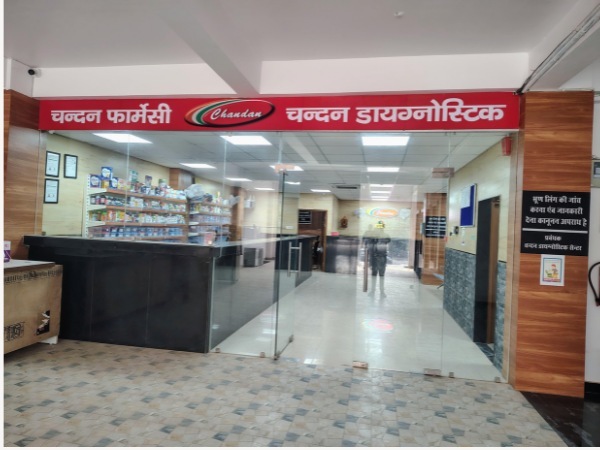
Chandan Healthcare incorporated in 2003 and operates diagnostic centers across North India—primarily Uttar Pradesh and Uttarakhand—offering pathology, radiology, and now pharmacy services.
The IPO in February 2025 raised ₹107 crore and shifted the funding mix decisively. Pre-IPO, the company relied on term debt (₹36 crore in FY24). Post-IPO, cash reserves climbed, giving management room to expand at speed.
What changed in FY26: Five 10-year PPP projects awarded (Punjab, Haryana, Assam) totaling an estimated ₹800 crore in revenue over the period.
A 5-year exclusive contract with Jeena Sikho (Ayurveda clinic network, 17 states) began go-lives in Q4, described by management as low-volume, same-margin business.
The pharmacy subsidiary remains a structural brake. Crisil’s May 2025 rating upgrade (BB- to BBB-/Stable) acknowledged improving financial profile but flagged “working capital-intensive operations” as a weakness.
3. Business Model: WTF Do They Even Do?
Chandan is two businesses in one: Diagnostics (pathology 71.5%, radiology 28.5% of revenue) and Pharmacy (47% of consolidated FY24 revenue, but only ~5% EBITDA margin).
The diagnostic hub-and-spoke model: central labs in Lucknow and Haldwani handle specialty testing; satellite and collection centers feed samples back. A comprehensive diagnostic center costs ₹6–7 crore to build (₹5 crore machines, ₹1 crore space), takes ~two years to EBITDA-positive.
A standalone pathology lab costs ~₹1 crore and turns EBITDA-positive “very soon”—hence the step-wise upgrade playbook: build labs first, add radiology later.
Geography: ₹276 crore spread across Uttar Pradesh (70%), Uttarakhand (29.72%), Rajasthan, and now metros (Mumbai, Kolkata, Raipur, Chandigarh launched recently). Pathology 71.5%, radiology 28.5%. Customer mix has shifted (FY26 concall): B2C 40% (+29% YoY), B2B 30% (+50% YoY), B2G ~30% (-3% as the company “did not focus more in government sector last year”—contradicted by the receivables pile).
Pharmacy: 47% of revenue, 5% EBITDA margin, and management is quietly closing unprofitable retail units. Subsidiary Chandan Pharmacy Limited (53% owned) is the lever; cost drag on consolidated EBITDA is explicit.
Management disclosed FY26 revenue of ₹280.67 crore in the concall (vs ₹276.39 in the audited standalone), EBITDA ₹56.84 crore (20.25% margin), and PAT ₹27.06 crore (9.64% margin). Diagnostics-only EBITDA is “more than 40%,” suppressed at group level by pharmacy’s 5% margin. A one-time ₹2.92 crore provision for Labor Code compliance (change in wage definition) hit Q4.
Management steered expectations for FY27 as: EBITDA margin “higher than last year” but no absolute guidance, citing “expanding in a huge manner.” Two-year outlook: expect 30–35% EBITDA at group level due to aggressive capex.
5. Market Expectations & Historical Multiples
This section describes how the market is currently pricing the company and how that compares with its own history and peer group. It is descriptive, not predictive.
Metric
Current
Historical Average
Peer Median
P/E
19.0
24.4 (5-yr avg)
47.3
EV/EBITDA
10.6
–
–
ROE
19.9%
22.4% (5-yr avg)
19.75%
ROCE
23.3%
29% (3-yr avg)
22.28%
Price/Sales
2.01
–
–
The market currently pays 19× earnings here, versus a peer median of 47×.
What the market is pricing in: A smaller, high-growth diagnostic player with an improving ROE trajectory (19.9% current vs. 22.4% five-year average) but volatile ROCE (23.3% now vs. 29% average three years back). The discount to peers reflects size (Chandan ₹276 Cr revenue vs. peer median ₹594 Cr) and execution risk on PPP revenue ramp (starts Q2 FY27). The lower P/E also embeds skepticism about working capital—debtor-day spikes are a structural headwind in government-heavy portfolios.
Management’s explicit claim: diagnostics business justifies “more than 40%” EBITDA; the pharmacy drag (5% EBITDA margin) is temporary and will be rationalized.