1. At a Glance
The pharmaceutical sector often hides its most complex narratives in small-cap wrappers. Smruthi Organics Ltd (SOL) is a classic example of a company navigating the treacherous waters of the API (Active Pharmaceutical Ingredient) market while tethered to a high-concentration risk profile. In the financial year ended March 31, 2026, the company reported a total revenue from operations of ₹ 101.97 crore, a significant slide from the ₹ 126.01 crore clocked in the previous fiscal. This 19% top-line contraction is the first red flag that demands an auditor-style scrutiny.
Why is the revenue vanishing? The company points toward intense competition in the domestic market and, more critically, continued restrictions on exports to Pakistan, which historically served as a key geography. When a company relies on a volatile neighbor for its growth engine, the friction is felt immediately on the P&L. Furthermore, the concentration risk here is not just geographical. The top two products—Metformin and Diloxanide Furoate—command a staggering 50% of the revenue share. In the world of high-stakes pharma, being a two-trick pony is like walking a tightrope during a monsoon.
However, it isn’t all gloom. Despite the revenue dip, the company managed a Net Profit of ₹ 3.43 crore for FY26, showing a resilience that suggests aggressive cost-cutting or process optimization. The Operating Profit Margin (OPM) stood at 13.03% for the final quarter, up from the lows of previous years. The company is also pivoting; it recently received the EDQM CEP for Amlodipine Besilate, opening the doors to the regulated European market.
Investors are watching a balancing act: a shrinking domestic and legacy export base versus a high-margin, regulated market expansion. Will the new certifications offset the loss of the Pakistani market, or is this a case of too little, too late? The intrigue lies in whether management can successfully transition from a volume-led Metformin player to a specialized, high-compliance exporter before the legacy business erodes further.
2. Introduction
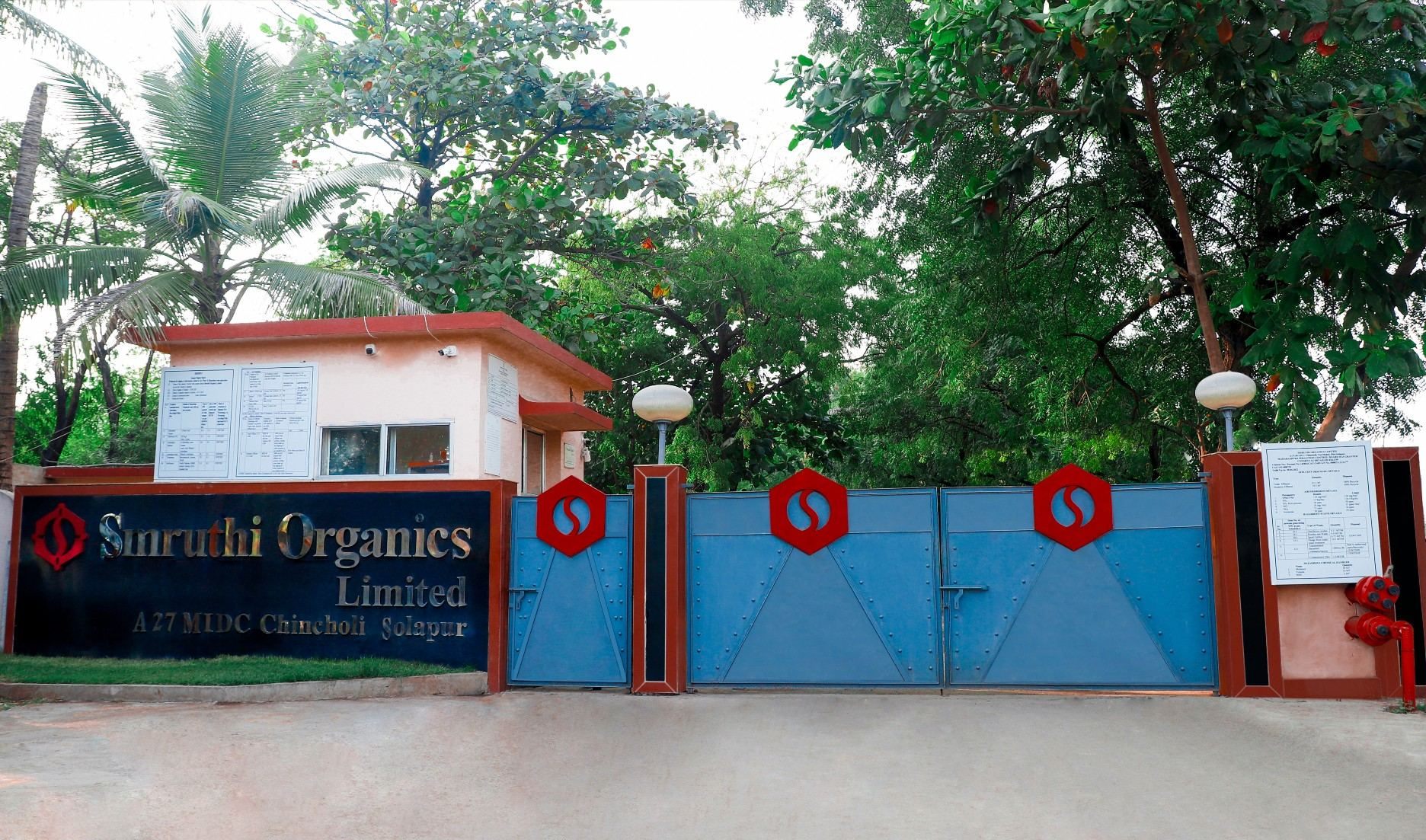
Smruthi Organics Limited, established in 1989, operates out of Solapur, Maharashtra. It has spent over three decades carving out a niche in the manufacture of APIs and intermediates. While the name might not ring bells in every household, its products like Metformin (anti-diabetic) and Telmisartan (anti-hypertensive) are staples in the global medicine cabinet.
The company operates two manufacturing units spread across 22 acres, with an annual capacity that has recently been expanded to approximately 5,800 MT. This is a significant jump from the 3,360 MT capacity seen in earlier years, suggesting that management was betting big on a demand surge that hasn’t fully materialized in the sales numbers yet.
The pharmaceutical API industry is currently undergoing a “China+1” shift, yet Smruthi remains heavily dependent on the Dragon, importing nearly 40% to 52% of its raw materials from China. This creates a precarious supply chain where any geopolitical sneeze in Beijing results in a fever in Solapur.
In the current fiscal, the company has made a strategic move to exit its Formulations Marketing Division, a minor segment that was dragging on resources. By focusing strictly on APIs and Intermediates, SOL is attempting to lean out its operations. But with a market cap of just ₹ 136 crore, it remains a micro-cap player in an industry dominated by giants with deeper pockets and broader portfolios.
3. Business Model – WTF Do They Even Do?
At its core, Smruthi Organics is a chemical factory for human health. They don’t make the tablets you buy at the pharmacy (well, they used to, but they’re quitting that); they make the “active” powder that actually does the work inside the tablet.
Their business model is essentially a high-volume, low-to-mid-margin play focused on essential medicines. They take raw chemical intermediates—often imported from China—and process them through several stages of synthesis to create high-purity APIs. These are then sold to formulation companies who package them into final dosages.
The “WTF” moment comes when you look at their product list. It’s a “Greatest Hits” of generic drugs:
- Metformin: The world’s go-to drug for Type 2 diabetes.
- Diloxanide Furoate: Used for intestinal amoebiasis.
- Norfloxacin: A common antibiotic.
- Telmisartan: For blood pressure.
The problem? Everyone and their grandmother makes Metformin. It is a commoditized market where price wars are the norm. To escape this trap, SOL is filing Drug Master Files (DMFs). They have 22 DMFs across 11 countries. This is their ticket to the “Big Leagues”—the regulated markets of Europe and the US, where quality documentation acts as a barrier to entry for low-quality competitors.
They have also launched new brands like TRANVIA P and YAMONT LC, though these are in the pain relief and anti-histamine segments, which are equally crowded. Essentially, they are a specialized manufacturer trying to prove they can meet global standards while struggling with a very concentrated customer base (Top 10 customers = 70% of sales).
4. Financials Overview
The numbers for the quarter ended March 2026 tell a story of a company fighting to stay profitable amidst a shrinking top line.
| Metric (₹ in Crores) | Latest Qtr (Mar ’26) | Same Qtr Last Year (YoY) | Previous Qtr (QoQ) |
| Revenue | 29.09 | 38.09 | 22.29 |
| EBITDA | 3.79 | 4.68 | 4.00 |
| PAT | 1.07 | 2.23 | 1.40 |
| EPS (₹) | 0.93 | 1.95 | 1.22 |
Annualised EPS Calculation: Based on the March 2026 full-year results, the actual EPS for the year stands at ₹ 3.00.
Witty Commentary:
The YoY revenue drop of 23.6% is enough to give any investor a headache, but the management seems to have found the aspirin. Despite sales falling from ₹ 38 cr to ₹ 29 cr, they kept the OPM at a respectable 13%. Management “walked the talk” on cost optimization, as promised in previous credit rating updates, but they are clearly running out of “top-line” road. If the revenue keeps sliding, there are only so many “other expenses” you can cut before you’re running the plant on candlelight.
Financial Wisdom: Revenue is vanity, profit is sanity, but cash is reality. When revenue drops 23%, but profit only drops slightly more in proportion, it means the company has high fixed costs that are starting to bite.
5. Valuation Discussion – Fair Value Range
Let’s break down what this business is actually worth using the data at hand.
Method 1: P/E Approach
The current Stock P/E is 36.3, while the Industry PE is 30.6.
- Earnings per Share (EPS): ₹ 3.00
- Fair P/E (Industry Standard): 30.6
- Calculated Value: $3.00 \times 30.6 = ₹ 91.8$
Method 2: EV/EBITDA Approach
- Annual EBITDA (FY26): ~₹ 13.03 Cr
- Enterprise Value (EV): ₹ 142 Cr
- Current EV/EBITDA: 10.8
- Industry Average EV/EBITDA: ~12
- Calculated Value per share: $\frac{(13.03 \times 12) – Debt + Cash}{Shares} \approx ₹ 135$
Method 3: DCF (Simplified Discounted Cash Flow)
Given the volatile growth (Sales growth 5yr: -4.22%), we assume a conservative 5% growth and a 12% discount rate.
- Free Cash Flow (TTM): ₹ 2.94 Cr (CFO – Capex)
- Estimated Value: ₹ 105 – ₹ 115 range.
Fair Value Range: ₹ 95 — ₹ 130
This fair value range is for educational purposes only and is not investment advice.
Do you think a company with negative 5-year sales growth deserves a premium P/E over the industry average?
6. What’s Cooking – News, Triggers, Drama
The biggest spice in the Smruthi kitchen right now is the EDQM (European Directorate for the Quality of Medicines).
In March 2026, the company received the CEP (Certificate of Suitability) for Amlodipine Besilate. In plain English: Europe just gave them a hall pass to sell their blood pressure API in the EU. This follows an “Attestation of Inspection” which confirmed the Solapur Unit II is GMP compliant by European standards. This is a massive trigger because margins in Europe are generally juicier than in Pakistan or domestic traders.
On the drama side, the company got slapped with a ₹ 2,000 fine by the BSE for a one-day delay in filing their annual report. It’s a tiny amount, but it’s the corporate equivalent of getting a late fee on a library book—it shows a slight lack of administrative tightness.
Also, look at the New Labour Codes. The company had to take an exceptional hit of ₹ 46.26 lakhs for gratuity provisions due to the new government framework. It’s a one-time pain, but it reminds us that the “regulatory risk” mentioned in credit reports isn’t just about drugs; it’s about the law of the land.
7. Balance Sheet
The latest consolidated figures from the March 31, 2026, audited results show a shrinking but stable foundation.
| Rows (₹ in Crores) | Mar 2026 | Mar 2025 | Mar 2024 |
| Total Assets | 103.55 | 111.74 | 118.00 |
| Net Worth | 73.51 | 71.63 | 69.00 |
| Borrowings | 8.37 | 16.80 | 12.00 |
| Other Liabilities | 21.67 | 23.31 | 37.00 |
| Total Liabilities | 103.55 | 111.74 | 118.00 |
- Borrowings have been cut in half from ₹ 16.8 cr to ₹ 8.37 cr. Someone in the finance department clearly hates paying interest.
- Total Assets are down, which usually happens when you stop investing or your receivables vanish. In this case, Trade Receivables dropped from ₹ 32.47 cr to ₹ 19.30 cr. They are finally collecting their dues!
- Net Worth is slowly creeping up, proving that even in a bad year, they aren’t burning the furniture to stay warm.
8. Cash Flow – Sab Number Game Hai
Cash flow is where the truth hides when the P&L is wearing makeup.
| Cash Flow (₹ in Crores) | Mar 2026 | Mar 2025 | Mar 2024 |
| Operating (CFO) | 22.26 | 9.98 | 4.26 |
| Investing (CFI) | (8.92) | (11.42) | (9.00) |
| Financing (CFF) | (12.07) | 1.40 | 1.00 |
Where did the money come from?
Mainly from collecting old bills. The massive jump in CFO (₹ 22.26 cr) wasn’t from selling more drugs, but from the fact that customers finally paid up (Receivables change: ₹ 13.17 cr inflow).
Where did it go?
They used that cash to pay off debt (₹ 9.13 cr repayment) and keep the plant running. They also spent ₹ 8.47 cr on buying new equipment. They are modernizing, but they are doing it with their own cash now, not the bank’s.
9. Ratios – Sexy or Stressy?
| Ratio | Value | Commentary |
| ROE | 5.17% | About as exciting as watching paint dry. |
| ROCE | 7.99% | Barely covering the cost of capital. Stressy. |
| Debt to Equity | 0.11 | Practically debt-free. This is the “Sexy” part. |
| PAT Margin | 3.36% | Razor-thin. One bad batch and it’s a loss. |
| Debtor Days | 69 Days | Improved from 117. The collection team deserves a bonus. |
Smruthi is like a very safe, very slow-moving car. It won’t crash (low debt), but it’s not winning any races (low ROE).
10. P&L Breakdown – Show Me the Money
| Year | Revenue (₹ Cr) | EBITDA (₹ Cr) | PAT (₹ Cr) |
| Mar 2026 | 102 | 13 | 3 |
| Mar 2025 | 126 | 12 | 4 |
| Mar 2024 | 128 | 12 | 4 |
The top line is on a diet it didn’t ask for. Revenue has slid from ₹ 128 cr to ₹ 102 cr in three years. However, the EBITDA has actually risen slightly because they’ve gotten better at making the drugs cheaper. It’s a classic case of “selling less but keeping more.”
If they were a comedian, their set would be titled: “I lost my biggest fan (Pakistan), but at least I saved on travel expenses.”
11. Peer Comparison
| Company | Revenue (₹ Cr) | PAT (₹ Cr) | P/E Ratio |
| Sun Pharma | 15,520 | 3,381 | 37.1 |
| Lupin | 7,474 | 1,468 | 18.0 |
| Smruthi Organics | 29 (Qtr) | 1.07 (Qtr) | 36.3 |
Sarcastic Notes:
Comparing Smruthi to Sun Pharma is like comparing a local grocery store to Walmart. Sun Pharma is winning the galaxy. Smruthi is in a corner, trading at a 36.3 P/E, which is higher than Lupin’s 18.0. Investors are paying a premium for a micro-cap with shrinking sales—talk about optimism!
12. Miscellaneous – Shareholding and Promoters
| Category | Holding (%) |
| Promoters | 64.73% |
| FII / DII | 0.00% |
| Public | 35.27% |
Promoter Roast:
The Eaga family (Purushotham, Vaishnavi, and Swapnil) owns the lion’s share. They recently re-appointed the Managing Directors and brought in Ms. Smruthi Purushotham Eaga as a Whole Time Director. It’s a classic family business. No institutions (FIIs/DIIs) want to touch this yet—probably because they’re waiting to see if the revenue slide stops.
The promoters have zero pledges, which is the only reason they aren’t getting roasted harder. They are backing their own horse, even if the horse is currently taking a nap.
13. Corporate Governance – Angels or Devils?
The governance record is mostly “Clean with a side of Clumsy.” The statutory auditors, Gokhale & Sathe, gave an unmodified opinion (that’s good). However, the company’s history of “minor” lapses—like the one-day delay in filing and the late payment of a tiny fine—suggests they might need a more robust compliance calendar.
The board meetings are frequent, and the re-appointment of management suggests stability. There are no major red flags like unexplained loans to subsidiaries or massive auditor resignations. They are “Angels” in intent, but perhaps “Interns” in administrative execution.
14. Industry Roast and Macro Context
The API industry is currently a mess. Post-COVID, there was a massive oversupply of basic drugs like Metformin, leading to a “race to the bottom” in pricing. Meanwhile, China has started dumping cheap APIs globally to clear its own excess capacity.
Smruthi is caught in this macro-pincer movement. Small players are getting squeezed by rising environmental compliance costs and the need for expensive R&D. The industry is pivoting toward “Specialty APIs,” but Smruthi is still heavily anchored to generics. The macro outlook for small API players is “Survival of the Fittest,” and Smruthi is currently at the gym, trying to bulk up its R&D spend (now at 3.58% of turnover) to stay relevant.
15. EduInvesting Verdict
Smruthi Organics is a company at a crossroads. Its past was defined by high-volume exports to neighboring markets and a heavy reliance on a few commoditized molecules. That past is dying, as evidenced by the 20% revenue drop.
Its future depends entirely on the Amlodipine EU approval and the success of its 22 DMF filings. They have fixed their balance sheet—debt is low, and receivables are being collected. They have the “infrastructure” to grow, but they lack the “orders.”
SWOT Analysis:
- Strengths: Debt-free status, 30+ years of experience, EU GMP compliance.
- Weaknesses: Severe customer and product concentration, shrinking revenue, high dependence on China for RM.
- Opportunities: Expansion into the EU market, new product launches in anti-histamines.
- Threats: Geopolitical tensions with Pakistan/China, continued pricing pressure in generics.
If you like “Turnaround” stories where a company cleans its house before looking for new guests, Smruthi is one to watch. But if you hate “Concentration Risk,” this is a horror movie.
Are you willing to wait for the European markets to kick in, or is the 50% reliance on just two products too much of a gamble for your portfolio? Let us know in the comments!
Disclaimer: This fair value range and analysis are for educational purposes only and do not constitute investment advice. Smruthi Organics is a micro-cap stock and carries significantly higher risk than large-cap pharmaceutical companies.