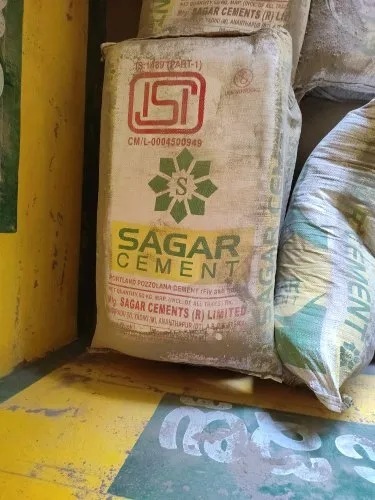
The story of Andhra Cements is not for the faint-hearted. It is a tale of a 1936-born legacy that nearly breathed its last, only to be resuscitated by a “white knight,” Sagar Cements, through a grueling insolvency process. But as we look at the latest audited numbers for the year ended March 31, 2026, the recovery remains on thin ice. This isn’t just a turnaround; it’s a high-stakes survival game where the company is racing against a clock made of interest and debt.
While the market often gets blinded by top-line growth, the audited cash flow statement provides a sobering dose of reality. The company’s net worth is under immense pressure, and the recent board approval for an in-principle merger with its parent, Sagar Cements, suggests that the “standalone” experiment might be hitting its structural limits. When you owe more than you’re making, the only way out is often a complete identity reset.
1. At a Glance
Andhra Cements is currently a masterclass in high-stakes corporate restructuring. After being acquired by Sagar Cements in early 2023 via the NCLT route, the company has been on a desperate sprint to reclaim its lost market share. The numbers, however, show a company running up a steep hill with a heavy backpack. Despite a revenue jump to ₹ 44,249 lakhs (₹ 442 cr) in FY26, the bottom line remains stained in red with a net loss of ₹ 6,716 lakhs.
The most alarming metric is the debt-to-equity ratio, which has spiraled because the equity base is being eroded by continuous losses. Management has been busy with a massive capex to expand clinker and grinding capacities, but this growth is being funded almost entirely by the very debt that is choking the P&L. The recent commissioning of the 6-stage preheater in October 2025 was supposed to be the “savior” moment, yet the financial bleeding continues.
With current liabilities significantly outweighing current assets, the company is essentially surviving on the credit lines and guarantees provided by its parent. The “provocative” hook here is the impending merger. Sagar Cements has been diluting its stake through Offers for Sale (OFS) to meet public shareholding norms, only to now propose merging the whole thing back into the parent. It’s a complex financial dance that leaves the observer wondering if they are looking at a growth engine or a rescue mission.
2. Introduction
Andhra Cements is one of India’s oldest cement manufacturers, but age hasn’t necessarily brought stability. Based in Guntur, Andhra Pradesh, it operates the Sri Durga Cement Works and the Visaka Cement Works. The latter has been a persistent headache, remaining non-operational due to its location within city limits and logistical nightmares.
The company’s modern history began in April 2022 when it was dragged into the Corporate Insolvency Resolution Process (CIRP). Sagar Cements eventually took the reins with a ₹ 32,225 lakh infusion, but the “clean slate” provided by the NCLT didn’t stay clean for long.
The fiscal year 2026 has been a year of contradictions. On one hand, operations have scaled up significantly. On the other hand, the cost of this scale—depreciation and interest—is rising faster than the revenues can keep up with. The company is currently in a “build and bleed” phase. It is building capacity to reach 3 MTPA of grinding, but it is bleeding cash to get there.
3. Business Model – WTF Do They Even Do?
Andhra Cements does one thing: it makes and sells cement and clinker. It’s a basic commodity business where you win by being the cheapest producer or by having the shortest transport route to the customer.
The company operates primarily through its Dachepalli unit. Since re-commencing operations in April 2023, the focus has been on scaling. The problem is that Andhra Cements is currently like a marathon runner who just woke up from a three-year coma. They are trying to compete with elite athletes (UltraTech, Ambuja) while their muscles are still atrophied.
The business model is currently centered around a massive capacity expansion. They are moving clinker capacity to 2.3 MTPA and grinding to 3 MTPA. The “logic” is that scale will bring down the cost per bag. However, in the cement industry, if you don’t have captive power or efficient logistics, scale just means you lose money on more bags.
4. Financials Overview
The latest quarter (March 2026) shows a jump in sales, but the profitability remains a ghost. Management previously hinted at a turnaround following the capacity expansion, but the “talk” is still waiting for the “walk.”
Quarterly Performance Snapshot (Figures in ₹ Lakhs)
| Metric | Mar 2026 (Latest) | Mar 2025 (YoY) | Dec 2025 (QoQ) |
| Revenue from Ops | 15,485 | 8,947 | 11,026 |
| EBITDA (OP) | 884 | (512) | 545 |
| PAT | 4,852 | (4,991) | (4,414) |
| EPS (₹) | 5.26 | (5.41) | (4.79) |
Witty Commentary: On the surface, a PAT of ₹ 4,852 lakh looks like a miracle recovery. But look closer—this was boosted by a massive deferred tax credit of ₹ 18,932 lakh. The loss before tax was actually ₹ 14,080 lakh for the quarter! When your interest expense is ₹ 3,021 lakh for the quarter, the operating reality is still very much in the intensive care unit.
Annualised EPS Calculation:
Since the March 2026 result is the full-year closing, we use the actual reported EPS for the year.
- Actual FY26 EPS: ₹ -7.29
5. Valuation Discussion – Fair Value Range Only
Valuing a company with negative consolidated reserves and inconsistent earnings is more of an art than a science.
Method 1: P/E Ratio
The company has negative earnings (LTM PAT is ₹ -6,716 lakh).
- EPS: ₹ -7.29
- Sector P/E: 29.9
- Value: Not applicable (Negative earnings).
Method 2: EV/EBITDA
- Market Cap: ₹ 51,036 lakh (₹ 510 cr)
- Borrowings: ₹ 112,711 lakh (₹ 1,127 cr)
- Cash & Bank Balances: ₹ 5,345 lakh
- Enterprise Value (EV): ~₹ 158,402 lakh
- FY26 EBITDA: ~₹ 1,576 lakh
- EV/EBITDA: ~100x
- Peer Median EV/EBITDA: ~15x to 18x
- Implied Fair Value: At peer multiples, the equity value would be technically negative given the debt levels.
Method 3: Replacement Cost / Capacity Valuation
- Current Grinding Capacity: 3 MTPA.
- Industry Standard for Brownfield: ~₹ 5,000 – ₹ 6,000 per tonne.
- Asset Value: ~₹ 150,000 lakh to ₹ 180,000 lakh.
- Equity Value (Asset Value – Debt): ~₹ 37,289 lakh to ₹ 67,289 lakh.
- Per Share Value: ~₹ 40 to ₹ 73.
Fair Value Range: ₹ 40 – ₹ 75 per share.
Disclaimer: This fair value range is for educational purposes only and is not investment advice.
6. What’s Cooking – News, Triggers, Drama
The biggest news is the in-principle merger with Sagar Cements announced in March 2026. After spending months selling shares in the open market to meet the 25% public shareholding rule, the management suddenly decided that Andhra Cements shouldn’t exist as a separate listed entity.
There is also the drama of the Credit Rating. Ratings have been fluctuating with a “Rating Watch with Developing Implications.” Furthermore, the company had approved a Rights Issue of ₹ 180 crore earlier. This was intended to finance the expansion, but with the merger now on the table, the future of these capital raises is a bit of a question mark.
7. Balance Sheet
The balance sheet is where the horror movie music starts playing. We are looking at a company where the debt is literally eating the equity.
Balance Sheet Evolution (Figures in ₹ Lakhs)
| Component | Mar 2026 (Audited) | Mar 2025 (Audited) |
| Total Assets | 142,006 | 114,402 |
| Net Worth (Equity + Reserves) | 8,074 | 14,455 |
| Borrowings | 112,711 | 75,707 |
| Other Liabilities | 21,221 | 24,240 |
| Total Liabilities | 142,006 | 114,402 |
- Net Worth dropped by nearly ₹ 6,400 lakh in one year.
- Borrowings jumped by a massive ₹ 37,004 lakh. That’s a lot of “growth” for a company that isn’t making a profit.
8. Cash Flow – Sab Number Game Hai
The audited cash flow statement for FY26 shows exactly where the money is bleeding. The company is literally surviving on “Financing Activities.”
Cash Flow Summary (Figures in ₹ Lakhs)
| Activity | Mar 2026 (Audited) | Mar 2025 (Audited) |
| Operating (CFO) | (2,515) | 5,955 |
| Investing (CFI) | (24,833) | (8,059) |
| Financing (CFF) | 27,350 | 1,052 |
Where is the money? In FY26, the company generated zero cash from its core business. In fact, it used ₹ 2,515 lakh in operations. This is a massive reversal from the ₹ 5,955 lakh generated in FY25.
Where did it go? Directly into capital expenditure (Fixed assets purchased: ₹ 22,624 lakh).
Where did it come from? New debt. Proceeds from non-current borrowings were a massive ₹ 37,154 lakh.
Witty Commentary: The company is paying for its lunch with a credit card it can barely afford. Using ₹ 27,350 lakh of borrowed financing to cover ₹ 2,515 lakh of operating losses and ₹ 24,833 lakh of expansion is a dangerous game of “extend and pretend.”
9. Ratios – Sexy or Stressy?
| Ratio | Value | Verdict |
| ROE | -59.6% | Destroying shareholder wealth. |
| ROCE | -5.55% | Losing money on the capital it employs. |
| Debt to Equity | 14.0 | A cry for help. |
10. P&L Breakdown – Show Me the Money
Let’s look at the three-year trend to see if there’s any light at the end of the tunnel.
P&L Trend (Figures in ₹ Crores)
| Year | Revenue | EBITDA | PAT |
| Mar 2026 | 442 | 16 | -67 |
| Mar 2025 | 274 | -29 | -152 |
| Mar 2024 | 268 | -3 | -66 |
The revenue has grown by 61% in the last year, which is impressive. EBITDA turned positive for the first time in years. This is the “stand-up comedy” part of the P&L: the management tells you they are finally profitable at the operating level, but then the interest and depreciation walk in and take all the money. It’s like winning a ₹ 100 lottery but spending ₹ 200 on the ticket.
Does the revenue growth excite you enough to ignore the bottom-line bleeding?
11. Peer Comparison
How does our struggling veteran look next to the industry titans?
| Company | Revenue (Cr) | PAT (Cr) | P/E |
| UltraTech Cement | 25,799 | 3,000 | 41.4 |
| Ambuja Cements | 10,915 | 1,857 | 21.9 |
| ACC | 7,146 | 238 | 12.2 |
| Andhra Cements | 155 (Qtr) | 48.5 (Qtr) | N/A |
Sarcastic Note: UltraTech makes more profit in a lunch break than Andhra Cements makes revenue in a quarter. While the big boys are fighting for market dominance, Andhra Cements is fighting to keep the lights on. Ambuja is sitting on a mountain of cash, while Andhra Cements is sitting on a mountain of interest obligations.
12. Miscellaneous – Shareholding and Promoters
The shareholding pattern has been a rollercoaster. Sagar Cements held 95% post-acquisition, but SEBI rules say you can’t keep more than 75%.
Shareholding Pattern (Mar 2026)
- Promoters: 75.00% (Sagar Cements)
- DIIs: 0.34%
- Public: 24.65%
Promoter Roast: Sagar Cements has been selling chunks of Andhra Cements via OFS at floor prices as low as ₹ 72, and now the stock is at ₹ 55. They essentially sold to the public at a premium and are now proposing a merger when the stock is lower. It’s a classic “heads I win, tails you lose” scenario for the majority owner.
Also, don’t ignore the fact that 31.7% of the promoter’s holding is pledged. In the world of finance, a pledge is like taking a loan against your house to buy a car—if the car breaks down, you lose the house.
13. Corporate Governance – Angels or Devils?
Corporate governance here is a bit of a gray area. The company has a heavy reliance on Material Related Party Transactions. They sought approval for transactions with Sagar Cements (₹ 50 cr), Panchavati Polyfibres (₹ 20 cr), and RV Consulting (₹ 500 cr).
When a company is struggling, large transactions with “friends and family” entities always raise eyebrows. Are these services being provided at fair market value, or is cash being moved around the group to plug holes?
The board meetings have been frequent, mostly focused on raising debt and expanding capacity. The shift from a “standalone turnaround” to a “merger with parent” within the span of 12 months suggests that the original plan might have been too optimistic.
14. Industry Roast and Macro Context
The Indian cement industry is currently in a “Capex War.” Everyone is expanding because they expect the government to spend trillions on infrastructure. It’s a game of musical chairs, and the music is the national budget.
The problem for a small player like Andhra Cements is that they have zero pricing power. When UltraTech or Adani-owned Ambuja decides to drop prices to grab market share, small players like Andhra Cements get crushed. The sector is also facing rising fuel costs (petcoke and coal), which makes operating older, less efficient plants a nightmare.
Sarcastic thought: Investing in a small cement player during a capacity glut is like bringing a knife to a tank fight. You might be brave, but you’re probably going to get hurt.
15. EduInvesting Verdict
Andhra Cements is a classic example of a “distressed asset play” that is taking much longer to play out than expected. On the positive side, revenue is finally scaling, and the capacity expansion is complete. The merger with Sagar Cements provides a safety net—if the merger goes through, the debt of Andhra Cements becomes the problem of the much larger Sagar Cements.
On the negative side, the standalone entity is fundamentally broken. Negative net worth, astronomical debt, and a history of operational shutdowns make it a high-risk situation. The recent interest expense is triple the operating profit, which is a mathematical recipe for disaster without external support.
SWOT Analysis:
- Strengths: Backing of Sagar Cements; recent capacity expansion to 3 MTPA.
- Weaknesses: Negative net worth; high debt (₹ 1,127 Cr); poor interest coverage.
- Opportunities: Synergies from the proposed merger with Sagar Cements; infrastructure boom in South India.
- Threats: Pricing wars by industry leaders; rising input costs; credit rating downgrades.
The story of Andhra Cements isn’t over, but it has certainly shifted from a “growth story” to a “merger story.”
Why do you think the management decided to merge the company right after selling shares to the public in an OFS? Let us know in the comments.