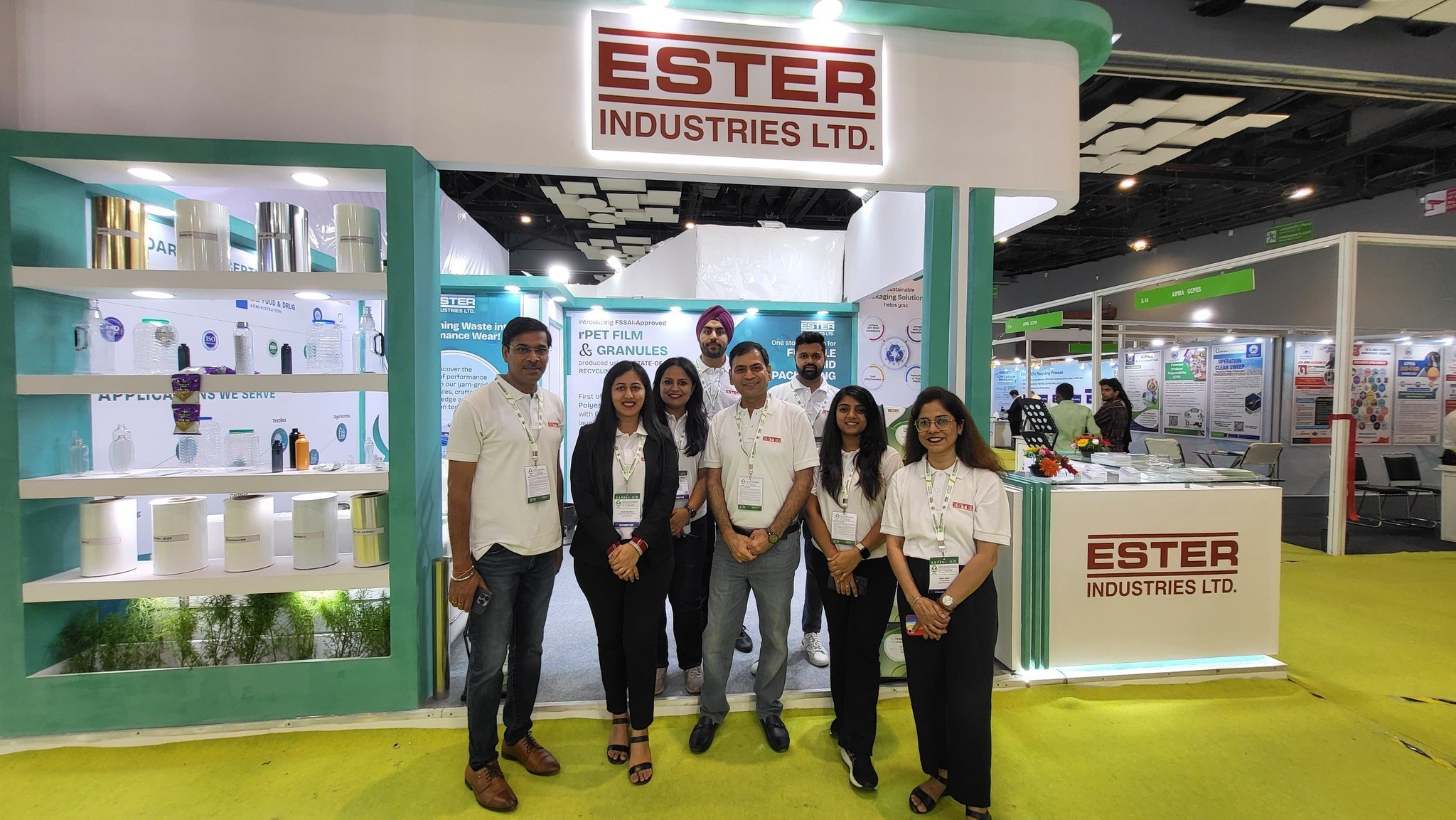
1. At a Glance
The tide has finally turned for Ester Industries. After weathering a brutal storm of aggressive price competition and external trade disruptions, the company has emerged with a 301% surge in quarterly PAT, clocking in at ₹7.9 crore for Q4 FY26. This isn’t just a recovery; it’s a structural shift. The Biaxially-oriented Polyethylene Terephthalate (BOPET) segment, which was previously gasping for air under the weight of Chinese dumping, has found a second wind.
Regulatory winds are now blowing in Ester’s favor. The Directorate General of Trade Remedies (DGTR) has initiated anti-dumping investigations, and the US Supreme Court’s rejection of certain trade tariffs has reopened the high-margin North American corridor. But let’s look at the scars: the full financial year (FY26) still carries the weight of the previous quarters’ trauma, ending with a consolidated net loss of ₹27.5 crore.
Investors are watching two distinct stories unfold. First, the Specialty Polymers division has cemented itself as the “profit anchor,” boasting volume growth of 21% YoY. Second, the massive ₹1,530 crore joint venture (ELITe) with Loop Industries is moving from PowerPoint slides to real-world engineering. The company has already secured ₹165.25 crore through warrant subscriptions, proving that the promoters and institutional players are putting their skin in the game.
However, the balance sheet remains a battlefield. With gross debt hovering around ₹742 crore and a Debt-to-Equity ratio near 0.93, the company is walking a tightrope. Every rupee of EBITDA is currently being chased by interest obligations and depreciation on a massive asset base. The question is no longer whether Ester can survive the trough, but whether its “specialty-ification” strategy can outrun its debt servicing requirements.
2. Introduction
Ester Industries is a veteran in the polyester film and specialty polymer space, but it is currently undergoing a mid-life transformation. Established in 1985, the company spent decades as a commodity player before realizing that the real money lies in intellectual property. Today, it operates three manufacturing units—Sitarganj, Khatima, and Hyderabad—with a combined capacity of 108 KTPA for Polyester Films.
The business is split into two uneven halves. The Polyester Film segment contributes roughly 87% of revenue, serving as the volume driver. However, this segment is a hostage to global crude prices and Chinese supply gluts. To break this cycle, management is aggressively pivoting toward Value-Added Products (VAS), which now account for 24-25% of the mix.
The real crown jewel, albeit smaller, is the Specialty Polymers division. This is an IP-protected business where Ester holds 20+ granted patents. It’s the stabilizer that keeps the lights on when the film industry goes through its periodic “boom and bust” cycles.
Looking forward, the company’s “True Circular Economy” play via the Ester Loop Infinite Technologies (ELITe) JV is the ultimate wildcard. By targeting the recycling of polyester textile waste—a notoriously difficult feat—Ester is positioning itself to be a critical supplier for global giants like Nike.
3. Business Model – WTF Do They Even Do?
Think of Ester Industries as a high-tech plastic bakery. They take raw materials like PTA and MEG (derivatives of crude oil) and “bake” them into specialized films and polymers.
- The Bread and Butter (Polyester Films): These are the thin, shiny films you see on food packaging, labels, and industrial tapes. They have 300+ SKUs. If you’ve ever torn open a bag of chips or a sachet of shampoo, you’ve likely interacted with their products.
- The Gourmet Pastries (Specialty Polymers): This is where the science happens. They create customized polyesters used in carpets, consumer electronics, and high-end textiles. This segment isn’t about volume; it’s about margins and patents.
- The Recycler (rPET): They take plastic waste and turn it back into “virgin-quality” chips. With the Plastic Waste Management Rules (PWMR) mandating 10% recycled content in packaging, Ester isn’t just being green—they’re being compliant with a massive new market demand.
The strategy is simple: use the massive scale of the film business to cover overheads while waiting for the Specialty Polymers and rPET segments to become the primary bottom-line drivers. It’s a transition from being a “plastic company” to a “materials science company.”
4. Financials Overview
The numbers for Q4 FY26 show a company aggressively pulling itself out of a hole. While Revenue growth is modest, the EBITDA expansion is the real story here.
| Particulars (Consolidated) | Q4 FY26 (Latest) | Q4 FY25 (YoY) | Q3 FY26 (QoQ) |
| Revenue | ₹345.1 Cr | ₹321.9 Cr | ₹339.0 Cr |
| EBITDA | ₹43.3 Cr | ₹39.1 Cr | ₹16.4 Cr |
| PAT | ₹7.87 Cr | ₹1.96 Cr | (₹12.4 Cr) |
| EPS | ₹0.81 | ₹0.21 | (₹1.27) |
Financial Wisdom: Revenue is vanity, Profit is sanity, but Cash is reality. Ester’s “Core EBITDA” was actually ₹53.5 Cr (15.5% margin) if you strip away the non-cash MTM losses on foreign currency loans.
Management Check: In previous calls, management hinted that the cycle was near the bottom. The Q4 results validate this, with utilization hitting 78% and margins expanding due to a better product mix. They “walked the talk” on operational recovery, even if the macro environment remained hostile for the first nine months.
5. Valuation Discussion – Fair Value Range
Valuing a company at the trough of a commodity cycle is like trying to price a house while it’s being renovated. We use three methods to find the baseline.
I. P/E Method
- Annualised EPS: $₹0.81 \times 4 = ₹3.24$
- Industry Average P/E: 19.8x
- Calculated Value: $3.24 \times 19.8 = ₹64.15$
II. EV/EBITDA Method
- Annualised EBITDA: ₹43.3 \text{ Cr} \times 4 = ₹173.2
- Current Enterprise Value (EV): ₹1,583 Cr
- EV/EBITDA Ratio: ~9.1x (Below industry peak of 14x)
- Fair Value at 11x EBITDA: ((173.2 \times 11) – \text{Net Debt}) / \text{Shares} \approx ₹105
III. DCF Method (Discounted Cash Flow)
Assuming a 10% growth rate in Specialty Polymers and a recovery in Film margins to 12% over 5 years, with a terminal growth of 3%.
- Fair Value: ₹85 – ₹95
Fair Value Range: ₹75 – ₹110
This fair value range is for educational purposes only and is not investment advice.
6. What’s Cooking – News, Triggers, Drama
There is enough drama here to start a Netflix series.
- The Anti-Dumping Shield: The DGTR has finally bared its teeth against Chinese imports. If the Ministry of Finance notifies the duties, Ester’s domestic realization will get a massive “protection” boost.
- The Nike Connection: The ELITe JV isn’t just talk. They’ve signed a multi-year offtake agreement with Nike for their “Twist” resin. It’s a “take-or-pay” deal, meaning Nike pays even if they don’t take the full volume.
- Management Shake-up: Arvind Singhania has moved to Non-Executive Chairman, handing the CEO reins to Vaibhav Jha, an IIT Bombay alumnus with a background in Reliance’s joint ventures. It looks like a professionalization play.
- Warrant Conversion: The company raised ₹165.25 crore through warrants. When people are willing to lock in capital at ₹158 per share (the exercise price) while the market is lower, they are betting on a massive future upside.
7. Balance Sheet
The balance sheet is heavy with “Iron and Steel” (Fixed Assets). The recent expansion in Telangana (Ester Filmtech) has added significant weight to the borrowings.
| Rows (₹ Crores) | Mar 2026 (Latest) | Mar 2025 | Mar 2024 |
| Total Assets | 1,674 | 1,573 | 1,643 |
| Net Worth | 783 | 773 | 718 |
| Borrowings | 729 | 660 | 773 |
| Other Liabilities | 162 | 140 | 153 |
| Total Liabilities | 1,674 | 1,573 | 1,643 |
- Debt is the uninvited guest that refuses to leave, currently sitting at ₹729 Cr.
- Net Worth is creeping up, but it’s more of a crawl than a sprint.
- Fixed Assets are nearly ₹1,000 Cr; this company is basically a giant factory with a small office attached.
8. Cash Flow – Sab Number Game Hai
Ester is surprisingly good at squeezing cash out of its operations, even when the P&L looks messy.
| Particulars (₹ Crores) | Mar 2026 | Mar 2025 | Mar 2024 |
| Operating Cash Flow (CFO) | 128 | 112 | (44) |
| Investing Cash Flow (CFI) | (116) | (56) | 42 |
| Financing Cash Flow (CFF) | 36 | (13) | (14) |
The CFO/Operating Profit ratio is 101%. This means for every rupee of “paper profit” they claim, they are actually bringing a rupee of cash into the bank. They are using this cash to fund the ₹67 Cr capex and repay debt.
9. Ratios – Sexy or Stressy?
The ratios tell the story of a company in a “turnaround” phase. They aren’t pretty, but the trajectory is what matters.
| Ratio | Value | Commentary |
| ROE | -3.53% | Stressy. Capital is currently being incinerated. |
| ROCE | 2.76% | Borderline. Barely earning enough to pay the tea boy. |
| P/E | NA | Can’t calculate P/E on negative annual earnings. |
| PAT Margin | 2.3% (Q4) | Recovering. Up from 0.6% last year. |
| Debt to Equity | 0.93 | Heavy. Needs a diet of high-margin sales. |
Do you think a 2.76% ROCE is a temporary dip or a sign of a broken business model?
10. P&L Breakdown – Show Me the Money
Let’s look at the three-year trend to see the carnage of the commodity cycle.
| Particulars (₹ Crores) | Mar 2026 | Mar 2025 | Mar 2024 |
| Revenue | 1,375 | 1,282 | 1,063 |
| EBITDA | 93 | 147 | (23) |
| PAT | (27) | 14 | (121) |
The P&L looks like a heart monitor of a patient having a mild panic attack. The swing from a ₹121 Cr loss in 2024 to a ₹14 Cr profit in 2025, and back to a loss in 2026, shows just how sensitive Ester is to raw material prices. The Q4 recovery is the only thing preventing a full-blown meltdown.
11. Peer Comparison
Ester is the “small guy” in a room full of heavyweights.
| Name | Revenue (Qtr) | PAT (Qtr) | P/E |
| Uflex | ₹3,612 Cr | ₹36.1 Cr | 12.2 |
| Polyplex Corp | ₹1,682 Cr | ₹29.6 Cr | 91.6 |
| EPL Ltd | ₹1,300 Cr | ₹103.3 Cr | 17.1 |
| Ester Industries | ₹344 Cr | ₹7.9 Cr | NA |
EPL is winning the margin game, while Polyplex’s P/E suggests investors are expecting a massive comeback. Ester is currently the “value play” or the “vulnerable one,” depending on your risk appetite.
12. Miscellaneous – Shareholding and Promoters
Promoters hold a solid 62.72%. They aren’t running away.
- Promoters: 62.72% (Wilemina Finance Corp is the big boss).
- FIIs: 0.05% (Basically non-existent).
- DIIs: 0.16% (Even local institutions are shy).
- Public: 37.07% (The retail army is holding the line).
Promoter Roast: The Singhanias have been at this since 1985. They’ve seen more cycles than a professional gym. While they’ve successfully kept the company alive through multiple “near-death” experiences, the slow pace of the specialty polymer ramp-up remains a point of gentle criticism.
13. Corporate Governance – Angels or Devils?
The governance framework at Ester is robust, at least on paper. They use a compliance management tool developed by PwC, which is like hiring a professional bouncer to make sure everyone follows the rules. There are no material litigations and the secretarial audits are clean.
However, the Related Party Transactions (RPTs) are always something to watch in family-run businesses. Recent postal ballots approved material RPTs, which management claims are necessary for operational efficiency. The resignation of Alok Dhir (Independent Director) in late 2025 is a standard board churn, but in a company this size, every exit is noted.
14. Industry Roast and Macro Context
The flexible packaging industry is essentially a giant game of “who can sell plastic the cheapest.” It’s a cutthroat world where a $10 move in crude oil prices can wipe out your quarterly profit.
China has been the “big bully” in the playground, dumping excess capacity into India and driving realizations down to unsustainable levels. The Indian industry is currently begging the government for protection (Anti-dumping duties), which is a sign of how fragile the domestic players are. The only way to survive this “race to the bottom” is to stop selling “plastic” and start selling “solutions”—which is exactly what the industry’s buzzword “Specialty-ification” means.
15. EduInvesting Verdict
Ester Industries is a classic turnaround candidate that is finally showing signs of life. The Q4 FY26 results are a “green shoot” in what has been a very dry desert.
Past Performance: Inconsistent. The company is a slave to the commodity cycle, and its balance sheet has historically been too leveraged to handle prolonged downturns.
Headwinds: High debt, volatility in raw material prices, and the execution risk of the massive ELITe JV project.
Tailwinds: PWMR mandates driving rPET demand, anti-dumping duties, and a high-margin specialty polymer pipeline that is finally scaling up.
SWOT Analysis
- Strengths: IP-protected specialty products, long-standing client relationships (Amcor, Dabur, ITC).
- Weaknesses: High interest burden, low ROCE, high dependence on the cyclical film business.
- Opportunities: The ELITe JV with Loop Industries could be a game-changer if textile-to-textile recycling takes off.
- Threats: Continued dumping from China or a global recession hitting FMCG consumption.
Ester is not for the faint-hearted. It is a bet on management’s ability to transform a commodity business into a specialized technology play before the debt catch up.
Final Thought: In finance, the darkest hour is usually just before the anti-dumping duty is notified. Ester has survived the dark; let’s see if it can handle the light.
Disclaimer: This fair value range and analysis are for educational purposes only and do not constitute investment advice. We do not provide buy, sell, or target price recommendations.