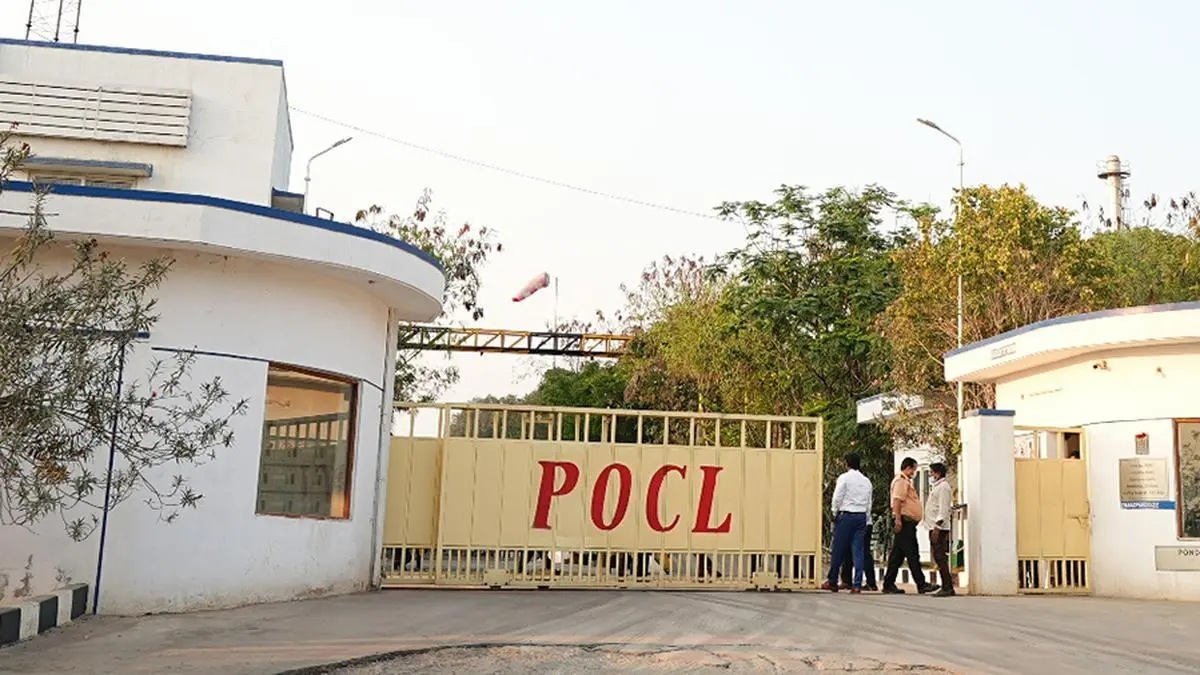
Pondy Oxides Mar 2026: 114% Profit Growth and the Mystery of the Missing Cash
Date of Publishing -
Spotted a factual error — a wrong number, date, or fact? Tell us and we will check the source.
1 — At a Glance
Pondy Oxides & Chemicals Ltd (POCL) closed FY26 with numbers that demand immediate attention. Revenue surged 45% year-on-year to touch ₹2,938.65 Cr, while net profit delivered a staggering 113% jump to ₹138.73 Cr. For a company operating in the gritty world of secondary metal recycling, expanding EBITDA margins from 5.3% to 7.4% in a single year is a significant operational flex. The market has rewarded this performance, pushing the stock to a ₹3,980.21 Cr market capitalization.
However, beneath the polished P&L lies a glaring contradiction. Despite the explosive profitability, cash from operating activities stood at a negative ₹53.92 Cr for FY26—following an even steeper negative ₹79.08 Cr in FY25. The company is funding its aggressive ₹200 Cr copper cathode expansion and working capital needs through a mix of recent equity raises and short-term borrowings, which have expanded to ₹152.10 Cr.
A soaring top line is only a vanity metric until it reliably translates into bankable operating cash.
Investors are currently pricing in flawless execution of the upcoming copper capacity. The tension between a pristine income statement and a stressed cash flow statement forms the core thesis of this analysis.
2 — Introduction
Incorporated in 1995, Pondy Oxides has spent nearly three decades quietly building an empire out of scrap. What started as a modest operation has morphed into India’s largest secondary lead manufacturer.
The company essentially intercepts the death cycle of lead-acid batteries and non-ferrous metals, melting them down and breathing new life into them as pure lead, specific alloys, and copper. With multiple manufacturing units strategically positioned across Tamil Nadu and Andhra Pradesh, POCL operates in a space that isn’t glamorous but is fiercely essential. Recently, they’ve been flexing their ambitions, buying up 122 acres in Mundra, Gujarat, and expanding aggressively into copper recycling.
3 — Business Model: WTF Do They Even Do?
Pondy Oxides is essentially a high-end, heavily industrialized recycling bin. They procure scrap—primarily lead batteries, but increasingly copper and aluminum—and smelt it into refined metals and specialized alloys for battery OEMs like Amara Raja.
The geographical revenue mix is fascinating: 66% of FY26 revenue came from exports. Yet, they import 73% of their lead scrap and a whopping 98% of their copper scrap. They buy global trash, refine it in South India, and ship it back out as global treasure.
The lead business provides 77% of the revenue, but copper is the new shiny toy, scaling rapidly to make up the rest. Copper is a low-margin trading and recycling play right now, but management hopes to change that soon.
4 — Financials Overview
Figures are standalone, in ₹ crore.
Metric
Latest Quarter (Mar 2026)
YoY
QoQ
Revenue
931.68
161%
20%
EBITDA
59.95
242%
17%
PAT
38.05
209%
1%
EPS
12.47
209%
1%
Note: EBITDA calculated as PBT + Interest + Depreciation.
The revenue trajectory is aggressive. A ₹931.68 Cr quarter translates to an annualized run rate that would make its peers weep. PAT at ₹38.05 Cr is impressive, though it barely nudged sequentially from Q3’s ₹37.56 Cr, primarily because the revenue mix shifted heavily toward the lower-margin copper business in Q4. Quality earnings usually arrive with quality cash conversion, a dynamic we will dissect shortly.
What is Management Promising in the Coming Quarters?
The Q4FY26 concall was a mix of victory laps and creative accounting philosophies. Management proudly highlighted FY26 as “one of the most remarkable years” with all-time high volumes.
The real swagger, however, was reserved for the upcoming 36,000 MTPA copper cathode plant. Management noted that current copper recycling margins of ₹35k–40k per ton will jump to ₹60k–70k per ton with the new cathode facility.
When pressed on the negative operating cash flow, management delivered a quote for the ages: “negative cash flow is technically not a negative cash flow.” They attributed the receivables spike entirely to vessel delays in the Red Sea, claiming ₹120-130 Cr was collected in the first week of April. Excuses tied to maritime logistics are the corporate equivalent of saying