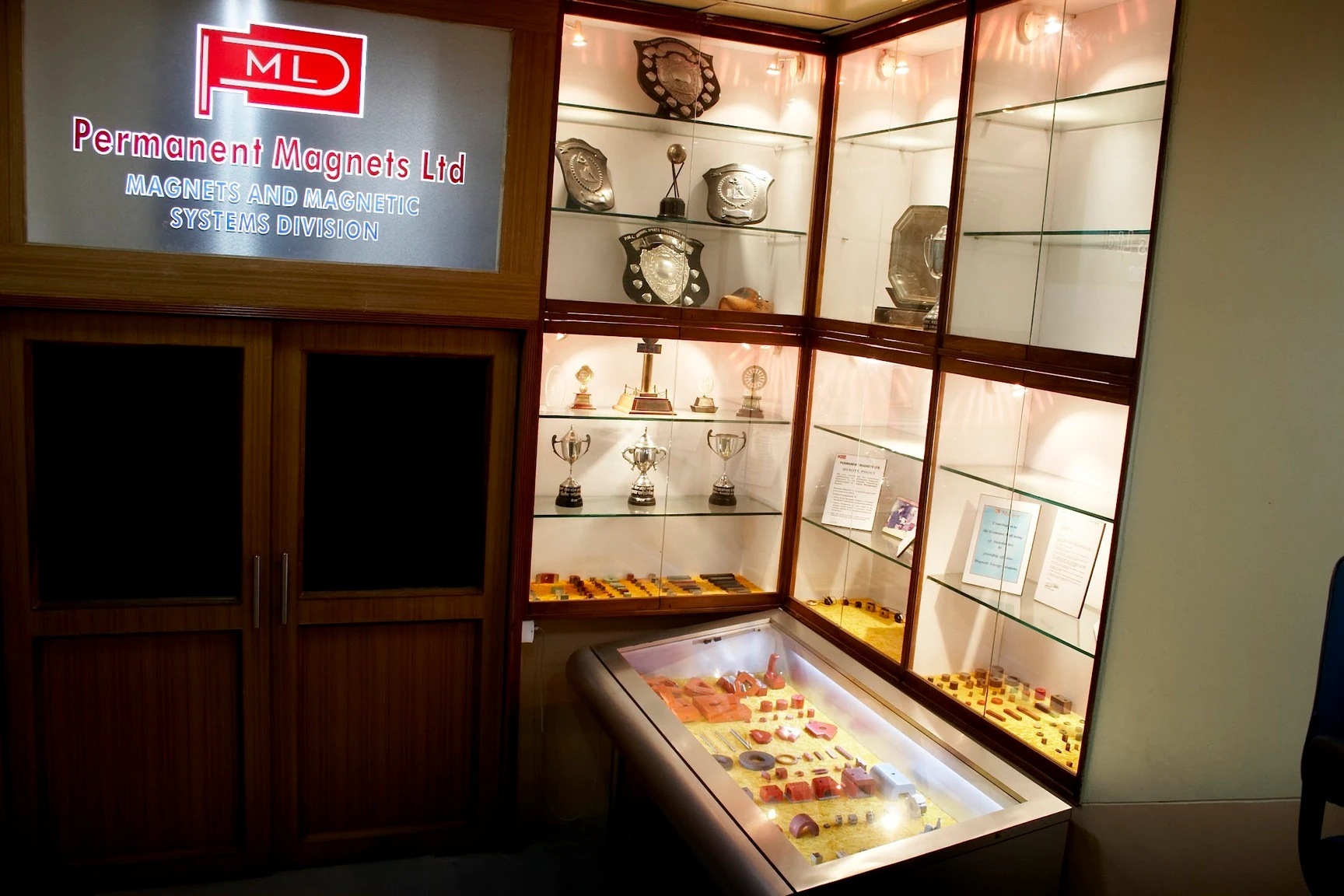
Permanent Magnets Ltd (PML) is currently navigating a complex transition. While its legacy shunt and magnet business faces temporary headwinds in the U.S. and domestic smart meter markets, the management is betting the farm on a massive ₹ 3,700 crore revenue vision by 2030 through its rare earth JV. The market, meanwhile, is pricing this small-cap at a premium P/E of 49x, even as annual profits show signs of compression.
1. At a Glance
Permanent Magnets Limited is no longer just a “magnet” company. It has evolved into a precision engineering player deeply embedded in the Electric Vehicle (EV) and Smart Meter ecosystems. However, the latest numbers suggest a story of two halves. On one hand, quarterly revenue for Q4 FY26 surged to ₹ 66.54 crore, a massive 47% YoY jump. On the other hand, the full-year PAT for FY26 dropped to ₹ 14.77 crore from ₹ 15.75 crore in FY25.
The red flags are starting to wave in the working capital department. Gross Current Assets (GCA) are sitting at an intensive 196 days. Inventory levels are high, and the company is essentially a “bank” for its customers, extending 60–90 days of credit while paying its own suppliers much faster.
Furthermore, the export story hit a snag. A tariff policy shift in the U.S. led to deferred orders, causing EBITDA margin pressure. While management claims this is “resuming,” the reliance on a few large clients (top 10 contribute 58% of sales) makes the revenue lumpy and unpredictable.
The company is asking for a massive increase in borrowing limits—from ₹ 100 crore to ₹ 300 crore. This signals a heavy transition into a debt-funded expansion phase. If the Rare Earth JV (Quantum Magnetics) doesn’t scale as planned, the interest burden could quickly eat the thin 6–7% net margins.
Teaser: Is the 2030 vision of ₹ 550 crore EBITDA a realistic roadmap or a “dream” designed to keep the P/E ratio afloat?
2. Introduction
Permanent Magnets Ltd, a flagship of the Taparia Group, has been around since 1960. It started with Alnico magnets but has now pivoted to high-tech current sensing modules and magnetic shielding.
The stock has been a multi-bagger over five years (29% CAGR), but the last three years have seen a -6.64% return. The market is clearly waiting for the next big trigger. That trigger is supposed to be the “China Plus One” strategy, where global players look to PML for non-Chinese rare earth magnets.
Currently, the company operates three plants in Mira Road, Thane. They produce over 350 SKUs, serving everything from defense and space to the neighborhood electricity meter. The recent board meeting outcome on May 13, 2026, confirmed that the company is moving into latching relays, a forward integration move to capture more value from the smart meter market.
The balance sheet is shifting. Net worth has grown to ₹ 157.39 crore (Consolidated), but so has the complexity of the operations. With a dividend yield of just 0.22%, this isn’t a stock for income seekers; it’s a high-stakes bet on Indian manufacturing prowess.
3. Business Model – WTF Do They Even Do?
PML is basically the “sensor and muscle” provider for electrical systems. They operate in four main buckets:
- Current Sensing (The Bread & Butter): They make shunts and modules that measure electricity. If you have a smart meter or an EV, there’s a high chance a PML shunt is inside, counting the electrons.
- Magnetic Assemblies (The Industrial Muscle): They make lifters that pick up tons of steel and separators that pull iron out of food or chemicals.
- Alloys (The High-Margin Hope): They melt high-permeability metals used in aerospace and defense. This segment is currently running at 100% capacity.
- Rare Earth (The Future/The Hype): Through their JV, Quantum Magnetics, they want to manufacture Neodymium magnets. China currently owns this market; PML wants a slice.
The irony? For a company named “Permanent Magnets,” nearly 77% of their revenue now comes from Engineering and Current Sensing. The “Magnet” part is actually the smaller piece of the pie today.
4. Financials Overview
The quarterly numbers look like a rollercoaster. Q4 FY26 was a blockbuster for sales, but margins remain under pressure due to higher raw material costs and increased depreciation from recent capex.
Consolidated Financial Performance
| Metric (₹ Cr) | Q4 FY26 (Latest) | Q4 FY25 (YoY) | Q3 FY26 (QoQ) |
| Revenue | 66.54 | 45.28 | 57.02 |
| EBITDA | 9.49 | 5.05 | 10.51 |
| PAT | 3.99 | 1.58 | 2.25 |
| EPS (₹) | 4.64 | 1.84 | 2.62 |
Annualised EPS Calculation:
As per the Q4 results, we use the full-year consolidated EPS.
FY26 Full Year EPS = ₹ 17.18 (as reported in the P&L data for Mar 2026).
Management “Walk the Talk” Audit:
In the Nov 2025 concall, management guided for FY26 revenue of ₹ 220–230 crore. They delivered ₹ 226.24 crore. They walked the talk on the topline. However, they also expected margins of 15–18%. The actual OPM for Q4 dipped to 14.26%, showing that cost pressures are stickier than anticipated.
5. Valuation Discussion
To understand if the current price of ₹ 904 is justified, we need to look at the numbers without the rose-tinted glasses of the “2030 vision.”
Method 1: P/E Multiple
- Current EPS (FY26): ₹ 17.18
- Industry P/E: 27.6
- Current Stock P/E: 49.0
- Calculation: $17.18 \times 27.6 = ₹ 474$
- Observation: The stock is trading at a nearly 80% premium to its industry average.
Method 2: EV/EBITDA
- Enterprise Value (EV): ₹ 810 Cr
- EBITDA (FY26): ₹ 37 Cr
- EV/EBITDA Ratio: $810 / 37 = 21.8x$
- Historical Context: For a manufacturing setup with 15% margins, an EV/EBITDA above 15x is usually considered “priced for perfection.”
Method 3: DCF (Back-of-the-envelope)
If we assume a 15% growth rate for the next 10 years (very optimistic) and a 12% discount rate:
- Estimated Fair Value: Ranges between ₹ 580 to ₹ 640.
Fair Value Range: ₹ 520 — ₹ 680
Disclaimer: This fair value range is for educational purposes only and is not investment advice.
6. What’s Cooking – News, Triggers, Drama
There is plenty of “masala” in the recent announcements.
The Relay Race: PML signed a deal with REL Developments (UK) to manufacture latching relays. These are high-value products for smart meters. The drama? Customer approvals take forever because utilities demand a 10-year warranty. Management says commercial sales will only start mid-FY27.
The Rare Earth Dream: The JV with Lorentic is the ultimate “moonshot.” They want to hit ₹ 3,700 crore revenue by 2030. Right now, it’s mostly a “dream” (management’s own words in the concall). They are currently waiting for import approvals from China to even resume basic assembly.
The Tariff Tussle: A U.S. customer paused orders because of tariff uncertainty. PML was bold enough to say they won’t absorb the 25% tariff. The customer is currently paying the tariff, but PML is looking to shift some manufacturing to Europe to bypass this. It’s a high-stakes game of geopolitical chess.
7. Balance Sheet
The balance sheet is expanding as the company prepares for its next growth leg. The “Other Liabilities” have spiked, likely reflecting advances or project-related payables.
| Metric (₹ Cr) | Mar 2026 | Mar 2025 | Mar 2024 |
| Total Assets | 282 | 194 | 191 |
| Net Worth | 157 | 144 | 130 |
| Borrowings | 85 | 15 | 16 |
| Other Liabilities | 40 | 35 | 45 |
| Total Liabilities | 282 | 194 | 191 |
- Borrowings check: Debt shot up from ₹ 15 Cr to ₹ 85 Cr in one year. The “conservative leverage” era is officially over.
- Asset Heavy: Fixed assets increased significantly. They are buying furnaces like they’re going out of style.
- Liquidity: The current ratio is 4.06, which looks great on paper, but much of that is “stuck” in inventory and receivables.
8. Cash Flow – Sab Number Game Hai
This is where the detective work pays off. Operating cash flow is positive, but the company is burning through cash for investing.
| Year | Operating CF (₹ Cr) | Investing CF (₹ Cr) | Financing CF (₹ Cr) |
| Mar 2026 | 18 | -43 | 48 |
| Mar 2025 | 38 | -28 | -9 |
| Mar 2024 | -2 | -22 | -3 |
Analysis: In FY26, they generated ₹ 18 Cr from operations but spent ₹ 43 Cr on new assets. Where did the gap come from? They borrowed ₹ 61 Cr (Proceeds from Borrowings). They are essentially financing their growth via debt because internal accruals aren’t enough to keep up with their 2030 ambitions.
9. Ratios – Sexy or Stressy?
The ratios tell a story of a company that is working hard but seeing its efficiency slip.
| Ratio | Mar 2026 | Mar 2025 | Mar 2024 |
| ROE (%) | 10.5 | 10.5 | 15.0 |
| ROCE (%) | 14.1 | 14.1 | 15.0 |
| Debt to Equity | 0.54 | 0.10 | 0.12 |
| PAT Margin (%) | 6.5 | 7.7 | 10.0 |
| Inventory Days | 173 | 178 | 180 |
The Verdict: Stressy. PAT margins have dropped from 10% to 6.5% in two years. While they are selling more, they are keeping less. The Debt-to-Equity jump from 0.10 to 0.54 in a single year is a massive shift in risk profile.
10. P&L Breakdown – Show Me the Money
| Component (₹ Cr) | Mar 2026 | Mar 2025 | Mar 2024 |
| Revenue | 226 | 205 | 201 |
| EBITDA | 37 | 30 | 34 |
| PAT | 15 | 16 | 20 |
Revenue is up, but PAT is down. It’s the classic “running faster to stay in the same place” scenario. Depreciation and Interest costs are the villains here, rising as the company builds out its new capacity.
11. Peer Comparison
PML is a tiny fish in a pond of giants like Waaree Energies and Apar Industries.
| Company | Revenue (Qtr ₹ Cr) | PAT (Qtr ₹ Cr) | P/E |
| Apar Inds. | 5480 | 209 | 51 |
| Genus Power | 1122 | 148 | 17 |
| Diamond Power | 474 | 50 | 98 |
| Permanent Magnets | 66 | 4 | 49 |
Sarcastic Note: Genus Power is sitting at a P/E of 17x while being a leader in smart meters. Meanwhile, PML is enjoying a “Rare Earth” premium of 49x. The market is clearly buying the PowerPoint presentation for FY2030, not the Excel sheet of FY2026.
12. Miscellaneous – Shareholding and Promoters
The Taparia family holds a solid 58.01% stake. They haven’t sold a single share in years.
| Holder | Percentage (%) |
| Promoters | 58.01 |
| FIIs | 0.00 |
| DIIs | 0.01 |
| Public | 41.98 |
The Roast: Institutional investors (FII/DII) are almost non-existent here. It’s essentially a “promoter plus retail” party. The number of shareholders has ballooned to over 18,000. It seems the public is more excited about neodymium magnets than the big funds are.
13. Corporate Governance – Angels or Devils?
Corporate governance seems stable. The auditors, M/s. Jayesh Sanghrajka & Co LLP, gave an unmodified opinion.
However, there is a lingering legal ghost: The Bombay High Court has an interim stay on a winding-up order from 2015. While the company has deposited funds and is contesting it, these decade-old legal battles are the kind of “legacy baggage” that makes institutional investors nervous.
The board also just bumped up the borrowing limit to ₹ 300 crore. While legal, such a sudden 3x jump in borrowing capacity usually suggests a “go big or go home” management style.
14. Industry Roast and Macro Context
The electrical equipment industry is currently high on “Smart City” and “Green Energy” fumes. Everyone expects the government to buy millions of smart meters, but the rollout has been slower than a government file movement.
The “China Plus One” strategy is the favorite buzzword. Everyone wants to be the “India alternative” to China for rare earth magnets. But here’s the reality: China controls the mines, the processing, and the pricing. PML trying to match Chinese prices while sourcing raw materials from third parties is like bringing a knife to a laser-guided missile fight.
15. EduInvesting Verdict
Permanent Magnets Ltd is a classic transition story.
Past Performance: Reliable, slow growth, debt-free.
Current State: High capex, rising debt, margin pressure, and flat profits.
Future Hope: Latching relays and Rare Earth magnets.
SWOT Analysis
- Strengths: 27+ years of management experience; high-tech niche products; strong domestic presence.
- Weaknesses: High working capital intensity; high client concentration; shrinking PAT margins.
- Opportunities: The EV revolution; massive smart meter rollout in India; geopolitical shift away from China.
- Threats: Volatile raw material prices (Nickel/Cobalt); U.S. trade tariffs; intense competition from Chinese players who have better scale.
The company is betting that FY27 will be the “breakout” year when the alloy furnace and relay plant start humming. Until then, the stock remains a high-P/E bet on a very ambitious future.
This analysis is for educational purposes only. Investing in small-cap stocks involves significant risk.