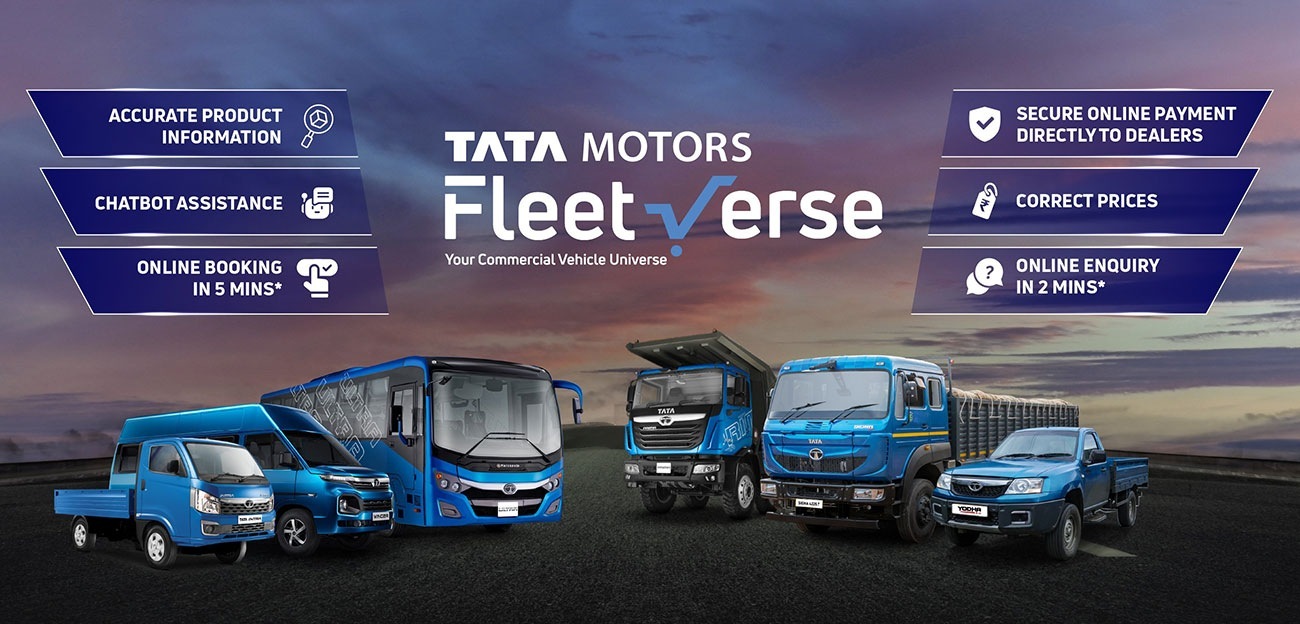
The commercial vehicle landscape in India is witnessing a seismic shift, and at the epicenter lies a powerhouse that has just reported a Net Profit of ₹1,793 crore for Q4 FY26. This isn’t just a recovery story; it is a full-blown expansion into high-margin territories. While the market was busy debating diesel price volatility and geopolitical shocks, this company quietly delivered its 11th consecutive quarter of double-digit EBITDA margin.
At a Glance
The numbers coming out of the latest financial filings are, quite frankly, provocative. For a company of this scale to maintain an EBITDA margin of 13.1% in Q4 FY26 is a feat that suggests a massive grip over pricing power. However, beneath the surface of the ₹26,098 crore quarterly revenue, there are red flags that every serious observer must note. The balance sheet carries a borrowing load of ₹5,615 crore, and while liquidity seems strong, the ambitious €3.8 billion Iveco acquisition looms like a massive shadow on the horizon.
Management has been very vocal about “pricing discipline,” but what does that actually mean for the transporter on the ground? It means higher costs. While the company is gaining investors’ attention through its Return on Equity (ROE) of 43.4%, the negative Cash Conversion Cycle of -40 days indicates they are essentially running the business on their suppliers’ money. It is a brilliant strategy until the supply chain cracks.
The volatility in Other Income, which swung to a negative ₹981 crore in September 2025 before recovering, highlights a level of non-operating turbulence that could catch the unwary off-guard. Is this a structural transformation or a cyclical peak being masked by aggressive pricing?
Introduction
Tata Motors Commercial Vehicle Limited (TMCV) stands as the undisputed flagship of the Tata Group’s heavy-duty ambitions. Following the strategic demerger effective October 1, 2025, the entity has emerged as a pure-play commercial vehicle (CV) titan. It doesn’t just make trucks; it moves the Indian economy. From the ubiquitous Ace mini-truck to heavy-duty HCV tippers that power infrastructure projects, their footprint is everywhere.
The company operates in a sector that is the heartbeat of the nation’s GDP. When e-way bill generation grows by 19%, as it did in March 2026, TMCV is usually the one providing the wheels for that growth. With a Market Cap of ₹1,39,155 crore, the company is no longer just a “legacy player”—it is attempting to become a technology-led logistics partner.
The recent quarter saw a 19.4% jump in sales and a 34.9% surge in profit. However, the narrative is shifting from just selling “metal” to selling “uptime” through digital platforms like Fleet Edge, which now tracks over 1 million vehicles.
Business Model – WTF Do They Even Do?
If you think they just sell trucks to fleet owners, you’re only seeing the tip of the iceberg. TMCV operates a multi-layered ecosystem:
- The Metal: Small, medium, and heavy commercial vehicles. They own the “First Mile” with the Ace and the “Last Mile” with heavy-duty trailers.
- The Tech: Through Fleet Edge, they are turning into a data company, monitoring vehicle health and fuel efficiency in real-time.
- The Future: They are aggressively pushing EV buses and Hydrogen H2I trucks, trying to make sure they aren’t disrupted by the green energy transition.
- The Global Play: They aren’t just an Indian brand anymore. A 70,000-unit order from Indonesia proves they are hunting for “rescues” outside domestic borders when local demand gets “muted.”
Essentially, they build the “donkeys” of the economy—rugged, reliable, and increasingly electric. They roast the competition by having a service touchpoint practically every few kilometers on Indian highways.
Financials Overview
The latest results show a company that is firing on all cylinders, but the costs are catching up. The Operating Profit Margin (OPM) improved to 13% in the latest quarter, up from 11% a year ago.
| Metric | Mar 2026 (Latest Qtr) | Mar 2025 (YoY) | Dec 2025 (QoQ) |
| Revenue | ₹ 26,098 Cr | ₹ 21,863 Cr | ₹ 21,847 Cr |
| EBITDA | ₹ 3,327 Cr | ₹ 2,431 Cr | ₹ 2,587 Cr |
| Net Profit (PAT) | ₹ 1,793 Cr | ₹ 1,340 Cr | ₹ 705 Cr |
| EPS (Quarterly) | ₹ 4.87 | ₹ 3.64 | ₹ 1.91 |
Annualised EPS Calculation:
With a latest Q4 EPS of ₹8.23 for the full year (as annualised calculation for Q4 uses the full-year figure), the Price-to-Earnings (P/E) ratio stands at 25.1.
Audit Note: Management previously guided for “teens” EBITDA margins. Delivering 13.9% on a standalone basis shows they have “walked the talk,” but the 50 bps headwind from steel and copper prices mentioned in the concall suggests the path to “mid-teens” is paved with expensive raw materials.
Valuation Discussion – Fair Value Range
To understand if this truck is overpriced, we need to look at the engine under the hood.
1. P/E Method:
The Industry P/E is 29.4, while TMCV trades at 25.1.
Using the full-year EPS of ₹8.23:
- Lower Bound (Current P/E 25): $8.23 \times 25 = ₹205.75$
- Upper Bound (Industry P/E 29.4): $8.23 \times 29.4 = ₹241.96$
2. EV/EBITDA Method:
With an Enterprise Value (EV) of ₹1,36,994 crore and a consolidated EBITDA of approximately ₹10,314 crore (calculated from OPM and Sales), the EV/EBITDA is roughly 13.2x.
3. DCF Method (Simplified):
Assuming a Free Cash Flow (FCF) of ₹12,878 crore (Mar 2026), a growth rate of 8%, and a discount rate of 12%, the intrinsic value reflects a robust cash-generating machine, though heavily dependent on the cyclical nature of CV demand.
Fair Value Range: ₹340 – ₹410
This fair value range is for educational purposes only and is not investment advice.
What’s Cooking – News, Triggers, Drama
The biggest drama in the boardroom right now is the Iveco Group acquisition. We are talking about a €3.8 billion (approx. ₹34,000 crore) deal. Management says it will close by Q2 FY27, but there’s a catch—an activist fund has snagged a 6-7% stake in the target, potentially looking to squeeze a better price.
On the domestic front, the company secured a 5,000-bus order from State Transport Undertakings. They also shipped the first batch of a massive 70,000-unit order to Indonesia. It seems when India’s monsoon slows things down, the company just looks for another archipelago to sell to.
Question for the Reader: If diesel prices spike by 10% tomorrow, do you think fleet owners will keep buying these shiny new trucks, or will they stick to their old smoke-billowing ones?
Balance Sheet
The balance sheet is a testament to the “Asset Light” philosophy, yet the debt is real.
| Row | Mar 2026 (Latest) | Sep 2025 | Mar 2025 |
| Total Assets | ₹ 52,309 Cr | ₹ 51,340 Cr | ₹ 49,850 Cr |
| Net Worth | ₹ 12,734 Cr | ₹ 10,850 Cr | ₹ 9,500 Cr |
| Borrowings | ₹ 5,615 Cr | ₹ 6,200 Cr | ₹ 7,100 Cr |
| Other Liabilities | ₹ 33,960 Cr | ₹ 34,290 Cr | ₹ 33,250 Cr |
| Total Liabilities | ₹ 52,309 Cr | ₹ 51,340 Cr | ₹ 49,850 Cr |
- Borrowings are shrinking faster than my patience in a traffic jam—down from over 7k Cr to 5.6k Cr.
- Other Liabilities are massive at ₹33,960 crore—this is basically a “free loan” from their suppliers.
- Net Worth is growing, but it’s still only about 24% of the total balance sheet. Talk about living on the edge.
Cash Flow – Sab Number Game Hai
Cash is king, but TMCV’s cash flow statement looks like a high-speed chase.
| Year | Operating CF | Investing CF | Financing CF |
| Mar 2026 | ₹ -14,981 Cr | ₹ -3,451 Cr | ₹ -5,223 Cr |
| Mar 2025 | ₹ 10,500 Cr | ₹ -2,800 Cr | ₹ -4,100 Cr |
| Mar 2024 | ₹ 8,900 Cr | ₹ -2,200 Cr | ₹ -3,500 Cr |
Wait, negative Operating Cash Flow of ₹14,981 Cr in Mar 2026? Don’t panic just yet. The company reported a Free Cash Flow of ₹12,878 crore for the year. The massive swing in the operating line often comes down to how working capital and “Other WC items” (which stood at ₹5,877 crore) are accounted for during the demerger phase. They are pouring money into Fixed Assets (₹2,248 crore) to ensure they don’t become the Nokia of trucks.
Ratios – Sexy or Stressy?
| Ratio | Mar 2026 | Industry Standard |
| ROE | 43.4% | 18-22% |
| P/E | 25.1 | 29.4 |
| Debt to Equity | 0.44 | < 1.0 |
| PAT Margin | 6.6% | 5-7% |
| Debtor Days | 12 | 30 |
The Debtor Days of 12 is legendary. They get paid almost before the truck leaves the showroom. The ROE of 43.4% is absolutely “sexy,” but remember, this is amplified by the relatively low equity base post-demerger.
P&L Breakdown – Show Me the Money
| Year | Revenue | EBITDA | PAT |
| Mar 2026 | ₹ 83,855 Cr | ₹ 10,035 Cr | ₹ 5,529 Cr |
| Mar 2025 | ₹ 74,500 Cr | ₹ 8,100 Cr | ₹ 4,200 Cr |
| Mar 2024 | ₹ 66,000 Cr | ₹ 5,100 Cr | ₹ 2,800 Cr |
Revenue is growing at a healthy clip, but the real star is the Operating Profit, which has doubled in two years. They are squeezing more juice out of every truck sold. If this were a stand-up set, the punchline would be their “Other Income”—a negative ₹2,553 crore for the year. It’s hard to make money when your “other” activities are burning a hole in your pocket.
Peer Comparison
In the world of big rigs, it’s a game of “who has the biggest market share?”
| Name | Revenue (Latest Qtr) | PAT (Latest Qtr) | P/E |
| Tata Motors | ₹ 26,098 Cr | ₹ 1,793 Cr | 25.1 |
| Ashok Leyland | ₹ 14,830 Cr | ₹ 862 Cr | 24.9 |
| SML Mahindra | ₹ 897 Cr | ₹ 54 Cr | 32.7 |
| Atul Auto | ₹ 230 Cr | ₹ 14 Cr | 40.3 |
Sarcastic Note: Ashok Leyland is breathing down Tata’s neck with a similar P/E, while SML Mahindra and Atul Auto are trading like they’ve discovered a way to run trucks on hopes and dreams given their sky-high P/Es.
Miscellaneous – Shareholding and Promoters
| Category | Dec 2025 | Mar 2026 |
| Promoters | 42.56% | 42.56% |
| FIIs | 18.29% | 19.03% |
| DIIs | 16.91% | 17.58% |
| Public | 21.91% | 20.49% |
The smart money (FIIs) is moving in, increasing their stake while the general public is slowly being eased out. The promoters—the venerable Tata Sons—haven’t sold a single share. They’ve seen world wars and economic depressions; they aren’t worried about a little steel price inflation.
Promoter Roast: They are so “Tata” that they recommended a ₹4 per share dividend while simultaneously preparing to take a €3.8 billion bridge loan. It’s like buying a round of drinks for the house while negotiating a mortgage for a palace.
Corporate Governance – Angels or Devils?
With the Tatas, corporate governance is usually a “non-issue,” but the recent Management Shuffle is worth a glance. Sudipto Kumar Das (CS) and Sitaram Kandi (CHRO) are out; Ranjan Kumar and DP Nambiar are in. A change in the guard during a massive demerger and acquisition phase is always a “hold my beer” moment for auditors.
The company has zero pledged shares, which is the gold standard of promoter confidence. However, the Related Party Transactions with Tata Cummins and other subsidiaries are so complex they’d make a Sudoku grandmaster weep.
Industry Roast and Macro Context
The CV industry is the ultimate “cyclical beast.” It’s currently feasting on government infrastructure spending, but it’s terrified of the Diesel Monster. Diesel accounts for 30-50% of the Total Cost of Ownership (TCO) for transporters. If diesel prices stay high, the “demand cadence” which was “standout” in Q4 could turn into a “standstill” in Q1.
The entire sector is currently obsessed with “Hydrogen” and “Electric,” mostly because they have to be. It’s like a group of old-school heavy metal fans trying to learn EDM because that’s what the kids want. The “scrappage policy” is another joke—old trucks don’t die; they just go to work in smaller villages where “emissions” is a word used only in crossword puzzles.
EduInvesting Verdict
TMCV is currently a titan in transition. They have successfully navigated the demerger and are sitting on a Net Cash position of ₹13,700 crore (Consolidated). Their operational efficiency is at an all-time high, with a 13.1% EBITDA margin.
Headwinds:
- Commodity Inflation: Steel and Copper are the villains here.
- Geopolitics: The Middle East conflict has already “recalibrated” their exports.
- Acquisition Risk: Integrating Iveco won’t be a walk in the park.
Tailwinds:
- Indonesia Order: A massive 70k unit buffer.
- Digital Dominance: Fleet Edge is a moat that competitors are struggling to cross.
- Infrastructure Push: India is still building roads, and roads need trucks.
SWOT Analysis:
- Strength: Dominant market share (35.7% VAHAN).
- Weakness: Inherent cyclicality of the CV market.
- Opportunity: EV penetration in the SCV (Small Commercial Vehicle) segment.
- Threat: Volatile fuel prices impacting transporter profitability.
The company is no longer just a “value play”—it is a “quality and growth” story with a side of high-stakes global M&A. Whether they can maintain these “sexy” ratios while swallowing a European giant like Iveco is the billion-euro question.
This fair value range and analysis are for educational purposes only and do not constitute investment advice. Always consult with a SEBI-registered advisor before making financial decisions.