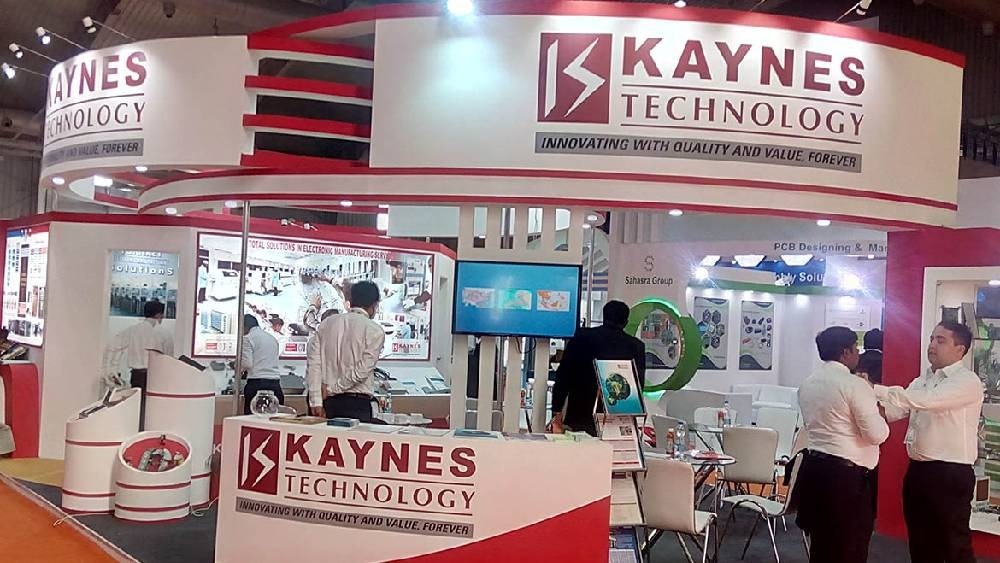
At a Glance
The narrative of Kaynes Technology India Ltd is currently split between a high-growth electronics powerhouse and a working capital nightmare. While the headline revenue for FY26 hit ₹36,264 million—a solid 33.2% YoY growth—the subterranean financial movements are far more alarming. The company’s Net Working Capital days exploded from 87 to 125 days, a massive red flag that points directly to a strategic misstep in their smart metering business model.
The most sensational number in this set isn’t the profit, but the Operating Cash Flow (OCF), which plummeted to a staggering negative ₹6,004 million. For a company with a ₹21,987 crore market cap, burning through ₹600 crore in operations while simultaneously committing to a ₹4,700 crore capex for OSAT and PCB projects is a high-wire act that should make any conservative investor sweat.
Investors are increasingly fixated on the ₹1,365 crore in smart metering receivables. This single segment has essentially held the company’s liquidity hostage. Despite the management’s desperate attempt to pivot toward a more “product-driven” enterprise, the current reality is one of stretched balance sheets and mounting contingent liabilities of ₹520 crore.
Is the much-hyped Sanand OSAT facility a genuine structural pivot, or just a shiny object meant to distract from the massive cash trap in the metering business? The following analysis peels back the layers of this high-growth, high-risk electronics play.
Introduction
Kaynes Technology is no longer just a small-scale PCB assembler. It has evolved into a massive Integrated Electronics Manufacturing Services (IEMS) player, serving mission-critical sectors like Aerospace, Defense, and Automotive. However, with great scale comes great complexity, and FY26 has been the year where Kaynes’ execution was put to the ultimate test.
The company operates 22 manufacturing facilities, but the sheer geographical spread and the transition toward Advanced Semiconductor Packaging (OSAT) have introduced significant “program volatility.” A major blow came when a top EV OEM customer slashed orders by 90%, proving that even in a booming sector, Kaynes is vulnerable to the fortunes (or failures) of its top clients.
Management has been forced into an “apology mode” after missing revenue guidance repeatedly. They initially aimed for ₹4,500 crore, then downshifted to ₹4,000 crore, only to finally deliver ₹3,626 crore. This gap highlights a dangerous trend of over-promising and under-delivering, which has led to intense scrutiny of their governance and disclosure practices.
The story here is simple: Kaynes is trying to build a world-class semiconductor ecosystem in India, but it is doing so while lugging around a heavy, cash-draining legacy of smart metering projects that are failing to convert into actual bank balances.
Business Model – WTF Do They Even Do?
Kaynes is essentially the “brain surgeon” for machines. They don’t just make the box; they design the complex electronic nervous systems—the Printed Circuit Board Assemblies (PCBA)—that go inside everything from medical X-ray machines to ISRO’s Chandrayaan-3 components.
They operate through three main buckets:
- OEM Turnkey (PCBA & Box Build): They take a design, source the parts, and build the final product. This is still the bread and butter, though margins are under pressure from raw material imports.
- ODM & IoT Solutions: This is the “high-margin” dream. They design the product themselves and sell the solution. They want this to be 30% of revenue, but currently, it’s the playground for their working capital disasters.
- The New Bet (OSAT/PCB): They are moving backward into the supply chain, intending to package chips and manufacture high-density PCBs. It’s a bold move to capture more “value-add,” but it requires massive, front-loaded capital.
The irony? For a company that specializes in “Smart Solutions,” their decision to handle the installation and maintenance of smart meters was anything but smart. It turned a high-tech manufacturing firm into a local plumbing and software contractor, leading to the current receivable crisis.
Financials Overview
Calculating the real earnings power of Kaynes requires stripping away the noise of their massive QIP fundraise. The P/E ratio currently sits at 60.0, which is priced for perfection in a company that just reported a 21% YoY drop in quarterly PAT.
FY26 Performance Table (Consolidated)
| Metric (₹ Million) | Latest Quarter (Q4FY26) | Same Qtr Last Year (YoY) | Previous Quarter (Q3FY26) |
| Revenue | 12,426 | 9,845 (+26.2%) | 8,040 (+54.5%) |
| EBITDA | 1,937 | 1,679 (+15.4%) | 1,190 (+62.7%) |
| PAT | 912 | 1,162 (-21.5%) | 910 (+0.2%) |
| EPS (₹) | 13.61 | 12.71 | 11.43 |
Annualised EPS Calculation: Since these are Q4 results, we use the full-year reported EPS of ₹54.28.
Financial Wisdom: Revenue is vanity, Profit is sanity, but Cash is reality. Kaynes has the vanity and a bit of sanity, but reality is currently knocking on the door with a negative OCF of ₹600 crore.
Management “walked the talk” on revenue growth to an extent, but they completely tripped on the cash flow guidance. Last year, they promised “neutral” cash flow; they delivered a massive burn.
Valuation Discussion – Fair Value Range
Valuing Kaynes is like trying to value a tech startup that accidentally owns a heavy-machinery factory. We must account for the high growth but penalize the poor capital efficiency.
1. P/E Method
- FY26 EPS: ₹54.28
- Industry Median P/E: 32.8
- Premium Multiple (for Growth): 45x – 50x
- Value: $54.28 \times 45$ to $54.28 \times 50$ = ₹2,442 – ₹2,714
2. EV/EBITDA Method
- FY26 EBITDA: ₹5,741 Mn
- Target Multiple: 25x – 28x
- EV: ₹1,43,525 Mn – ₹1,60,748 Mn
- Less Net Debt, plus Cash: Adjusted to Equity Value
- Value per share: ₹2,650 – ₹2,980
3. DCF Method (Discounted Cash Flow)
- Assuming 20% FCF growth post-FY28 (once OSAT scales) and a 12% WACC.
- Value: ₹3,100 – ₹3,450
Fair Value Range: ₹2,600 – ₹3,200
Disclaimer: This fair value range is for educational purposes only and is not investment advice.
What’s Cooking – News, Triggers, Drama
The drama at Kaynes is spicier than a South Indian curry.
First, the SEBI Show-Cause Notice to MD Ramesh Kunhikannan for insider trading compliance lapses. He ended up paying a ₹23.4 lakh settlement fine. It’s not a huge amount, but for a company asking institutional investors for billions, it’s a bad look.
Then there’s the CEO Resignation. Rajesh Sharma packed his bags in late 2025, right around the time Kotak Institutional Equities released a “roast” report flagging ₹520 crore in contingent liabilities and accounting “lapses.” Management’s defense? “Inadvertent disclosure errors.”
On the bright side, the PM inaugurated the Sanand OSAT plant, which gives the company massive political and strategic “street cred.” They also partnered with Japan’s AOI Electronics and Mitsui to secure chips and raw materials. It’s a classic Kaynes move: high-level strategic wins paired with mid-level operational messes.
Balance Sheet
The balance sheet is currently bloated with “Intangibles” and “Receivables.” The equity base grew significantly due to the ₹1,600 crore QIP, which is the only reason the Debt-to-Equity ratio looks “sexy” at 0.19.
| Row (₹ Million) | Mar 2026 (Latest) | Mar 2025 | Mar 2024 |
| Total Assets | 68,940 | 46,412 | 32,652 |
| Net Worth | 47,625 | 28,442 | 24,885 |
| Borrowings | 9,130 | 9,030 | 3,230 |
| Other Liabilities | 12,330 | 8,980 | 4,560 |
| Total Liabilities | 68,940 | 46,412 | 32,652 |
- The “Other Assets” (mostly receivables) are growing faster than a weed in a monsoon.
- Net worth jumped ₹1,900 crore mostly because they sold more shares, not just from core profits.
- Borrowings are “stable,” but only because the QIP cash is being used as a shield.
Cash Flow – Sab Number Game Hai
If the Balance Sheet is a selfie with filters, the Cash Flow statement is the morning-after photo. It is brutal.
| Cash Flow (₹ Million) | Mar 2026 | Mar 2025 | Mar 2024 |
| Operating (CFO) | (6,004) | (823) | (17) |
| Investing (CFI) | (9,172) | (3,547) | (15,052) |
| Financing (CFF) | 15,796 | 4,650 | 14,286 |
Kaynes is currently a “financing-led” company. They raise money from the public (CFF) to pay for their expansion (CFI) because their actual operations (CFO) are consuming cash instead of generating it. They burned ₹600 crore in operations this year. Where did it go? Mostly into the black hole of Smart Metering receivables.
Ratios – Sexy or Stressy?
The ratios tell a story of a company running very fast but losing its breath.
| Ratio | Value (FY26) | Commentary |
| ROE | 9.64% | Pathetic for a “high-growth” stock. |
| ROCE | 13.2% | Barely covering the cost of capital. |
| P/E | 60.0 | Extremely expensive for these return ratios. |
| Debt to Equity | 0.19 | The only “sexy” number, thanks to the QIP. |
| Debtor Days | 154 Days | Absolute disaster. Management is basically a bank for its customers. |
Financial Wisdom: High ROE/ROCE is the hallmark of a quality business. Kaynes currently has the valuation of a quality business but the return profile of a utility company.
P&L Breakdown – Show Me the Money
Let’s look at the three-year trend. It looks like a mountain, but the oxygen is getting thin at the top.
| Metric (₹ Million) | Mar 2026 | Mar 2025 | Mar 2024 |
| Revenue | 36,264 | 27,218 | 18,046 |
| EBITDA | 5,741 | 4,107 | 2,542 |
| PAT | 3,639 | 2,934 | 1,833 |
Revenue is up 100% in two years. That’s the “stand-up comedy” part—it sounds great until you realize they haven’t collected half of it. The EBITDA margins are holding at 15.8%, but the Amortization of intangibles (₹32 crore in Q4) is starting to eat the bottom line.
Peer Comparison
How does Kaynes stack up against the other kids in the ESDM class?
| Company | Revenue (Qtr ₹ Cr) | PAT (Qtr ₹ Cr) | P/E Ratio |
| Kaynes Tech | 1,243 | 91.2 | 60.0 |
| Syrma SGS | 1,465 | 119.2 | 61.1 |
| Honeywell Auto | 1,169 | 121.2 | 50.1 |
| Aditya Infotech | 1,139 | 95.9 | 114.7 |
Kaynes is losing the revenue race to Syrma SGS, which is growing faster and reporting higher quarterly profits. Meanwhile, Aditya Infotech is in a valuation bubble of its own. Kaynes is the “middle child”—not the cheapest, not the fastest, just the one with the most “semiconductor” buzz.
Miscellaneous – Shareholding and Promoters
- Promoters: 53.46% (Ramesh Kunhikannan is the big boss).
- FIIs: 7.28% (Down from 14%—the foreigners are running for the exits).
- DIIs: 15.13% (Domestic funds are holding the bag).
- Public: 24.12% (Retail participation is surging—usually a sign of a local top).
Promoter Roast: Ramesh Kunhikannan is a visionary, but his “insider trading compliance lapses” suggest he needs a better calendar—or a better lawyer. The management’s “sincere apology” for missing guidance is becoming a quarterly ritual.
Corporate Governance – Angels or Devils?
The ghost of Kotak’s December 2025 report still haunts the hallways.
- Related Party Transactions: Unidentified and messy.
- Contingent Liabilities: ₹520 crore. This is basically a “financial landmine” waiting to go off.
- Capitalized Technical Know-how: ₹180 crore. When a company capitalizes “know-how” instead of expensing it, they are artificially boosting profits.
- Auditor Reassurance: Statutory auditors say everything is fine, but CRISIL kept them on “Watch” for months.
Are they devils? No. But they are definitely “naughty angels” who play fast and loose with disclosures to keep the stock price buoyant.
Industry Roast and Macro Context
The Indian ESDM (Electronic System Design and Manufacturing) sector is currently the stock market’s favorite “darling.” Everyone wants to be the next Foxconn. The government is throwing PLI schemes like confetti at a wedding.
But here is the reality: import dependency is 70-80%. We are mostly “assembling,” not “manufacturing.” If China sneezes, Indian EMS companies get pneumonia. The West Asia conflict and supply chain delays are the current excuses for every missed target. The “Kavach” railway safety system is the new “hype” vertical, but it’s stuck in “trial phases” while the order book waits for a green signal.
EduInvesting Verdict
Kaynes is a classic case of “Great Story, Messy Math.” The transition to OSAT and PCB manufacturing is a structural masterstroke that could make them an indispensable part of India’s tech future. However, the current financial management is abysmal.
The smart metering business has been a Value Destroyer, trapping ₹1,300 crore in receivables and forcing the company to dilute shareholders via a QIP just to keep the lights on.
SWOT Analysis
- Strengths: Massive order book (₹9,072 Cr), presence in high-margin Defense/Aerospace, PMO-level strategic backing.
- Weaknesses: Terrible working capital cycle (125 days), negative OCF, high customer concentration.
- Opportunities: OSAT commercialization, expansion into North America via August Electronics, “Kavach” rail orders.
- Threats: SEBI scrutiny, further guidance misses eroding credibility, geopolitical supply chain shocks.
Final Thought: If management actually stops taking “installation” orders and cleans up the metering mess, Kaynes could be a titan. Until then, it’s a high-growth company with a “leaky” bucket.
Final Disclaimer: This fair value range and analysis are for educational purposes only and do not constitute investment advice.