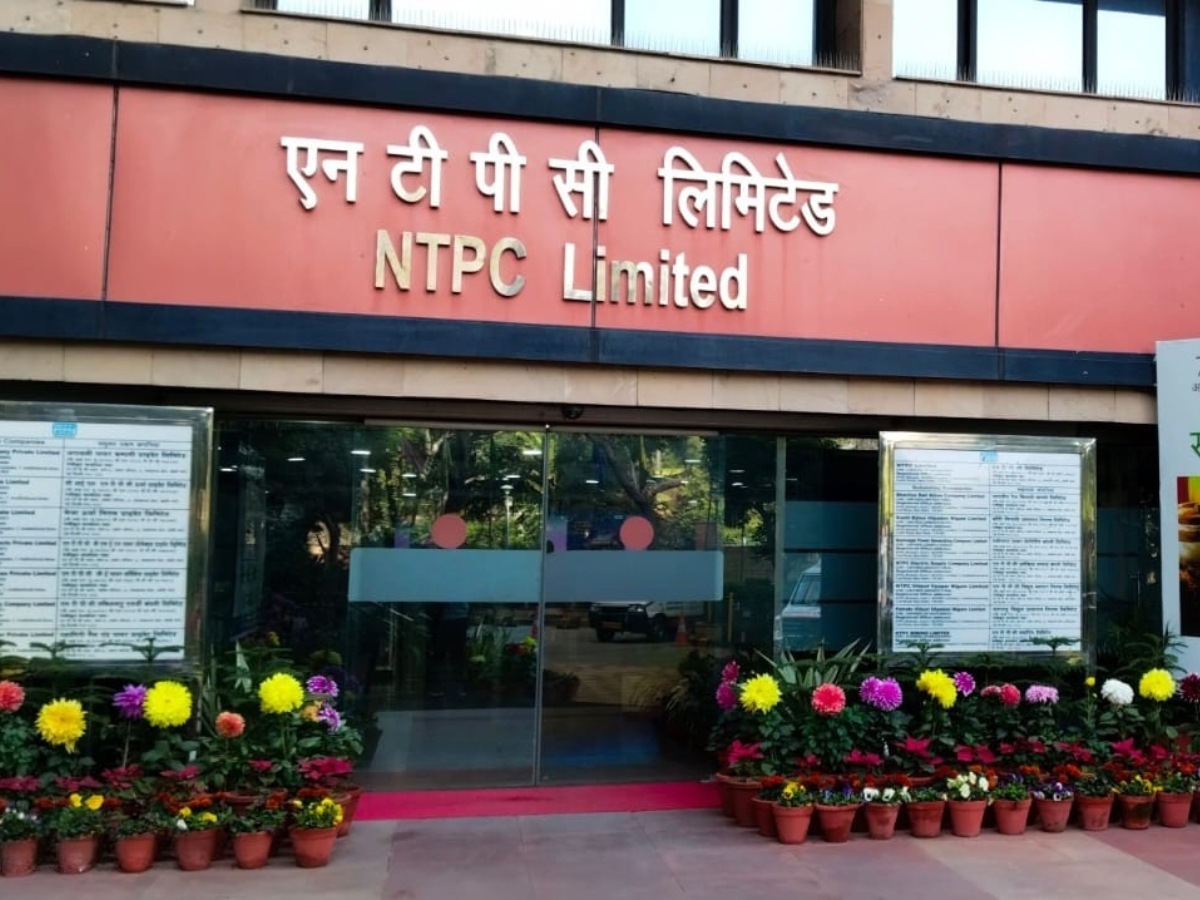
Section 1 — At a Glance
The structural transformation of India’s power landscape is vividly captured in the financial and operational configuration of NTPC Limited for the financial year ended March 31, 2026. This public sector enterprise remains the primary anchor of the national electrical grid, a reality emphasized by a massive consolidated asset base that expanded to ₹5,58,644 crore.
While market participants frequently fixate on headline revenue figures, the core economic reality of this entity is governed by its consolidated regulated equity, which climbed to ₹1,20,319 crore in FY26. This foundational metric determines the predictable earnings architecture of the company under a cost-plus tariff model.
- Consolidated Regulated Equity: ₹1,20,319 Cr
- Total Consolidated Assets: ₹5,58,644 Cr
- FY26 Net Profit (Consolidated): ₹27,546 Cr
The headline financial indicators presents a paradox that requires close institutional scrutiny. Consolidated revenue from operations for the full year remained virtually flat, tracking at ₹1,87,385 crore compared to ₹1,88,138 crore in the preceding fiscal period. This marginal reduction reflects lower overall system demand during specific seasonal blocks. However, net profit for the group experienced a substantial expansion of 15%, ascending to ₹27,546 crore.
This divergence highlights a critical structural dynamic: profitability is structurally insulated from output volumes and short-term operational variations. Instead, it remains explicitly pegged to plant availability parameters defined by regulatory frameworks.
The primary operational anxiety stems from the group’s highly elevated capital leverage profile. Total borrowings have swollen to ₹2,71,005 crore, driven by a capital expenditure program that consumed ₹49,068 crore in FY26 alone. This massive build-out across conventional thermal, pumped storage, and renewable asset pipelines implies that debt serviceability metrics will remain under prolonged pressure before these capital configurations transition into revenue-generating assets.
True structural profitability in infrastructure is not a function of absolute volume, but a reflection of asset availability protected by regulatory frameworks.
The following analysis details how this massive utility is attempting to balance its legacy fossil-fuel generation dominance with an aggressive pivot into renewable energy, nuclear options, and battery storage platforms.
Section 2 — Introduction
NTPC Limited occupies a unique position in the domestic capital markets. Historically known as the National Thermal Power Corporation, the entity has evolved from a monolithic manager of coal-fired baseload assets into a multi-technology energy conglomerate.
The corporate architecture now spans multiple subsidiaries, joint ventures, and specialized operating units designed to navigate a highly complex energy transition framework. As of March 31, 2026, the group operates an aggregate installed capacity of 89,108 MW, a footprint that has subsequently breached the 90,000 MW threshold post-closing.
The strategic trajectory of the firm is defined by heavy structural capital deployment. During the fiscal year, management completed the highest annual capacity addition in the history of the corporation, commissioning 9,618 MW of gross capacity.
This multi-pronged expansion is designed to address a dual mandate: safeguarding India’s near-term energy security during peak heatwave conditions while building out non-fossil generation platforms. Recent corporate restructurings, including the absolute transfer of commercial coal mining activities to its wholly-owned subsidiary, NTPC Mining Limited, indicate a clear intention to streamline corporate segments for independent capital access.
US
Now live
US Stocks terminal is live
13,000+ US tickers · EDGAR fundamentals · screener and filings feed — the same terminal, for American markets.
Explore →
Section 3 — Business Model: WTF Do They Even Do?
To the casual observer, NTPC is a corporate entity that buys millions of tons of coal, burns it at high temperatures, and sends electrons humming across high-voltage transmission wires. This basic view captures 94% of the group’s current operational structure, which accounts for approximately 17% of India’s total generation capacity and close to 22% of actual national power output. The remaining 6% of the business model is a collection of secondary activities, including project management consultancy, international energy trading, and deep-tier coal mining.
However, the actual commercial mechanism is far more administrative than a simple commodity business. NTPC operates under a classic two-part tariff structure governed by the Central Electricity Regulatory Commission (CERC). The financial engine works through two distinct triggers:
- Asset Availability Trigger: When a plant achieves a Plant Availability Factor (PAF) of 85%, it automatically earns its full, assured fixed charges to cover O&M expenses, debt servicing, interest costs, and an explicit 15.5% return on equity.
- Dispatch Volume Trigger: When the grid actually draws power from the plant, NTPC earns its variable energy charges, which function as a direct, cost-plus pass-through of the landed cost of coal or gas.
If the company keeps its boilers functional and maintains a PAF above the normative threshold of 85%, it recovers its entire fixed charge allotment. This layout ensures a guaranteed return on equity, regardless of whether the State Electricity Boards actually draw the power.
If a blistering summer forces a plant to run at full tilt, the fuel costs are simply passed through to the consumer. If solar generation floods the grid during midday hours and NTPC is ordered to back down its thermal output, the headline