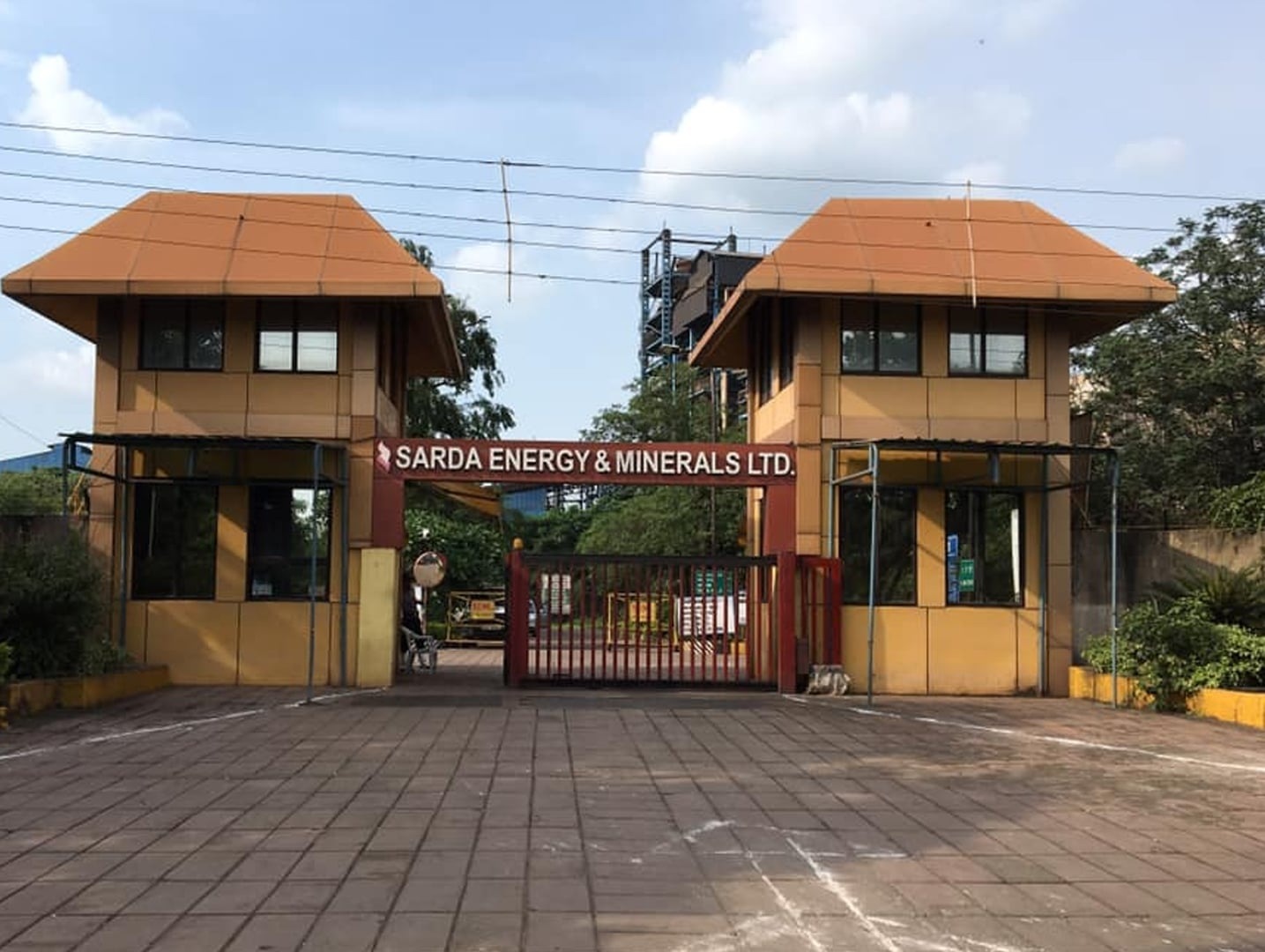
Sarda Energy FY26: The ₹1,109 Crore Pivot Where Metals Became the Side Hustle
Section 1 — At a Glance
Sarda Energy & Minerals Limited has engineered a profound tectonic shift in its foundational business design. Long regarded by the public markets as a mid-sized, highly cyclical proxy play on central Indian long steel and manganese-based ferroalloys, the group completed a five-year corporate metamorphosis in FY26. For the first time in its history, the earnings engine of the company has fundamentally moved away from metal cyclicality. The energy segment has stepped up to become the primary organizational cornerstone, contributing approximately two-thirds of consolidated EBITDA. Driven by the aggressive operational scale-up and successful integration of the newly acquired SKS Power generation assets, consolidated revenue expanded to ₹5,690 crore in FY26, while consolidated net profits registered a massive 58% expansion to reach an all-time high of ₹1,109 crore.
Yet, this transformation has not advanced without distinct friction points. While headline profitability metrics scaled new milestones, the underlying operational machinery faced consecutive speed bumps during the final quarter of the year. Planned maintenance shutdowns at a major 300 MW merchant thermal turbine and the structural decommissioning of an aging 30 MW captive steel power unit severely restricted sequential volume outputs. Concurrently, regional commodity indices for finished steel and ferroalloys remained suppressed relative to historical highs, presenting material realization headwinds that capped standalone margins. Investors must now carefully evaluate whether this utility-skewed corporate profile warrants a structural re-rating, or if capital-intensive backward-integration expansions will dilute near-term returns. The balance sheet has repositioned itself into a highly defensive, near net-cash fortress, but the operational dependencies have never been more complex.
Section 2 — Introduction
Sarda Energy & Minerals Limited began its journey in 1973 as a traditional industrial manufacturer anchored deep within the resource-rich belt of Chhattisgarh. Over the subsequent four decades, the corporate playbook focused on building out a tightly integrated metals complex at Raipur, manufacturing iron ore pellets, sponge iron, billets, wire rods, and specialized cold-drawn wires. However, relying purely on the violent pricing swings of the global ferrous metals sector is a stressful way to compound capital. Recognizing this vulnerability, management embarked on an ambitious diversification program, targeting heavy infrastructure plays across thermal energy, hydro power generation, and commercial resource mining. The contemporary iteration of the group acts less like an old-school blast furnace operator and more like an industrial conglomerate that happens to run its own captive commodity hedges while selling bulk utility power to state grids.
Section 3 — Business Model: WTF Do They Even Do?
To understand Sarda Energy, you have to stop looking at them as a steel company and start looking at them as an energy utility masquerading in hard hats. The operational machinery is split across four deeply codependent business verticals:
Energy Division: The crown jewel. The company operates 761.50 MW of thermal power capacity alongside a growing 168 MW portfolio of eco-friendly hydropower projects spread across northern and central India. This includes the massive 600 MW commercial SKS Power plant acquired under the Insolvency and Bankruptcy Code framework.
Steel Intermediates: A fully integrated manufacturing complex in Raipur capable of churning out 9 lakh metric tonnes per annum (MTPA) of pellets, 3.6 lakh MTPA of sponge iron, and 3 lakh MTPA of billets.
Ferro Alloys: Operating across dual manufacturing complexes in Visakhapatnam and Raipur with a total capacity of 147 MVA, specialized in exporting manganese-based alloys to international markets.
Resource Mining: Captive resource security anchored by a 1.5 MMTPA iron ore block in Rajnandgaon and the strategic Gare Palma IV/7 coal mine maxing out its expanded 1.8 MMTPA regulatory ceiling.
Essentially, they dig up their own coal to run their own power plants to melt down their own iron ore to create steel products, while dumping the excess electricity onto merchant markets when spot tariffs look juicy. It is an industrial perpetual motion machine where the primary goal is avoiding paying retail prices for input costs.
Section 4 — Financials Overview
Figures are consolidated, in ₹ crore.
Metric
Latest Quarter (Q4 FY26)
YoY Change (%)
QoQ Change (%)
Revenue from Operations
1,254
1.21%
-1.72%
EBITDA
352
10.69%
-10.89%
Net Profit (PAT)
155
53.47%
-18.42%
Reported EPS (₹)
4.48
45.93%
-17.04%
The sequential soft spot in the quarterly performance table is a classic lesson in how physical maintenance breaks corporate momentum. Management noted that Q4 operations were restricted by a scheduled maintenance shutdown on one of the 300 MW commercial thermal turbines. Over in the steel plant, things got equally disruptive as a legacy 30 MW captive power unit was taken offline since December for complete technological replacement. When you take large chunks of your power infrastructure offline during a quarter, your operating margins show the bruise. However, look at the year-on-year net profit jump—a 53% surge that demonstrates what happens when your broader asset base is running on an entirely superior structural utilization level compared to the prior year.
Section 5 — Valuation Discussion: Fair Value Range Only
To determine where Sarda Energy sits on the valuation spectrum, we must anchor our math across multiple fundamental methodologies,