Namo eWaste H2 FY26: A 136% Surge in Half-Yearly Profits or Just More Electronic Garbage to Sort Through?
Section 1 — At a Glance
A massive 136% surge in half-yearly net profit creates an immediate gravitational pull for investor capital, yet the undercurrents of this scrap metal recycler demand cold, analytical scrutiny. For the half-year ended March 31, 2026, the bottom line expanded to ₹7.36 crore from ₹3.12 crore in the corresponding previous period, a jump that has sent the market pricing the equity at an aggressive premium. Total operating revenue for the full fiscal year reached ₹194.59 crore, up nearly 30% year-on-year, driven by an ambitious operational capacity footprint that management has rapidly scaled to 82,000 metric tonnes per annum.
Yet beneath the headline expansion lies a persistent working capital strain that continues to separate reported profits from actual bank balances. The company’s cash conversion cycle stretched further to 126 days in FY26, anchored by 97 days of inventory locking up liquidity before a single gram of recovered copper or black mass can be monetized. Growth that relies on building massive collection backbones is structurally capital-hungry, and when capital efficiency metrics remain capped by localized informal collection networks, sudden scaling risks choking liquidity. True corporate scale is achieved when operational leverage outpaces working capital accumulation, not when they run parallel lines. Investors must now decipher whether this newly minted capacity will unlock massive manufacturing margins or simply pile up un-monetized scrap on a clean balance sheet.
Section 2 — Introduction
Welcome to the wild world of organized scrap collection, where your old cracked smartphone is no longer domestic clutter—it is a strategic asset class. Operating from its headquarters in Gurugram, this small-cap circular economy player has spent the last decade convincing corporations that handing over dead laptops is both an environmental duty and a legally mandated necessity. Having graduated to the public markets via the NSE SME platform in late 2024, the business has entered a frantic expansion mode, catching the eye of small-cap fund managers who love nothing more than a green narrative wrapped around a highly volatile industrial reality.
Section 3 — Business Model: WTF Do They Even Do?
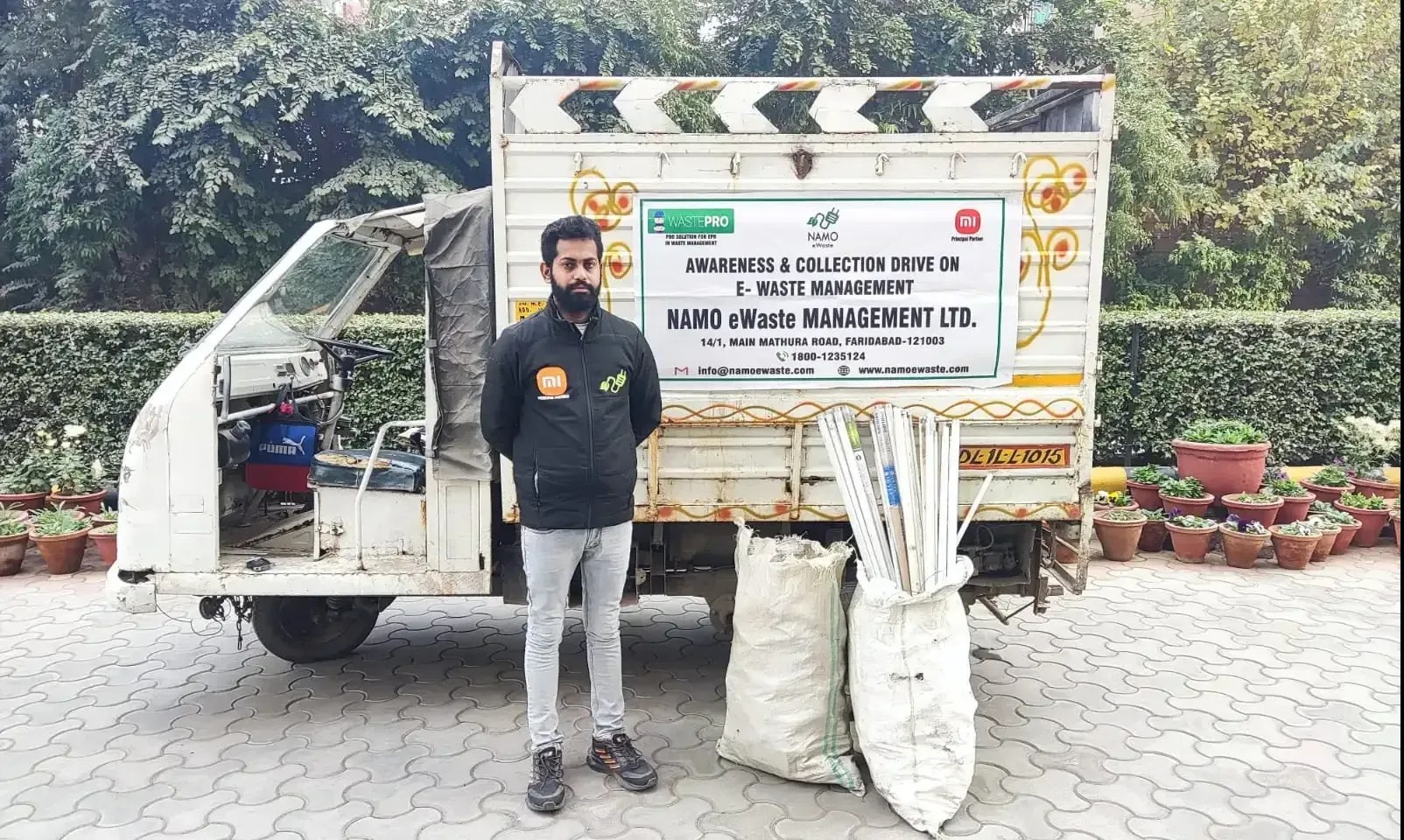
At its core, the business acts as a high-tech corporate garbage collector with a fancy molecular toolkit. They take in obsolete electronics, dead electric vehicle batteries, and industrial electronic waste, processing them through a network of four operational recycling plants spanning over 5,00,000 square feet.
The company splits its hustle into three main buckets: Extended Producer Responsibility (EPR) consulting—where they help consumer tech brands bribe regulators with compliance certificates; asset refurbishment, which involves wiping down corporate laptops, fixing the spacebars, and selling them to second-hand channels; and deep material recovery. By shredding and segregating electronic junk, they extract industrial metals like copper, aluminium, and iron, alongside microscopic traces of gold and silver. It is an excellent business model, provided you can actually convince the informal local scrap dealer to let you have the feedstock instead of burning it in a backyard furnace.
Section 4 — Financials Overview
Figures are consolidated, in ₹ crore.
Metric
Latest Half (H2 FY26)
YoY (Same Half)
Previous Half (H1 FY26)
Revenue
107.28
29.25%
87.32
EBITDA / Operating Profit
11.80
48.11%
11.30
PAT
7.36
135.90%
6.99
EPS
3.22
136.76%
3.06
The second half of the year historically carries the heavy lifting for this business because electronic brands suddenly realize on March 30th that they haven’t met their regulatory recycling quotas. Revenue for H2 FY26 scaled to ₹107.28 crore, showing comfortable sequential momentum over H1’s ₹87.32 crore. EBITDA tracking followed a similar path, registering at ₹11.80 crore for the half-year. While a 136% jump in half-yearly PAT looks spectacular on a stock broker’s graphic banner, a closer look at the tax line reveals that H2 FY25 was depressed by a massive 52% effective tax rate booking, making this half’s normalized 25% tax rate look like financial sorcery. Real earnings quality is born in the operating margin, not in the fluctuating