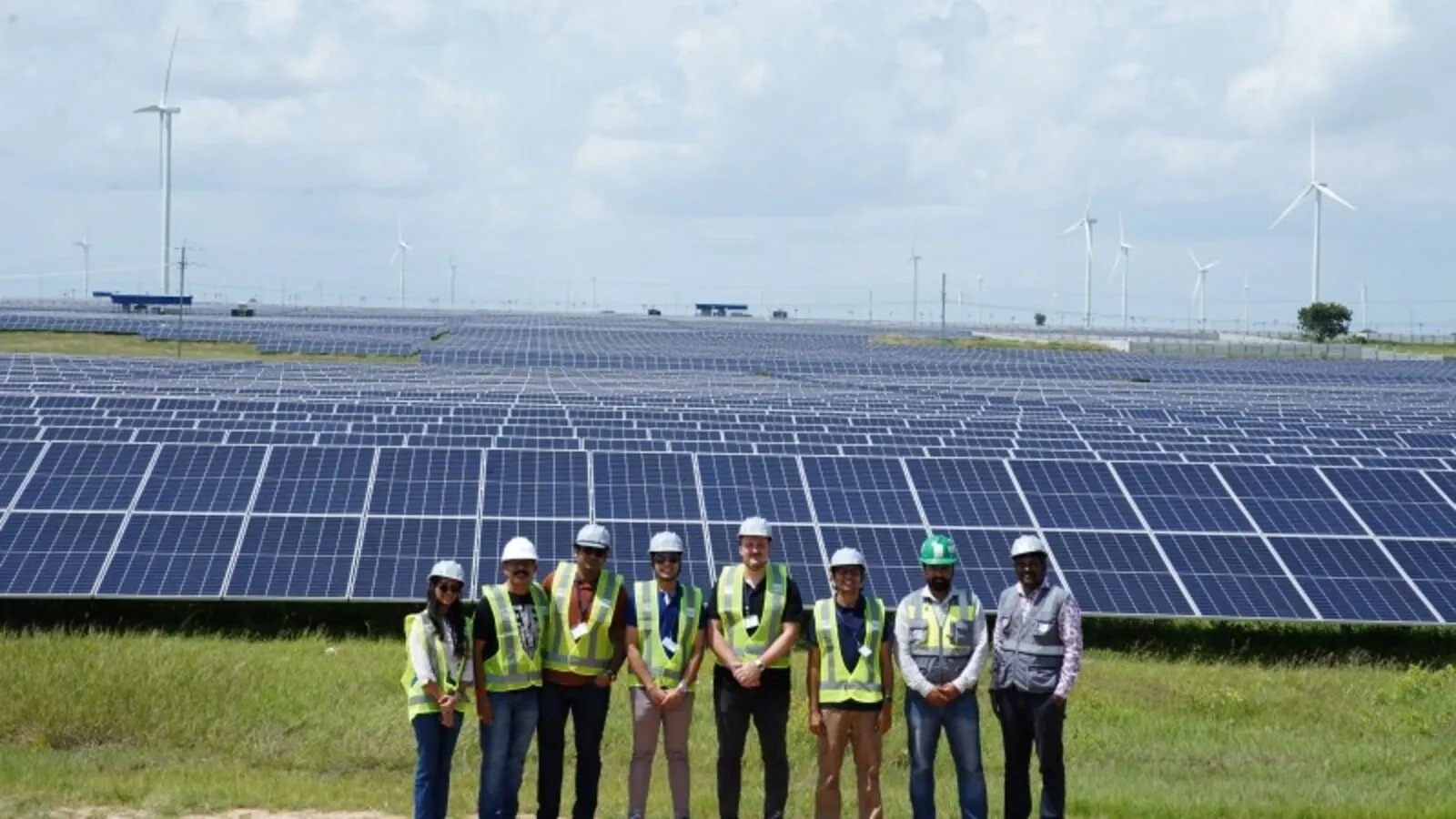
Revenue surges 28%, PAT sky-rockets 4.4x, and a massive 5.7 GW portfolio—but with ₹12,684 Crore in debt, is CleanMax leading a revolution or just walking a tightrope?
1. At a Glance
Clean Max Enviro Energy Solutions Ltd is currently commanding the spotlight in India’s renewable energy landscape, and the numbers are nothing short of sensational. We are looking at the country’s largest Commercial & Industrial (C&I) renewable energy provider, which has just closed FY26 with a staggering ₹1,913 Crore in revenue. Investors are flocking to this story because of one word: Scale. The company added 1.4 GW of capacity in a single year—a feat that many mid-sized utilities struggle to achieve in a decade.
However, beneath the high-voltage growth lies a balance sheet that would make a traditional auditor break into a cold sweat. As of March 2026, the company’s total borrowings have ballooned to ₹12,684 Crore. While the top line is growing at 28%, the debt pile is growing alongside it to fuel massive Capital Work in Progress (CWIP) of ₹5,339 Crore. The market is currently valuing this company at a Price-to-Earnings (P/E) ratio of 170, a nosebleed valuation that assumes absolutely everything will go right in an industry known for regulatory landmines and transmission bottlenecks.
The red flags are flying in plain sight. Despite reporting a consolidated PAT of ₹85.6 Crore (a massive jump from the previous year’s ₹19.4 Crore), the company’s Return on Equity (ROE) stands at a measly 2.61%. For every rupee of shareholders’ equity, the company is barely generating pennies in return. Furthermore, the Interest Coverage Ratio is a razor-thin 1.17. This means the company is earning just enough to pay its interest, leaving very little margin for error if interest rates spike or if the grid decides to “back down” on their power supply.
The company is pivoting hard toward the “Data & AI” segment, which now accounts for 43.5% of its portfolio. While partnering with giants like Google and Amazon sounds prestigious, it also creates a high-stakes dependency on a single sector. With a Debt-to-Equity ratio of 2.73, CleanMax is playing a high-leverage game where execution must be flawless. Will the cash flows from these 23-year PPAs arrive fast enough to service the mountain of debt, or is the company simply outrunning its own liabilities?
2. Introduction
Clean Max Enviro Energy Solutions Ltd, listed under the ticker CLEANMAX, is a pure-play renewable energy giant that has successfully branded itself as the “Net Zero Partner” for corporate India. Founded in 2011, the company has transitioned from a rooftop solar installer to a massive utility-scale player, managing a portfolio that now spans 5.7 GW across 23 states and several international markets.
The company’s listing on March 2, 2026, was a landmark event, raising ₹3,100 Crore to clean up its balance sheet and fund the next leg of its aggressive expansion. It operates in the highly specialized C&I segment, where it bypasses traditional state discoms to sell power directly to blue-chip corporates.
In the financial world, “Cash is King,” but in renewables, “Evacuation is God.” CleanMax’s story is currently revolving around its shift from State Transmission (STU) to Central Transmission (CTU) projects. This move allows them to tap into the massive energy hunger of data centers, but it also brings them face-to-face with national-level infrastructure risks.
Financial wisdom dictates that growth without profitability is just a slow way to go out of business. CleanMax is trying to prove that it can turn massive infrastructure spending into consistent annuity-like cash flows. With high-profile backers and a client list that reads like the Fortune 500, the stakes have never been higher for this Mumbai-based firm.
3. Business Model – WTF Do They Even Do?
CleanMax is essentially a “Private Power Utility” for the rich and famous of the corporate world. They don’t deal with the headaches of domestic electricity bills; they deal with the massive decarbonization targets of companies like Apple, Cisco, and Amazon.
The Power Sales Engine (~74% of Revenue)
This is their bread and butter. They build solar and wind farms (either on the customer’s roof or far away in a desert) and sign Power Purchase Agreements (PPAs). The beauty? These contracts last for 20-25 years. It’s like owning a house and having a tenant who is legally obligated to pay rent for the next quarter-century. They’ve even invented something called EAPAs (Energy Attribute Purchase Agreements) for tech companies that want the “green credit” even if they aren’t physically next to the solar panels.
The Service Side (~25% of Revenue)
Sometimes, a company like Tata or Reliance wants to own the plant themselves but doesn’t know how to build it. CleanMax steps in as the EPC (Engineering, Procurement, and Construction) contractor. They build it, take a fee, and often stay back to handle the O&M (Operations & Maintenance). It’s lower margin but also lower risk because they aren’t the ones carrying the debt for the asset.
The “Retail” Premium
Unlike big utility players like NTPC who sell power to the government at razor-thin margins, CleanMax sells “Retail.” By going direct to corporates, they realize higher tariffs. They are currently realizing about ₹4.28 per unit, while large-scale government tenders are often stuck below ₹3.00. They are selling a premium product: reliability and a “Green” conscience.
4. Financials Overview
The numbers for Q4 FY26 show a company in a massive “ramp-up” phase. The integration of newly commissioned assets is finally starting to hit the bottom line, but the interest costs are the giant elephant in the room.
| Metric (Consolidated) | Q4 FY26 (Latest) | Q4 FY25 (YoY) | Q3 FY26 (QoQ) | YoY Var% |
| Revenue (₹ Cr) | 557.46 | 445.51 | 422.46 | 25.1% |
| EBITDA (₹ Cr) | 267.46 | 256.51 | 263.46 | 4.3% |
| PAT (₹ Cr) | 45.40 | 17.23 | 21.18 | 163.5% |
| EPS (₹) | 4.73 | 4.39 | 2.69 | 7.7% |
Annualised EPS Calculation: Since these are Q4 results, we use the full-year reported EPS. The FY26 Consolidated EPS stands at ₹8.04.
Author’s Note on Management’s “Talk”:
In previous concalls, management promised a reduction in borrowing costs. They actually delivered, bringing the weighted average cost of debt down from 9.2% to 8.5%. However, they also promised disciplined execution. While projects were built at 97% of budgeted cost, the sheer volume of debt taken to achieve this growth has kept the interest coverage ratio uncomfortably low. They are walking the talk on growth, but the safety margins remain thin.
5. Valuation Discussion – Fair Value Range
Valuing a hyper-growth utility company is like trying to measure a skyscraper while it’s still being built.
Method 1: P/E Ratio
- Annualised EPS: ₹8.04
- Industry P/E: 31.0
- Current Stock P/E: 170.0
- The stock is trading at a massive premium to the industry. If we assign a “Growth Premium” P/E of 60-70x (considering the 5.7 GW pipeline), the value sits between ₹482 – ₹562.
Method 2: EV/EBITDA
- Enterprise Value (EV): ₹26,388 Cr
- FY26 EBITDA: ₹1,132 Cr
- EV/EBITDA Multiple: ~23.3x
- For a high-growth RE company, a fair multiple is often 15-18x. This implies an EV of ₹16,980 – ₹20,376 Cr. After subtracting Net Debt of ~₹10,280 Cr, the equity value per share (117 Cr shares) ranges from ₹572 – ₹862.
Method 3: DCF (Discounted Cash Flow)
- Assuming 15% Free Cash Flow growth for the next 10 years and a terminal growth rate of 3%, with a WACC of 11% (high due to leverage), the present value of future cash flows suggests a range of ₹750 – ₹950.
Fair Value Range: ₹600 — ₹850
Disclaimer: This fair value range is for educational purposes only and is not investment advice. The current market price of ₹1,365 reflects extreme “scarcity premium” and future expectations that far exceed current fundamental valuations.
6. What’s Cooking – News, Triggers, Drama
CleanMax isn’t just a power company; it’s a corporate drama magnet.
- The Apple Bite: Apple and CleanMax recently announced a ₹100 Crore co-investment. This isn’t just about money; it’s about “street cred.” When Tim Cook’s team puts money into your SPV, other corporates stop asking questions and start signing PPAs.
- The Income Tax “Gift”: Just to keep things spicy, the IT department served a ₹6.78 Crore demand notice in April 2026. Management is appealing, but it’s a reminder that the government always wants its cut of the “Green” pie.
- The Rajasthan Bottleneck: They commissioned a massive 525 MWp project in Bikaner, but the grid is acting up. Management admitted there are “bottlenecks” that won’t be resolved until late 2026. This means they have the power, but they can’t send it all out. It’s like having a Ferrari in a Mumbai traffic jam.
- Dinesh Khara Joins the Board: Former SBI Chairman Dinesh Khara has joined as an Independent Director. Having the man who used to run India’s largest bank on your board is a massive signal to lenders: “We are grown-ups now.”
Are you willing to wait for the grid to catch up with the company’s ambition?
7. Balance Sheet
The Balance Sheet is a massive construction site. The company is pumping money into Fixed Assets and CWIP at a frantic pace.
| Metric | Mar 2026 (Latest) | Mar 2025 | Mar 2024 |
| Total Assets | ₹23,098 Cr | ₹13,025 Cr | ₹8,869 Cr |
| Net Worth | ₹4,744 Cr | ₹2,609 Cr | ₹1,880 Cr |
| Borrowings | ₹12,684 Cr | ₹8,087 Cr | ₹5,570 Cr |
| Other Liabilities | ₹5,776 Cr | ₹2,374 Cr | ₹1,465 Cr |
| Total Liabilities | ₹23,098 Cr | ₹13,025 Cr | ₹8,869 Cr |
- The debt has jumped by ₹4,597 Crore in just one year. That’s a lot of interest to pay while waiting for the sun to shine.
- The Net Worth improved significantly thanks to the IPO, but the leverage remains the dominant feature of this landscape.
- CWIP at ₹5,339 Crore means nearly 23% of the assets aren’t even earning a single rupee yet.
8. Cash Flow – Sab Number Game Hai
This is where the reality of the business model hits. CleanMax is a “Cash Out” machine in its current phase.
| Year | Operating Cash Flow (CFO) | Investing Cash Flow (CFI) | Financing Cash Flow (CFF) |
| Mar 2026 | ₹1,731 Cr | -₹5,957 Cr | ₹5,095 Cr |
| Mar 2025 | ₹1,404 Cr | -₹3,606 Cr | ₹2,481 Cr |
| Mar 2024 | ₹886 Cr | -₹1,939 Cr | ₹1,789 Cr |
Where is the money? It’s buried in the ground in the form of solar panels and wind turbines. The company generated ₹1,731 Cr from operations, which is great, but then spent ₹5,957 Cr on buying more assets.
Where did it come from? Financing. The company raised ₹5,095 Cr through the IPO and new loans just to keep the lights on and the construction going. This is a classic “Capital Intensive” cycle. You spend today so you can collect “rent” (PPA payments) for the next 20 years.
9. Ratios – Sexy or Stressy?
The ratios tell two different stories. The operational efficiency is “Sexy,” but the capital efficiency is definitely “Stressy.”
| Ratio | Mar 2026 | Commentary |
| ROE | 2.61% | Lower than a savings bank account. Painful. |
| ROCE | 6.24% | Improving, but still below the cost of debt (8.5%). |
| Debt to Equity | 2.73 | Highly leveraged. The company is leaning on the bank. |
| PAT Margin | 4.92% | Thin margins for such a risky business. |
| P/E | 170 | Priced for perfection in an imperfect world. |
If the ROCE is lower than the interest rate, you aren’t creating wealth; you’re just moving it from shareholders to the banks.
10. P&L Breakdown – Show Me the Money
Let’s look at the three-year trajectory of the earnings engine.
| Year | Revenue | EBITDA | PAT |
| Mar 2026 | ₹1,913 Cr | ₹1,132 Cr | ₹86 Cr |
| Mar 2025 | ₹1,496 Cr | ₹901 Cr | ₹19 Cr |
| Mar 2024 | ₹1,390 Cr | ₹706 Cr | -₹38 Cr |
The EBITDA growth is impressive, moving from ₹706 Cr to ₹1,132 Cr. This shows that the solar farms are actually working and generating power efficiently. The “Operating Leverage” is kicking in—once the plant is built, the cost to run it is very low. However, the PAT is being squeezed by the ₹786 Crore interest bill.
Is it a sustainable model? Only if they stop building and start collecting, but the “Growth” narrative won’t allow them to stop.
11. Peer Comparison
CleanMax is playing in a league of giants.
| Company | Revenue (Qtr) | PAT (Qtr) | P/E | Note |
| NTPC | ₹45,845 Cr | ₹5,597 Cr | 15.9 | The boring grandpa of the sector. |
| Adani Green | ₹3,502 Cr | ₹514 Cr | 128.6 | The benchmark for aggressive growth. |
| SJVN | ₹1,081 Cr | ₹224 Cr | 47.8 | Playing the PSU safe game. |
| CleanMax | ₹557 Cr | ₹45 Cr | 170.0 | The expensive new kid on the block. |
CleanMax is the most expensive in the room. Even Adani Green, the poster child for high valuations, looks “cheap” compared to CleanMax’s 170 P/E. CleanMax is winning on the “Direct to Corporate” strategy, but Adani is winning on the sheer brute force of size.
12. Miscellaneous – Shareholding and Promoters
The shareholding is a mix of the founder’s vision and big international money.
- Promoters (49.5%): Led by Kuldeep Jain, an ex-McKinsey partner and IIM-A alum. He’s a “suit” who turned into a “solar man.” He knows how to talk to global investors.
- FIIs (29.8%): Heavy weights like BGTF (Brookfield) and Osaka Gas have skin in the game.
- DIIs (14.7%): SBI Life and IndiaFirst have small stakes.
- Public (6.0%): A very small float, which explains why the stock price moves like a rocket on any news.
Promoter Roast: Kuldeep Jain has built a great company, but he’s also built a debt-heavy monster. He’s essentially betting his entire equity that interest rates won’t stay high and the sun won’t stop shining. It’s a bold bet, but one that leaves him at the mercy of the banks.
13. Corporate Governance – Angels or Devils?
On the surface, the governance looks solid. Hiring Dinesh Khara (ex-SBI) and having Brookfield as a major investor provides a layer of institutional “safety.”
However, the 20% promoter pledge is a lingering concern. Pledging shares usually means the promoters need personal cash or are backing other ventures, which can be a risk if the stock price crashes. The company also recently issued corporate guarantees worth hundreds of crores for its subsidiaries. This is standard in infra, but it creates a web of contingent liabilities that can be hard for a retail investor to untangle.
The auditors haven’t flagged any major issues, but the high amount of “Capitalized Interest” is something to watch. They are essentially adding interest costs to the value of the assets instead of putting them on the P&L—perfectly legal, but it masks the true cost of the debt.
14. Industry Roast and Macro Context
The renewable energy sector in India is currently a mix of “Green Dreams” and “Bureaucratic Nightmares.” The government wants 500 GW of non-fossil capacity by 2030, which is great for business. But then they change the rules on “Banking” (how you store power in the grid) and “Cross-Subsidy Surcharges” (the fees you pay to use state wires) every Tuesday.
The industry is currently obsessed with “Hybrid” projects—solar plus wind plus batteries. Why? Because the sun doesn’t shine at night and the wind doesn’t blow during the day. CleanMax is following this trend, but it makes the projects significantly more expensive and complex to build.
The entry of big PSU players like NTPC Green into the C&I space is the real threat. They have cheaper capital and deeper pockets. CleanMax is surviving on “relationships” and “speed,” but in a commodity business like electricity, the lowest cost producer usually wins in the end.
15. EduInvesting Verdict
Clean Max Enviro Energy Solutions is a classic “story” stock. If you believe that India’s data centers and factories will stop at nothing to go green, then CleanMax is the primary vehicle for that trend. They have successfully moved from being a contractor to an asset owner, which is where the real wealth is created.
However, the financial gravity is real. A 170 P/E ratio, 2.73 Debt-to-Equity, and an ROE of 2.6% are not the hallmarks of a “safe” investment. The company is currently in a “Dash for Gas” (or in this case, a “Dash for Sun”), trying to lock in as many customers as possible before the giants like NTPC and Adani take over the playground.
SWOT Analysis:
- Strengths: Largest C&I player, blue-chip client base (Apple/Amazon), high realized tariffs.
- Weaknesses: Massive debt (₹12,684 Cr), low ROE, high dependence on single-sector demand (Data Centers).
- Opportunities: Expansion into CTU projects, potential to refinance debt as assets mature, battery storage integration.
- Threats: Regulatory changes in state open access rules, transmission bottlenecks in Rajasthan, competition from low-cost PSUs.
CleanMax is a high-conviction bet on the “Decarbonization of Corporate India.” It’s a badass company with a bold vision, but the bridge they are building is made of high-interest debt.
Do you trust the sun and the banks equally?
Disclaimer: This article is for educational purposes only. Clean Max Enviro Energy Solutions is a high-risk infrastructure play. All financial data is based on consolidated figures as of March 2026. This is not a recommendation to buy or sell the stock. Consult a SEBI-registered advisor before taking any financial positions.