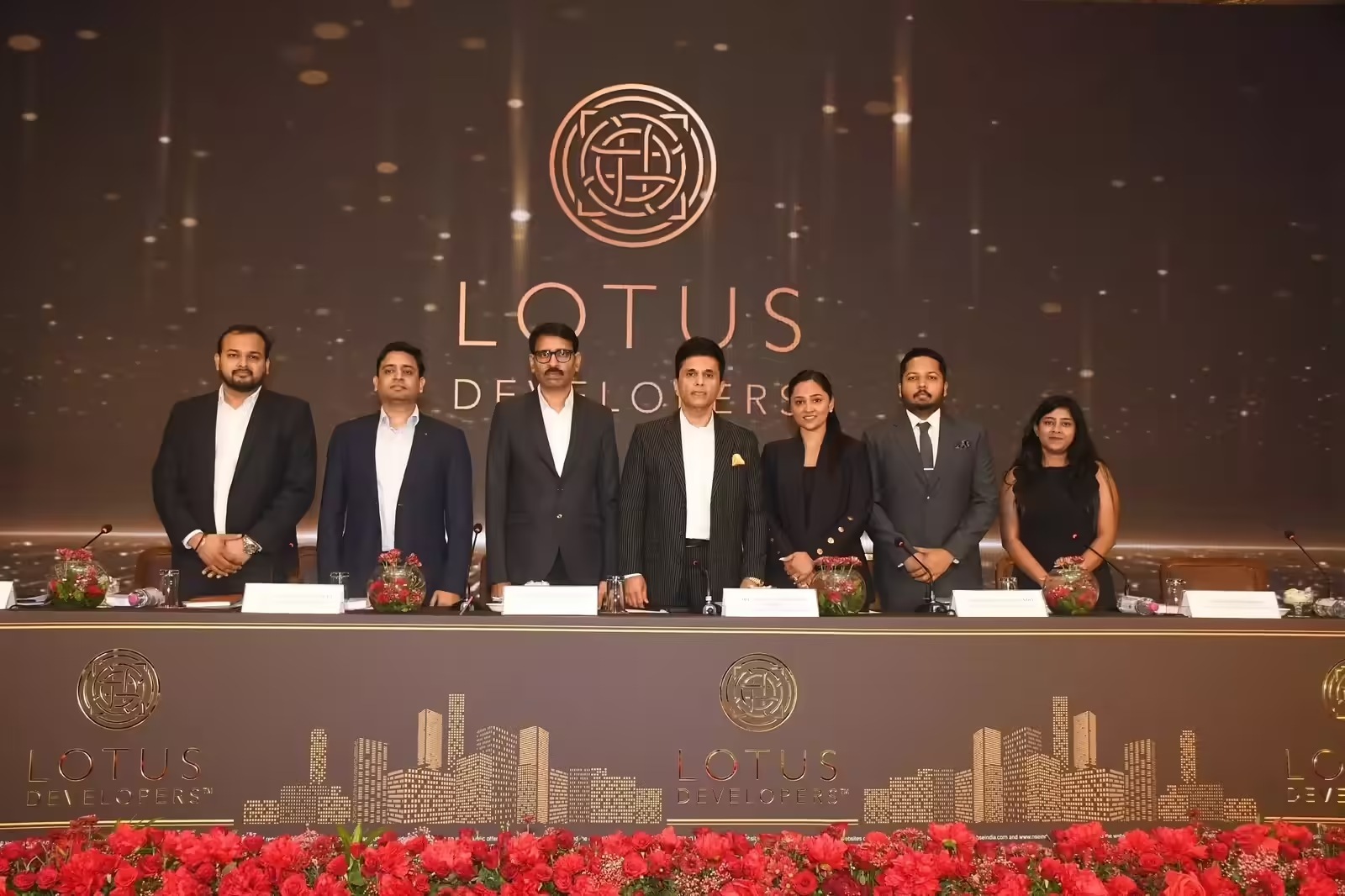
The Mumbai skyline is not just a collection of buildings; it is a scoreboard for developers who can navigate the labyrinth of redevelopment. Sri Lotus Developers & Realty Ltd just finished the final lap of FY26, and the numbers are shouting for attention. We are looking at a company that recorded ₹1,157 Cr in annual pre-sales, representing a massive 137% YoY growth.
At a Glance
There is a specific kind of arrogance required to charge a 22% pricing premium in a micro-market like Juhu, and Sri Lotus has turned that arrogance into a high-margin science. While the broader market whispers about a slowdown, this company is screaming through its results. In Q4 FY26 alone, pre-sales touched ₹462 Cr, a 177% jump compared to the same period last year.
But don’t let the shiny brochures fool you into thinking this is easy money. The real estate game in Mumbai is a graveyard of broken promises and stalled projects. Sri Lotus operates in the ultra-luxury and luxury segments—where a single mistake in a 4BHK penthouse delivery can tank a brand’s reputation. They focus on the western suburbs, specifically Juhu, Bandra, and Versova, where land is scarcer than honesty in a bull market.
The red flags? They exist, and they are heavy. We see a working capital cycle that has bloated to 520 days. In real estate, time is not just money; it’s an interest-bearing liability. Furthermore, while the company claims to be “net debt free” with a cash pile of ₹849 Cr, their operations actually chewed through cash this year. Net cash from operating activities was a negative ₹326 Cr. This means the business isn’t yet funding its own growth through internal collections; it’s still relying on the massive IPO war chest it raised in late 2025.
Is this a masterpiece of execution or a capital-intensive gamble on Mumbai’s elite? The company is moving into GIFT City with a ₹2,000 Cr GDV project and targeting a ₹1,800–2,000 Cr pre-sales goal for FY27. The ambition is massive, but as any seasoned auditor will tell you, the distance between “pre-sales” and “cash in bank” can be a very long walk.
Introduction
Sri Lotus Developers & Realty Limited is not your typical “buy land and build” developer. In a city like Mumbai, where vacant land is a myth, they have mastered the asset-light redevelopment model. They don’t buy the land; they convince existing housing societies to let them tear down the old and build the “ultra-luxury” new.
Incorporated in 2015, they have quickly climbed the food chain. Their brand—Lotus Developers—has become synonymous with the “Luxury Coastline Collection.” We are talking about projects across the most expensive zip codes in India: Juhu, Bandra, Versova, and Prabhadevi.
The company recently went public, listing in August 2025, raising ₹792 Cr. Since then, they have been on an acquisition spree, adding nine new projects in FY26 alone. Their pitch to investors is simple: High margins (35%+ EBITDA), faster execution (delivering 12-18 months ahead of RERA), and a clean balance sheet.
However, the transition from a private developer to a listed entity brings a level of scrutiny that many aren’t prepared for. Every delay in a Bandra redevelopment project now hits the ticker tape in real-time.
Business Model – WTF Do They Even Do?
The business model is essentially high-stakes matchmaking between old apartment owners and ultra-wealthy buyers. Sri Lotus uses a Joint Development Agreement (JDA) or Redevelopment approach.
- Step 1: Find a tired society in a premium area (e.g., Bandstand, Bandra).
- Step 2: Promise the current owners bigger, shinier apartments and a fat corpus.
- Step 3: Use their brand to sell the “additional area” at a massive premium to the ultra-rich.
They claim a 22% pricing premium in Juhu. Why? Because they build “products, not projects.” They focus on the “Blue water & Garden View (B&G)” concept. In plain English: if you can see the Arabian Sea from your balcony, Sri Lotus wants to build it.
Their revenue mix is currently skewed, with Commercial projects contributing 80.7% in FY25, but the future pipeline is heavily residential. They are now moving into GIFT City, Gujarat, with a project involving Abhishek Bachchan as a partner. It’s a mix of retail, office, and luxury residential. Is it a diversification play or a distraction from their Mumbai core? Only the cash flows will tell.
Financials Overview
The latest results are QUARTERLY RESULTS (Q4 FY26). We have calculated the annualized EPS based on the full-year performance as per the March 2026 audited figures.
| Metric (₹ Cr) | Q4 FY26 (Latest) | Q4 FY25 (YoY) | Q3 FY26 (QoQ) |
| Revenue | 308 | 190 | 224 |
| EBITDA | 121 | 109 | 79 |
| PAT | 101 | 86 | 70 |
| EPS (₹) | 1.96 | 1.97 | 1.43 |
Annualized EPS Calculation:
As these are Q4 (March) results, we use the full-year EPS.
FY26 Full Year EPS: ₹5.04
Financial Wisdom: Management previously guided for EBITDA margins in the 35–40% range. They delivered 36.5% for FY26. They are “walking the talk” on margins, but the drop from FY25’s freakish 52.6% shows that the “Covid-era low-cost land” benefit is officially over. Welcome back to reality.
Valuation Discussion – Fair Value Range
We will evaluate the company based on its reported consolidated FY26 figures.
1. P/E Method
- Full Year FY26 EPS: ₹5.04
- Industry P/E: 26.7
- Current Stock P/E: 28.8
- Calculation: $5.04 \times 26.7 = ₹134.56$
2. EV/EBITDA Method
- FY26 EBITDA: ₹281 Cr
- Market Cap: ₹6,840 Cr
- Debt: ₹131 Cr | Cash: ₹849 Cr
- Enterprise Value (EV): $6840 + 131 – 849 = ₹6,122$ Cr
- EV/EBITDA Ratio: $6122 / 281 = 21.78x$
- Applying a conservative 18x multiple: $281 \times 18 = ₹5,058$ Cr (Enterprise Value)
- Implied Equity Value: $5058 – 131 + 849 = ₹5,776$ Cr
- Per Share: $5776 / 48.87 = ₹118.19$
3. DCF Method (Simplified)
- Estimated Free Cash Flow (FCF) Potential: Based on management’s “Estimated Pending Free Cashflow” of ₹8,553 Cr to be realized by FY31.
- Discounting this back at a 12% WACC over 5 years suggests a present value of approximately ₹145 – ₹160 per share depending on the velocity of construction.
Fair Value Range: ₹125 – ₹155
This fair value range is for educational purposes only and is not investment advice.
What’s Cooking – News, Triggers, Drama
The biggest drama isn’t in the numbers; it’s in the zip codes. The company just launched the “Luxury Coastline Collection”—11 projects that sound like an Italian vacation (Amalfi, Portofino).
In April 2026, they launched Project Celestia in Versova. It did ₹155 Cr in bookings in just seven days. That is high-velocity selling. But there’s a hitch: the Lotus Trident commercial project got pushed to Q1 FY27 due to “regulatory and statutory approvals.” In Mumbai real estate, “regulatory approvals” is code for “we are waiting for a signature that might take six months.”
Also, the company is getting a GST notice (DRC-01) for FY21-22 and FY23-24. It’s a standard headache for Indian corporates, but it adds to the “drama” quotient.
Question for the reader: Do you think a developer can truly manage 20+ mega-projects simultaneously without compromising on the “luxury” quality they promise?
Balance Sheet
The following table reflects the latest audited Consolidated figures as of March 31, 2026.
| Particulars | Mar 2026 (₹ Cr) | Mar 2025 (₹ Cr) | Mar 2024 (₹ Cr) |
| Total Assets | 2,351 | 1,219 | 737 |
| Net Worth | 1,911 | 932 | 170 |
| Borrowings | 131 | 122 | 428 |
| Other Liabilities | 309 | 162 | 138 |
| Total Liabilities | 2,351 | 1,219 | 737 |
- The Net Worth skyrocketed by ₹979 Cr in a year—mostly thanks to the public’s money from the IPO.
- Borrowings are at ₹131 Cr, which is basically pocket change compared to their ₹849 Cr cash balance.
- They are sitting on ₹823 Cr in Inventory. That’s a lot of unsold concrete and premium marble.
Cash Flow – Sab Number Game Hai
Real estate accounting is a fantasy land where “Revenue” is recognized based on progress, but “Cash” only comes when the buyer pays the next installment.
| Particulars (₹ Cr) | Mar 2026 | Mar 2025 | Mar 2024 |
| Operating Cash Flow | -326 | -20 | 46 |
| Investing Cash Flow | -20 | 16 | 28 |
| Financing Cash Flow | 747 | 250 | -44 |
The operating cash flow is a negative ₹326 Cr. Where did the money go? It went into “Working Capital changes”—specifically, a massive ₹538 Cr outflow. They are building faster than they are collecting. This is sustainable only as long as the IPO money lasts or pre-sales keep booming.
Ratios – Sexy or Stressy?
| Ratio | FY26 | FY25 |
| ROE | 16.7% | 41.3% |
| ROCE | 21.2% | 27.2% |
| Debt to Equity | 0.07 | 0.13 |
| PAT Margin | 31.6% | 41.5% |
| Debtor Days | 156 | 136 |
The ROE “dropped” to 16.7%, but that’s because the equity base expanded massively after the IPO. If you adjust for the unutilized IPO cash, the ROE is a much sexier 23.7%. However, the Debtor Days at 156 and Working Capital days at 520 are stressy. They are waiting longer to get paid.
P&L Breakdown – Show Me the Money
| Component (₹ Cr) | Mar 2026 | Mar 2025 | Mar 2024 |
| Revenue | 769 | 550 | 462 |
| EBITDA | 281 | 289 | 158 |
| PAT | 243 | 228 | 120 |
In FY25, they made ₹289 Cr EBITDA on ₹550 Cr sales. In FY26, they made LESS EBITDA (₹281 Cr) on MORE sales (₹769 Cr). Why? Because the cost of construction and development jumped from ₹245 Cr to ₹718 Cr. The “high margin” honeymoon is evolving into a high-volume execution phase.
Peer Comparison
The big boys in the room are much larger, but Sri Lotus is trying to punch above its weight class.
| Company | Revenue (Qtr ₹ Cr) | PAT (Qtr ₹ Cr) | P/E |
| Oberoi Realty | 1,749 | 703 | 23.5 |
| DLF | 1,814 | 1,268 | 34.1 |
| Godrej Prop | 3,458 | 645 | 27.9 |
| Sri Lotus | 308 | 101 | 28.8 |
Sri Lotus has a ROCE of 21%, which beats DLF (6.3%) and Godrej (8.2%) by a mile. They are smaller, leaner, and currently more profitable on a per-rupee basis. Godrej is crying over its 8% ROCE while Lotus is laughing with 21%, but Godrej has the scale Lotus can only dream of.
Miscellaneous – Shareholding and Promoters
| Category | Mar 2026 (%) | Dec 2025 (%) |
| Promoters | 81.87 | 81.87 |
| FIIs | 1.00 | 1.76 |
| DIIs | 1.59 | 2.84 |
| Public | 15.55 | 13.54 |
The Promoters own nearly 82%, which is extremely high. Anand Pandit is the face of the company—a man who is as comfortable in a film studio as he is on a construction site (check the “Abhishek Bachchan” JDA).
The Roast: The promoters voluntarily waived their right to the ₹0.50 dividend this year to “retain funds for expansion.” While that sounds noble, they still own 82% of a company that is currently burning operating cash. It’s less of a sacrifice and more of a necessity to keep the gears turning.
Corporate Governance – Angels or Devils?
The auditors are T. P. Ostwal & Associates LLP. They gave an unmodified opinion, which is good. The company has ZERO RERA cases or complaints in its history—an almost miraculous feat for a Mumbai developer.
However, the rapid expansion into 21+ subsidiaries and the raising of lending limits to ₹3,000 Cr for these subsidiaries is something to watch. When a real estate company starts moving thousands of crores between “wholly owned subsidiaries,” the transparency can get a bit murky. They also have high debtor days (156 days), which suggests they aren’t being as aggressive with collections as they are with sales.
Industry Roast and Macro Context
The Indian real estate sector is currently in a “luxury fever.” The segment for homes above ₹2.5 Cr has grown from 3% in 2021 to 22% in 2025. Everyone with a cement mixer thinks they can build “ultra-luxury” penthouses.
The Western suburbs of Mumbai are a shark tank. Every big name from Lodha to Oberoi is fighting for the same coastal views. Macro-wise, the infra spend in Mumbai (Coastal Road, Metros) is the wind beneath these developers’ wings. But remember: real estate cycles in India end not with a bang, but with a “liquidity crunch.” If interest rates pivot or the stock market cools, these “pre-sales” numbers can vanish faster than a Mumbai monsoon.
EduInvesting Verdict
Sri Lotus is a high-octane growth story. They have successfully transitioned from a niche developer to a listed entity with a ₹17,000 Cr GDV pipeline. Their execution speed is their biggest moat, and their net-cash status (for now) gives them a massive advantage over debt-laden peers.
SWOT Analysis:
- Strengths: Net debt free; 20%+ pricing premium; zero RERA complaints; rapid execution.
- Weaknesses: Negative operating cash flow; high working capital cycle (520 days); high debtor days.
- Opportunities: GIFT City expansion; huge upcoming launch pipeline (₹5,500 Cr GDV in FY27).
- Threats: Regulatory delays (like Lotus Trident); GST litigation; high concentration in Mumbai’s western suburbs.
Management has guided for ₹1,800–2,000 Cr pre-sales in FY27. If they hit that, they become a serious mid-cap contender. If they don’t, that high working capital cycle will start to bite. They are walking a tightrope made of premium Italian marble.
Final Thought: Real estate is a game of trust. Management is walking the talk on sales and construction speed. Now, they just need to prove they can actually bring the cash home.
Fair Value Range: ₹125 – ₹155
This fair value range is for educational purposes only and is not investment advice.