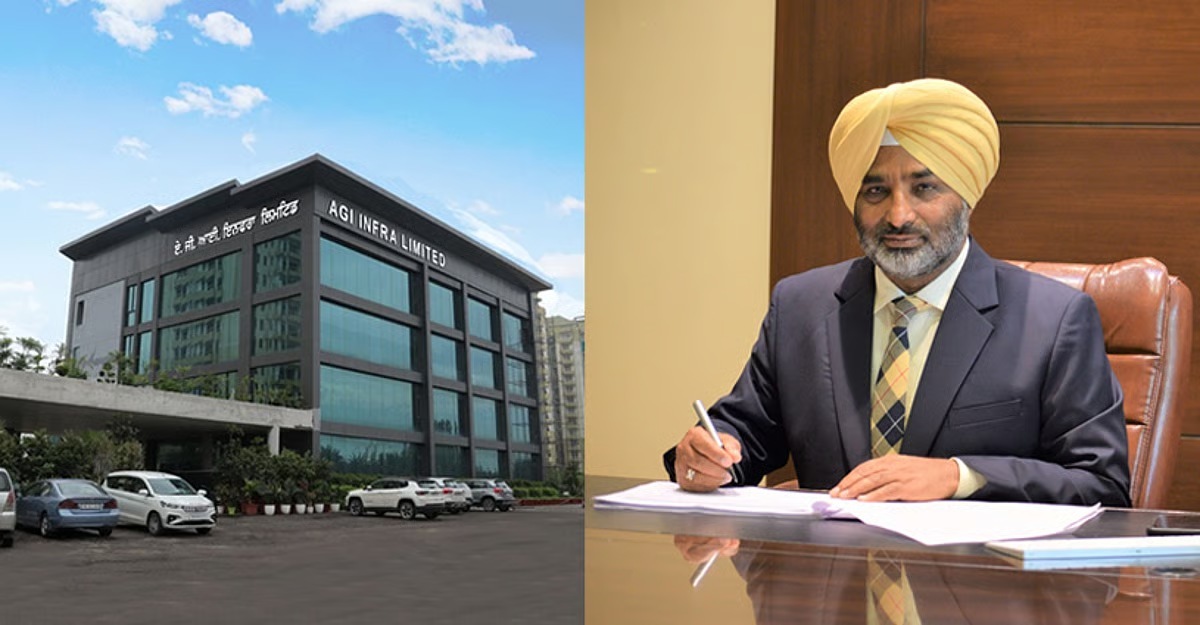
AGI Infra FY26: A ₹1,578 Crore Balance Sheet Built on 2,286 Days of Delusion
Section 1 — At a Glance
The financial reality of regional real estate development is a study in structural friction. For AGI Infra Limited, the conclusion of FY26 highlights a fundamental operational paradox: a business showcasing unprecedented profitability simultaneously strapped for liquid cash. Revenue from operations climbed 8.58% to ₹352.54 crore, while net profit surged by a remarkable 42.30% to hit ₹94.86 crore, driven by a sharp reduction in effective tax expenses.
However, beneath the headline earnings growth lies an aggressive accumulation of inventory, which expanded by ₹263.87 crore over the past twelve months alone to reach an unprecedented ₹1,082.30 crore. This massive build-up has locked away the company’s operational cash flows, resulting in a deeply negative cash flow from operating activities of ₹32.38 crore for the full year. The gap between accounting profits and true cash generation is widening into a structural deficit, leaving the company heavily reliant on external capital financing.
Investor attention is fixed firmly on the company’s ambitious construction pipeline across Punjab and its recent mainboard listing migration. Yet, the primary concern remains its working capital cycle, which has deteriorated to a staggering 211 days. True corporate performance is measured by what lands in the bank, not what is written into project ledger accounts. The market is pricing this regional developer at a premium, creating an intense, high-stakes race between physical asset handovers and mounting balance sheet pressures.
Section 2 — Introduction
Welcome to Punjab’s real estate theatre, where the concrete is poured thick, the timelines are long, and the accounting metrics behave like a high-end luxury vehicle navigating an unpaved village road. Established in 2005, AGI Infra Limited has spent more than two decades transforming the skylines of Jalandhar and Ludhiana from horizontal brick houses into vertical concrete towers.
The corporate narrative is currently flying high on the back of institutional validations, including a mainboard migration to the National Stock Exchange (NSE) and a prominent feature on Forbes Asia’s “Best Under a Billion” list. On paper, management is executing a flawless masterclass in regional scale. In reality, they are operating a giant capital recycling machine that transforms multi-crore customer deposits and institutional debt into massive mounds of unsold bricks, mortar, and land banks, hoping that macro-cyclicality doesn’t pull the plug before the last penthouse is painted.
Section 3 — Business Model: WTF Do They Even Do?
AGI Infra works a business model that is simple to understand yet highly precarious to fund: they acquire land in secondary tier-2 markets, convince thousands of families to part with their savings upfront, and turn those advances into gated residential complexes like “Jalandhar Heights” or “AGI Sky Villas”.
Their portfolio is overwhelmingly skewed toward premium and luxury housing—accounting for 76.08% of their 1.68 crore square feet ongoing pipeline—with the remainder scattered across affordable housing blocks and a tiny sliver of retail space. They also maintain a wholly-owned subsidiary called AGI Cold Chain Private Limited, which exists primarily to lose money storing fruits and vegetables, proving that corporate diversification can be just as hazardous as local construction delays. It takes a unique form of strategic confidence to manage a massive multi-city construction portfolio while simultaneously worrying about the refrigeration temperature of local potatoes.
Section 4 — Financials Overview
Figures are consolidated, in ₹ crore.
Metric
Latest Quarter (Mar 2026)
YoY
QoQ
Revenue
88.12
5.81%
0.71%
EBITDA / Operating Profit
21.09
34.50%
-44.41%
PAT
26.69
69.57%
2.22%
EPS
2.14
181.58%
0.00%
The final quarter of the year was an exercise in corporate financial gymnastics. Revenue stood virtually flat sequentially at ₹88.12 crore, but EBITDA collapsed by 44.41% quarter-on-quarter as operating costs caught up with project timelines. Yet, in a spectacular twist of accounting fate, Net Profit managed to rise sequentially to