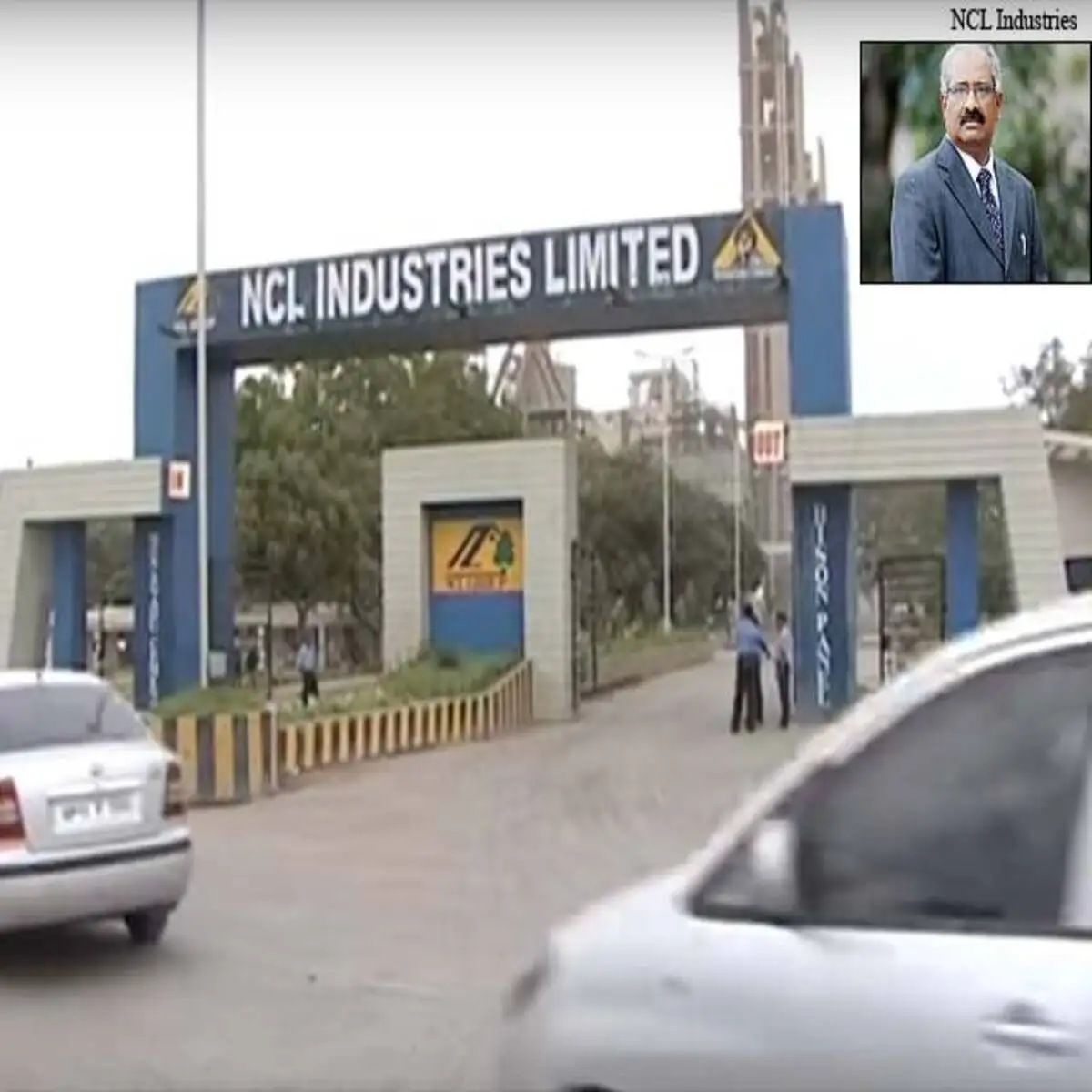
NCL Industries FY26: Profitability Bounces Back, Doors Finally Close
General information and entertainment, not investment advice. The author is not a SEBI-registered adviser or research analyst. No recommendation, no promised returns. Markets carry risk including loss of capital. Figures may not be current. Consult a registered adviser before acting.
Prices referenced are lagged to ₹185, as of mid-June 2026.
1. At a Glance
NCL Industries swung from a ₹25.38 Cr net profit in FY25 to ₹95.29 Cr in FY26—a 276% jump.
That bounce matters. So does what caused it: the numbers came partly from cleaner operations (cement and boards stayed competitive) and partly from a very messy decision: the company discontinued its Doors division and booked a ₹25.75 Cr impairment. The Board called it a move to “improve overall performance.”
Revenue fell 21% year-over-year (₹1,799 Cr to ₹1,422 Cr), but margins expanded. Operating profit margin climbed to 13.4% from 6.3%. That tension—less volume, fatter margins, one fewer division—is the story.
Market cap sits at ₹837 Cr. The P/E is 6.38x on trailing reported earnings.
2. Introduction
NCL Industries was born in 1979 as a building-materials house. Forty-seven years in, the company manufactures cement, ready-mix concrete (RMC), cement particle boards (Bison Panels), hydropower, and until now, prefab doors. Headquarters in Secunderabad. Listed on NSE and BSE.
The Kalidindi family and related entities control 41.6% (down from 47% in June 2023—a drift, not a collapse). Ravi Kalidindi holds 6.84% personally. The family took a tangible step in December 2025: K. Ravi was appointed Vice Chairman & Managing Director, replacing the prior arrangement. Gautam and Roopa Kalidindi stepped down from executive roles.
The company is an established player in Andhra Pradesh and Telangana, with 2,000+ dealers and a captive limestone mine feeding the cement plant.
One recent move: a new 0.66 MTPA cement grinding unit went live at Thallapalem (near Visakhapatnam) in November 2025, pushing total cement capacity from 3.30 MTPA to 4.00 MTPA.
3. Business Model: WTF Do They Even Do?
Cement dominates. FY26 saw cement sales of ₹1,500 Cr (106% of total revenue, after adjusting for inter-segment transfers). Volume sold: 2.71 Bn MT, down 6% from 2.89 Bn MT in FY25. Pricing pressure in the South is real; so is the company’s dealer network.
Boards earn steady money. Bison Panels—cement-bonded particle boards made under German technical tie-up (BISON WERKE)—sold ₹163 Cr worth in FY26. Prefab construction, airports, housing, infrastructure. Margins here are thicker than cement.
RMC is small but sticky. ₹131 Cr in FY26 from ready-mix concrete. Ten plants, transit mixers, captive clients. Not a growth engine, but a moat: customers prefer one-stop delivery.
Doors were a bet that lost. Prefab doors (Natura, Soft Touch, Signature, Fire Rated) sold ₹49 Cr in FY25. By FY26, after the discontinuation decision, the division collapsed into discontinued operations. The Board recognized a ₹25.75 Cr impairment. The message was clear: execution fell short. Operational and commercial challenges.
Energy is footnote. Two mini-hydel projects (15.75 MW capacity) supplied ₹7.36 Cr worth of power in FY26. Renewable, low margin, but keeps grid obligations and some costs inside.
Put it together: cement is the bread, boards the butter, RMC the steady drizzle, energy the tax break, and doors, well—the Board bid them farewell.
4. Financials Overview
Figures are consolidated, in ₹ crore.
Result Type: Annual. Basis: Consolidated. Latest Period: FY26 (Mar 2026).
Metric
FY26
FY25
YoY
Revenue
1,422.08
1,798.97
-21%
EBITDA
190.26
99.20
+92%
PAT (Continuing Ops)
123.66
34.24
+261%
PAT (Total, incl. Discontinued)
95.29
25.38
+276%
EPS (Reported, continuing)
₹27.87
₹7.52
+271%
EPS (Total, incl. discontinued)
₹21.50
₹5.56
+287%
The margin story flips the volume story. Revenue dropped 21% but net profit from continuing operations jumped 261%. Operating margin went from 6.3% (FY25) to 13.4% (FY26). The company did less business but kept more of what it did. The doors impairment (a one-time charge, not an operating loss) landed in exceptional items (₹9.77 Cr on consolidated, ₹9.77 Cr on standalone). Strip out discontinued ops and the ₹25.75 Cr impairment, and the core cement-boards-RMC business was pulling decent leverage.
Board meeting held 29 May 2026 approved a 35% total dividend for FY26 (₹1.50 per share paid as interim in March, ₹2.00 per share final). That’s a 23.8% payout on net profit (before discontinued ops). Healthy signalling.