Rallis India FY26: Highest Ever EBITDA, Flattest Revenue
General information and entertainment, not investment advice. The author is not a SEBI-registered adviser or research analyst. No recommendation, no promised returns. Markets carry risk including loss of capital. Figures may not be current. Consult a registered adviser before acting.
1. At a Glance
FY26 delivered ₹2,897 Cr in revenue (+9% YoY) and ₹362 Cr EBITDA, the highest ever in the company’s history. Yet the profit jump masks two opposing forces: a domestic market pressing upward, and exports crumbling at the seams.
Crop care domestic formulations, the heart of the business, grew only 5% in volume despite a heavy dose of new product launches (11 in the year). Seeds saw 15% revenue growth and CSM (custom synthesis) surged 59% — but all three segments together couldn’t drown out one fact: export crop protection fell 33% in Q4, with Metribuzin and Pendimethalin volumes down YoY.
The stock sat at ₹226.50 at the time of reference (lagged data, not live). At that price, the market was paying 21.8x trailing earnings, against a peer median of 23.3x.
The tension: Highest EBITDA ever, but margin depth came from one-off CSM gains and portfolio clearing, not structural operating leverage.
2. Introduction
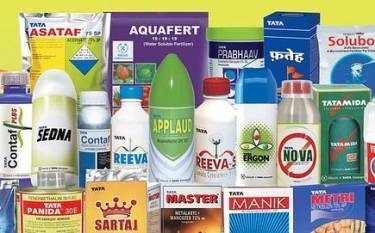
Rallis India, part of Tata Chemicals (55.08% stake), has spent 150 years in agrochemical manufacturing. The company sits across three major buckets: crop protection (insecticides, fungicides, herbicides), seeds (cotton, maize, millets, mustard, rice), and “Soil & Plant Health” — a euphemism for biologicals and micronutrients that management is inching toward profitability on.
FY25 was choppy. Revenues flatlined at ₹2,663 Cr (vs ₹2,648 Cr in FY24), battered by weak rabi seasons, unseasonal rainfall in key states, and export headwinds (global inventory de-stocking, Chinese dumping in the agrochem space, currency swings). The Q4 of that year was particularly brutal: ₹-32 Cr PAT, ₹-19 Cr EBITDA.
FY26 came with war, monsoon whispers, and cost inflation. Management was clear: input costs (Glyphosate, Mancozeb, Metribuzin, Pyrethroids, strobilurins) surged 15–25%, with geopolitical disruption in play until mid-year.
3. Business Model: WTF Do They Even Do?
The model is vertically integrated-ish.
Crop Care (82% of revenue) spans insecticides (~44% of domestic branded formulations), fungicides (~32%), and herbicides (~23%). Domestic branded formulations account for ~58% of crop care. The company also does technical-grade chemistry (5% of crop care) and “Soil & Plant Health” (10%)—water-soluble fertilizers, biofertilizers, organic compost.
Seeds (16% of revenue) is narrowed to five crops: cotton, maize, millets, mustard, rice. Strategy is to build scale on fewer horses. Cotton is the star (grew ~35% in FY26); rice is constrained by seed production capacity.
Exports (roughly 20% of revenue) are B2B molecules sold to 41 countries. Rallis makes the active ingredients; global formulators buy them and brand them. This channel is contract-heavy and price-sensitive.
CSM (Custom Synthesis Manufacturing, part of B2B, 59% growth in FY26) is a contract feature: Rallis manufactures proprietary molecules for global agrochemical companies. It comes with a volume-drop protection clause—revenue per unit can adjust upward if volumes fall. Handy.
Distribution is 8.5 million farmer connections, 7,200 dealers, 95,000 retailers, 2,200 seed villages, and 50+ export customers. The company calls this “80% of India’s districts covered.”
Manufacturing: five owned plants (Akola, Lote, Ankleshwar, Dahej CZ, Dahej SEZ), two advanced seed processing plants, 10 third-party contractors. RICH (Rallis Innovation Chemistry Hub) in Bengaluru is the R&D arm.
4. Financials Overview
Figures are consolidated, in ₹ crore.
Metric
FY26
FY25
FY24
Revenue
2,897
2,663
2,648
EBITDA
362
287
311
PAT
184
125
148
EPS
9.46
6.43
7.60
What the numbers say:
Revenue grew 9% in FY26, clawing back from FY25’s flatline. Crop Care (+8%) drove most of it; Seeds (+15%) and CSM (+59%) were smaller numerators but high-velocity stories. Yet the headline masks the shape: Q1 was ₹957 Cr (best quarter), Q4 was ₹456 Cr (worst). Exports in Q4 came in at ₹77 Cr, down 33% YoY—that’s the war de-inventory hitting hard.
EBITDA margins jumped to 12.5% in FY26 from 10.8% in FY25, but management was explicit in concall commentary: don’t read Q4 as trend. Domestic crop protection margins were “pressured” in Q4 because the company was “liquidating legacy inventory” in two “trouble child products”—Clasto and Benzilla. CSM’s 59% growth came with better gross margins due to contract dynamics (volume-drop protection kicked in as volumes softened). Seeds EBITDA margin swung positively on mix (cotton, maize doing well), but came with a warning: drying and processing constraints could tighten margins if recovery rates drop.
PAT grew 47% to ₹184 Cr. EPS annualized: 9.46 (FY26) vs 6.43 (FY25).
5. Market Expectations & Historical Multiples
This section describes how the market is currently pricing the company and how that compares with its own history and peer group. It is descriptive, not predictive.
Metric
Current
Historical Average (5Y)
Peer Median (24 companies)
P/E
21.8
24.8
23.3
EV/EBITDA
10.9
13.2
11.5
P/B
2.14
2.35
2.11
ROCE
14.1%
14.3%
15.3%
ROE
10.2%
8.7%
11.9%
The market currently pays 21.8x earnings here versus a peer median of 23.3x—a discount of ~6%. On EV/EBITDA, the company is at 10.9x, slightly below peers at 11.5x. The market appears to be pricing in near-term margin pressure from input cost inflation and export weakness, but also factoring Tata Chemicals’ 55% backing and the company’s defensive crop-protection franchise.
ROCE, at 14.1%, trails the peer band (15.3% median) and is flat to the company’s 10-year average of 14.3%—no efficiency gains showing. ROE at 10.2% is below peers (11.9%) but has recovered from a 3-year low of 8.41%, signaling some operational tightening.
The data suggests the market is neither undervaluing nor overvaluing the company; it is pricing it at peer levels with a slight margin-of-uncertainty discount reflecting crop-centric cyclicality and near-term