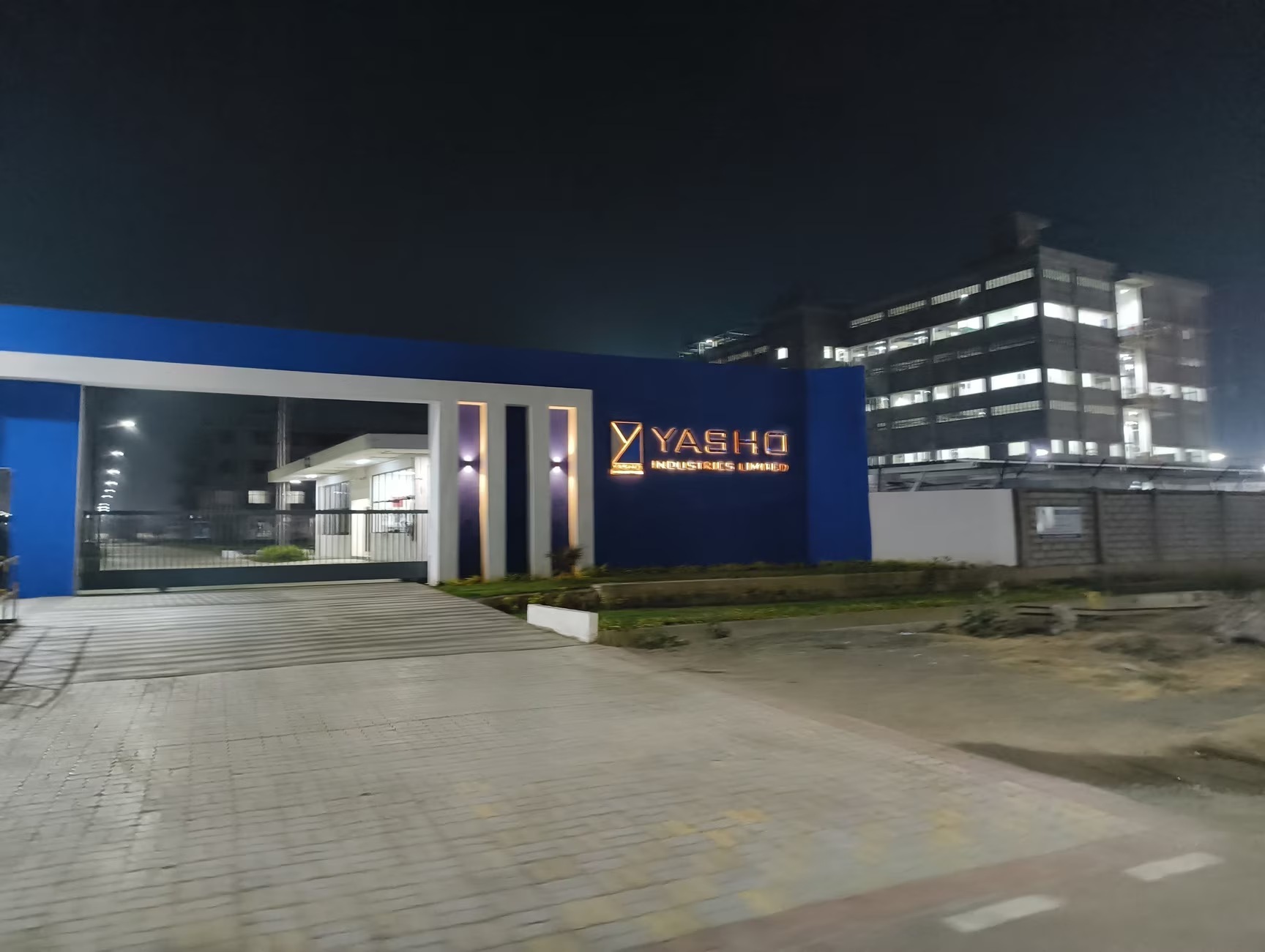
Yasho Industries Limited (Mar 2026): A 314% Profit Rebound Masking a Mountain of Debt and Sticky Working Capital
Section 1 — At a Glance
Yasho Industries Limited wrapped up the fiscal year 2026 on an explosive note, posting a massive 313.71% surge in annual consolidated Net Profit to ₹25.26 crore, recovering from the multi-year low of ₹6.11 crore recorded in the previous fiscal. Annual revenue from operations expanded by 22.70% to reach ₹830.03 crore, driven by a sharp recovery in volume throughput and the progressive ramp-up of its recently commissioned Pakhajan facility.
While the headline profitability bounce looks spectacular on paper, a deeper forensic dive reveals structural stress that continues to keep the company’s financial health on a tight leash. The corporate turnaround is heavily decoupled from its underlying cost structure: annual operating profit (EBITDA) grew by a more modest 20.99% to ₹144.46 crore, keeping EBITDA margins compressed at 17.40% compared to 17.67% in the previous year. Profitability was restricted by intense competitive dumping from Chinese suppliers and substantial fixed asset overheads, with depreciation and interest costs collectively gobbling up ₹110.49 crore.
Investor attention is currently hooked on a massive 15-year strategic supply agreement secured with a global MNC for lubricant additives, which management projects will yield an annual revenue run-rate of ~₹150 crore starting from the fourth quarter of the fiscal year 2027. However, the balance sheet remains deeply leveraged with total borrowings hovering at ₹551.19 crore, leaving the company with a debt-to-equity ratio of 1.24 and an uncomfortably low interest coverage ratio of 1.61. Sudden earnings acceleration can easily blind investors to long-term structural leverage, but capital-intensive businesses rarely outrun an aggressive amortization schedule without sustained, high-margin asset utilization. The immediate runway looks visible, but execution risks at the newly expanded facilities remain the ultimate arbiter of value.
Section 2 — Introduction
Yasho Industries Limited entered the specialty chemicals landscape back in 1985, but it took the company until 1993 to commence its actual manufacturing journey. Over the last three decades, it has transformed itself from a small-scale regional producer into an export-oriented specialty chemicals player operating out of Gujarat. The company migrated from the BSE SME platform to the main board in 2020, positioning itself to aggressively tap institutional capital for rapid physical expansion.
The urgency surrounding the company today stems from a classic industrial bottleneck realization sequence. Having operated at a restricted capacity of 12,500 MTPA across three legacy units in Vapi, the company commissioned a massive 20,000 MTPA greenfield manufacturing facility at Pakhajan-Dahej on April 9, 2024, nearly tripling its historical production capabilities. This article exists because the long-gestation financial consequences of this large-scale capital deployment are finally hitting the financial statements. With the global supply chain adapting to an interim US-India trade framework and domestic input costs highly volatile, Yasho is running a high-stakes race to ramp up its asset utilization before its heavy debt servicing costs eat into its operational survival.
Section 3 — Business Model: WTF Do They Even Do?
To the smart but uninitiated investor, Yasho Industries is essentially a B2B factory that cooks up pure chemical molecules across five primary industrial and consumer verticals. They do not make consumer products; instead, they sell the invisible ingredients that stop your car tires from cracking and prevent your cooking oil from going rancid.
The business is neatly split into two functional halves:
Industrial Division (87% of Revenues): This is the company’s primary engine, churning out rubber chemicals for global tire giants (like Continental, Apollo, and MRF), lubricant additives under the “YALUB” brand for hydraulic and engine oils, and specialized stabilizers for printing inks and composite resins.
Consumer Division (13% of Revenues): A smaller, higher-margin play producing food-grade antioxidants and aroma chemicals utilized by flavor, fragrance, and pharmaceutical majors.
Yasho Industries Revenue Mix
Segment Mix
Geographic Mix
• Industrial Chemicals: 87%
• International: 62%
• Consumer Chemicals: 13%
• Domestic: 38%
Management plays exclusively in the business-to-business (B2B) lane and explicitly states they have no desire to compete with their own client base by stepping into final formulations or consumer-facing products. Geographically, Yasho is structurally an export house, shipping 62% of its output to over 50 countries, leveraging front-end subsidiaries and stock-points in the Netherlands and the US.
Section 4 — Financials Overview
Figures are consolidated, in ₹ crore.
Quarterly Performance Trend
Metric
Latest Quarter (Mar 2026)
YoY (%)
QoQ (%)
Revenue
246.26
33.25%
22.01%
EBITDA / Operating Profit
44.72
23.77%
33.01%
PAT
12.26
143.74%
172.44%
EPS (₹)
10.17
132.19%
172.65%
Note: Year-on-year and quarter-on-quarter variations are computed using precise underlying values from consolidated disclosures.
The fourth quarter of FY26 delivered an impressive top-line print of ₹246.26 crore, expanding 33.25% year-on-year, primarily pulled by an uptick in industrial volume demands. Quarterly net profit clocked in at ₹12.26 crore, signaling that the operational leverage from the Pakhajan asset is finally kicking into gear as blended