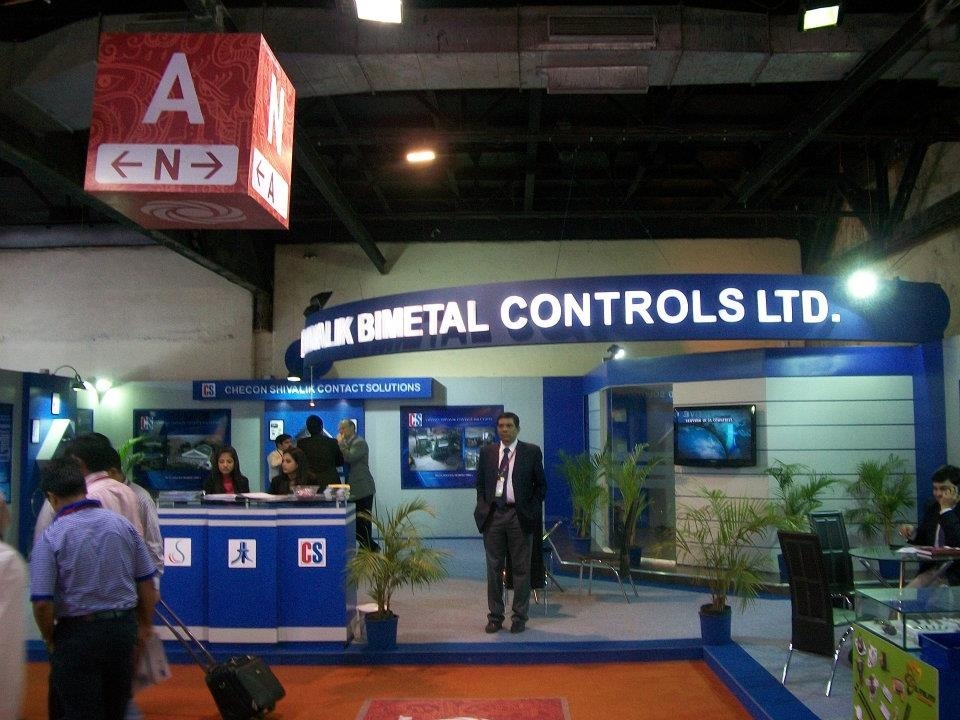
Shivalik Bimetal Controls Ltd Mar 2026 : Revenue Scales to New High of ₹571 Crore Amid Big-Bang Forward Integration and Structural Tariff Shield
1. At a Glance
Shivalik Bimetal Controls Limited (SBCL) closed the financial year ended March 31, 2026, with revenue scaling to an all-time high of ₹570.86 crore, registering a steady 12.30% growth compared to ₹508.35 crore in fiscal 2025. This volume-backed expansion comes on the heels of a multi-year consolidation phase, signaling strong business momentum and consistent market execution. While top-line acceleration remains a clear validation of the company’s leading market positioning in niche precision metallurgy, the real fireworks are on the operating side. Full-year Operating Profit (EBITDA) surged to ₹131.39 crore, up from ₹104.22 crore in the previous fiscal, allowing operating margins to widen by over 260 basis points to close at 23.02%. This impressive bottom-line protection was achieved despite lingering geopolitical uncertainties and temporary de-stocking across primary export destinations like the United States.
Investor attention is heavily centered on SBCL’s bold pivot into high-value forward integration. The company is setting up a dedicated automotive busbar and electronics assembly facility in Pune to cater directly to marquee domestic and global two-wheeler electric vehicle (EV) manufacturers. This transition from an engineered-material vendor to a component-solution specialist fundamentally multiplies the content-per-vehicle potential. However, this strategy is not entirely risk-free. The planned forward integration brings structurally lower gross margins, meaning operational execution and volume scaling will be vital to defend the core profitability profile. Furthermore, a sharp elongation in the company’s net working capital cycle to 213 days continues to pose clear cash-flow efficiency questions. Earnings quality remains robust as the absolute profit after tax (PAT) jumped 24.40% to close at ₹95.86 crore. Ultimately, asset utilization and execution velocity at the newer facilities will dictate whether this capacity translation breeds superior capital returns or compresses capital efficiency truths.
2. Introduction
Shivalik Bimetal Controls Limited has quietly carved out an enviable, highly specialized engineering fortress from its manufacturing facilities nestled in Solan, Himachal Pradesh. Established over four decades ago, the company has transformed itself from a localized provider of thermostatic bimetal strips into a prominent, multi-country supplier of ultra-low-ohmic current-sense shunt resistors and electronic beam-welded assemblies. SBCL currently operates as India’s solitary fully integrated player in this precise niche, commanding dominant domestic and double-digit global market shares across its key operational verticals.
This analytical review is necessitated by a profound structural shift currently underway within the organization. Over the last twelve months, the management has initiated a aggressive leadership transition and a comprehensive reimagining of its product destination mix. Facing unexpected tariff realignments and regulatory changes in the North American export corridors, Shivalik has shifted away from selling basic metal strips toward shipping fully machined, high-margin components. Simultaneously, the organization is implementing a major domestic expansion by forward-integrating into complex busbar and custom printed circuit board (PCB) assemblies. This transformation effectively bridges the gap between raw metallurgy and commercial power electronics, positioning Shivalik at the center of the ongoing green electrification wave.
3. Business Model: WTF Do They Even Do?
To the smart but structurally lazy investor, Shivalik Bimetal is best understood not as a conventional steel or metal mill, but as a specialized engineering gatekeeper for the electrical world. The company operates a dual-technology model centered on joining disparate metals that typically refuse to blend under normal metallurgy conditions. They excel at two core, high-barrier production capabilities:
High-Pressure Diffusion Bonding (Thermostatic Bimetals): Mechanically merging two different alloy layers with opposing thermal expansion properties. When temperature climbs, the strip bends predictably, safely breaking or establishing an electrical connection. These go inside virtually every residential circuit breaker (MCB), industrial switchgear unit, and home appliance globally.
Electron Beam Welding (Current Sense Shunts): Utilizing high-velocity electron streams inside precise vacuum chambers to weld heavy copper with specialized manganin alloys. This creates ultra-low-ohmic shunt resistors, which act as highly precise current sensors. Think of them as the fundamental digital traffic cops measuring precise electron flow inside modern electric vehicle battery management systems (BMS) and local smart electricity meters.
[Upstream Raw Alloys] —> [In-House Electron Beam Welding / Diffusion Bonding] —> [Downstream Components: Shunts & Bimetals] —> [Automotive EV BMS / Smart Meters / Switchgear]
Shivalik’s primary moat lies in the reality that it designs and fabricates its own specialized electron beam welding (EBW) equipment in-house, cutting overseas capital procurement costs by nearly half. Once an automotive Tier-1 or global smart meter OEM designs Shivalik’s specific alloy grade into their system, components face a multi-year qualification cycle. This creates an extraordinarily sticky customer relationship where switching costs are high and alternative options are virtually nonexistent.
4. Financials Overview
Figures are consolidated, in ₹ crore.
Quarterly Comparison Table
Metric
Latest Quarter (Mar 2026)
YoY (%)
QoQ (%)
Revenue from Operations
₹162.63
22.80%
21.16%
EBITDA / Operating Profit
₹35.46
62.81%
10.12%
Profit After Tax (PAT)
₹26.05
1.44%
17.45%
Earnings Per Share (EPS)
₹4.52
1.35%
17.40%
SBCL’s final quarter of fiscal 2026 recorded an exceptional revenue recovery, touching ₹162.63 crore, supported by a strong domestic rebound in the smart-metering business and a stabilization of order