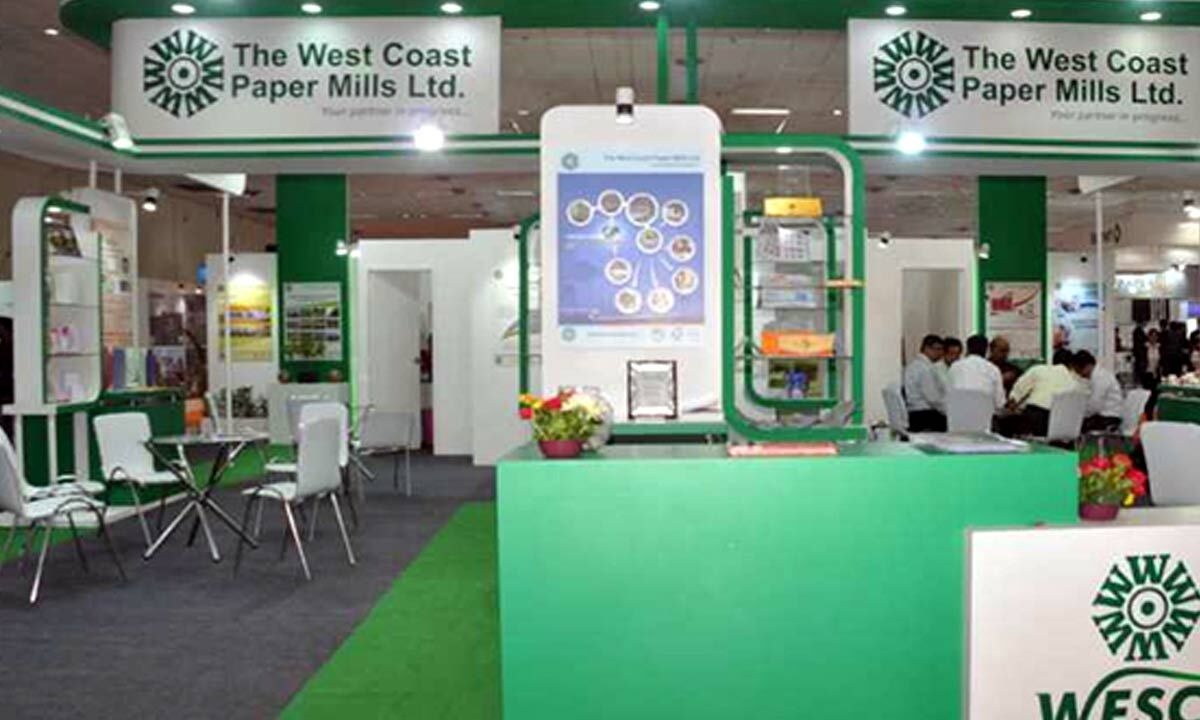
1. At a Glance – The Paper Tiger That Forgot Its Roar
At ₹423 per share, West Coast Paper Mills Ltd is sitting with a market cap of ₹2,794 crore, trading at 19.6 times earnings and at just 0.79x book value. Sounds cheap? Maybe. Sounds exciting? Not yet.
Q3 FY26 consolidated revenue came in at ₹1,049.78 crore with PAT at ₹29.58 crore. Compare that to last year’s December quarter PAT of ₹67 crore — and boom — profit down 58% YoY. OPM? A skinny 7%.
ROE is 9.49%, ROCE is 11.5%, dividend yield 1.18%, debt-to-equity just 0.13. Looks conservative. Almost too polite.
But here’s the real question:
How does a company that once printed money in FY23 (₹1,087 crore PAT that year) suddenly look like it’s printing disappointment?
Stick around. This one is layered like recycled cardboard.
2. Introduction – From Cash Machine to Margin Compression
Established in 1955, located in Dandeli, Karnataka, West Coast Paper is one of India’s oldest paper manufacturers. It produces printing paper, writing paper, packaging boards, and even optical fiber cables through its subsidiary West Coast Optilinks.
Once upon a time — specifically FY23 — this company had OPM of 33% and PAT of ₹1,087 crore. Investors were high-fiving each other like it was Diwali bonus season.
Fast forward to Q3 FY26.
Revenue stable.
Margins collapsing.
PAT gasping for oxygen.
Sales growth over 5 years? 10%.
Profit growth over 5 years? Negative 3%.
TTM profit growth? Negative 63%.
Is this a cyclical business cooling off?
Or did management enjoy the boom years a little too much?
Let’s unfold the paper.
3. Business Model – WTF Do They Even Do?
📄 Paper Division (93% of H1 FY25 Revenue)
They manufacture premium printing and writing paper under the Wesco brand.
Key highlights:
- 3.2 lakh MTPA production capacity
- 2.65 lakh MTPA in-house pulp capacity (backward integrated)
- 75 MW captive power
- 95% capacity utilization in FY24
Between FY22 and FY24:
- Volume flat
- Realizations up 30%
- Revenue up 30%
Translation: They made more money because they charged more, not because they sold more.
Classic pricing cycle beneficiary.
🔌 Cables Division (7% of H1 FY25 Revenue)
Manufactures optical fibre cables.
Production FY24: 84,719 km (vs 63,630 km in FY22)
Between FY22 and FY24:
- Volume up 25%
- Realizations up 32%
- Revenue up 65%
This is the sexy part of the story. Optical fiber sounds modern. Digital India vibes.
But here’s the thing:
It’s only 7% of revenue.
So unless cables become 20–30%, paper still calls the shots.
4. Financials Overview – The Reality Check Table
EPS:
- Q1 FY26: ₹8.23
- Q2 FY26: ₹2.65
- Q3 FY26: ₹4.07
Average = (8.23 + 2.65 + 4.07) / 3 = ₹4.98
Annualised EPS = ₹4.98 × 4 = ₹19.92
Current Price ₹423
Recalculated P/E = 423 / 19.92 ≈ 21.2
Slightly higher than reported 19.6.
Quarterly Comparison (₹ Crores)
| Metric | Latest Qtr (Dec FY25) | YoY Qtr (Dec FY24) | Prev Qtr (Sep FY25) | YoY % | QoQ % |
|---|---|---|---|---|---|
| Revenue | 1,050 | 1,016 | 1,043 | 3.3% | 0.7% |
| EBITDA | 77 | 83 | 68 | -7.2% | 13.2% |
| PAT | 30 | 67 | 12 | -55% | 150% |
| EPS (₹) | 4.07 | 9.72 | 2.65 | -58% | 53% |
Revenue stable.
Margins weak.
Profit volatile.
Question for you:
Would you pay 21x earnings for 7% OPM business?
5. Valuation Discussion – Fair Value Range
1️ P/E Method
Industry PE: 19.9
Annualised EPS: ₹19.92
Fair value = 19 to 22 PE range
= ₹378 to ₹438
2️ EV/EBITDA
Enterprise Value: ₹3,236 crore
TTM EBITDA ≈ ₹336 crore
EV/EBITDA = 6.57
If we apply 6–8 range:
Fair EV = ₹2,016 to ₹2,688 crore
Equity value approx ₹2,300 to ₹3,000 crore
Per share range ≈ ₹350 to ₹455
3️ DCF (Simplified)
Assume:
- PAT ₹148 crore (TTM)
- Growth 5%
- Discount rate 12%
Indicative equity value range:
₹340 to ₹420
Fair Value Range:
₹350 – ₹440
This fair value range is for educational purposes only and is not investment advice.
6. What’s Cooking – News & Drama
- Q3 FY26 results announced: PAT ₹29.58 crore.
- CMD S.K. Bangur re-appointed from May 1, 2026.
- Optical fiber plant launched in Telangana.
- NCLT approved acquisition of Uniply Décor.
- 2023: Breakdown in TG set hit production.
So management is active.
Expansion in cables.
Corporate continuity maintained.
But market cares about one thing:
Margins.
Without OPM revival, all announcements sound like press release poetry.
7. Balance Sheet – Latest Consolidated (Sep 2025)
| Item | Mar 2025 | Sep 2025 |
|---|---|---|
| Total Assets | 5,512 | 5,576 |
| Net Worth | 3,491 | 3,538 |
| Borrowings | 456 | 463 |
| Other Liabilities | 1,565 | 1,574 |
| Total Liabilities | 5,512 | 5,576 |
Observations:
- Debt stable at ₹463 crore
- Net worth strong at ₹3,538 crore
- Debt-to-equity just 0.13
- Assets rising steadily
Funny takeaway:
• Balance sheet looks like a CA student’s dream answer sheet
• Low leverage, high assets
• Income statement crying, balance sheet chilling
8. Cash Flow – Sab Number Game Hai
| Year | CFO | CFI | CFF |
|---|---|---|---|
| Mar 2023 | 1,238 | -894 | -334 |
| Mar 2024 | 764 | -714 | -61 |
| Mar 2025 | 99 | -172 | 72 |
CFO collapsed from ₹1,238 crore (FY23) to ₹99 crore (FY25).
That’s not a slowdown.
That’s a full traffic signal red.
Where did the cash go?
Boom cycle ended.
9. Ratios – Sexy or Stressy?
| Ratio | Value |
|---|---|
| ROE | 9.49% |
| ROCE | 11.5% |
| P/E | 21.2 |
| PAT Margin | 3.6% |
| Debt/Equity | 0.13 |
ROE under 10%.
P/E above 20.
Math isn’t impressed.
10. P&L Breakdown – Show Me the Money
| Year | Revenue | EBITDA | PAT |
|---|---|---|---|
| Mar 2023 | 4,921 | 1,647 | 1,087 |
| Mar 2024 | 4,448 | 1,095 | 786 |
| Mar 2025 | 4,062 | 493 | 336 |
FY23 was a dream.
FY25 was a hangover.
Margins collapsed from 33% to 12% to 8%.
Cycle? Or structural reset?
11. Peer Comparison
| Company | Revenue Qtr | PAT Qtr | P/E |
|---|---|---|---|
| JK Paper | 1,763 | 27.53 | 21.3 |
| Seshasayee Paper | 387 | 18.64 | 19.86 |
| West Coast Paper | 1,049 | 29.57 | 19.57 |
West Coast is neither the cheapest nor the most profitable.
Middle child energy.
12. Shareholding & Promoters
Promoter holding: 56.55%
FIIs: 3.26% (falling trend)
DIIs: 12.65% (rising trend)
Public: 27.54%
Interesting shift:
Institutions domestic increasing.
Foreign investors reducing.
Promoter family – Bangur group – deeply entrenched.
Zero pledge.
No drama.
13. Corporate Governance – Angels or Devils?
- CMD reappointed.
- No pledged shares.
- Regular disclosures.
- Acquisition through NCLT route.
Governance looks stable.
No red flags from filings.
14. Industry Roast – Paper Industry Reality
Paper industry is cyclical.
Raw material costs swing.
Realizations fluctuate.
Demand linked to education, packaging, publishing.
Digitalization killed printing demand long term.
But packaging saved the day.
Then came optical fiber story.
Every paper company now says:
“We are not just paper, we are technology.”
But revenue share still 93% paper.
Question:
Is this diversification meaningful or cosmetic?
Industry PE median 19.5.
ROCE industry median 7.5%.
So West Coast at 11.5% ROCE isn’t bad.
But it isn’t magical either.
Paper is a commodity business.
Margins peak.
Margins crash.
Investors forget that every cycle.
15. EduInvesting Verdict
West Coast Paper Mills is not a fraud.
Not a rocket.
Not a turnaround miracle.
It is a cyclical commodity manufacturer with:
✔ Strong balance sheet
✔ Low debt
✔ Decent promoter holding
✔ Volatile earnings
Strengths:
- Backward integration
- Low leverage
- Established distribution
Weaknesses:
- Cyclical earnings
- Margin compression
- Profit volatility
Opportunities:
- Optical fiber expansion
- Export markets
Threats:
- Raw material cost
- Demand slowdown
- Overcapacity in industry
At ₹423, the stock trades near its fair value range.
This is not a story stock.
This is a cycle stock.
If margins recover, earnings can expand.
If margins stay at 7–8%, returns stay boring.
The real bet here is not on management genius.
It is on the paper cycle.
So ask yourself:
Are you betting on a company?
Or on pulp prices?
Because in this business, pulp decides your portfolio mood.
Written by EduInvesting Team | Date