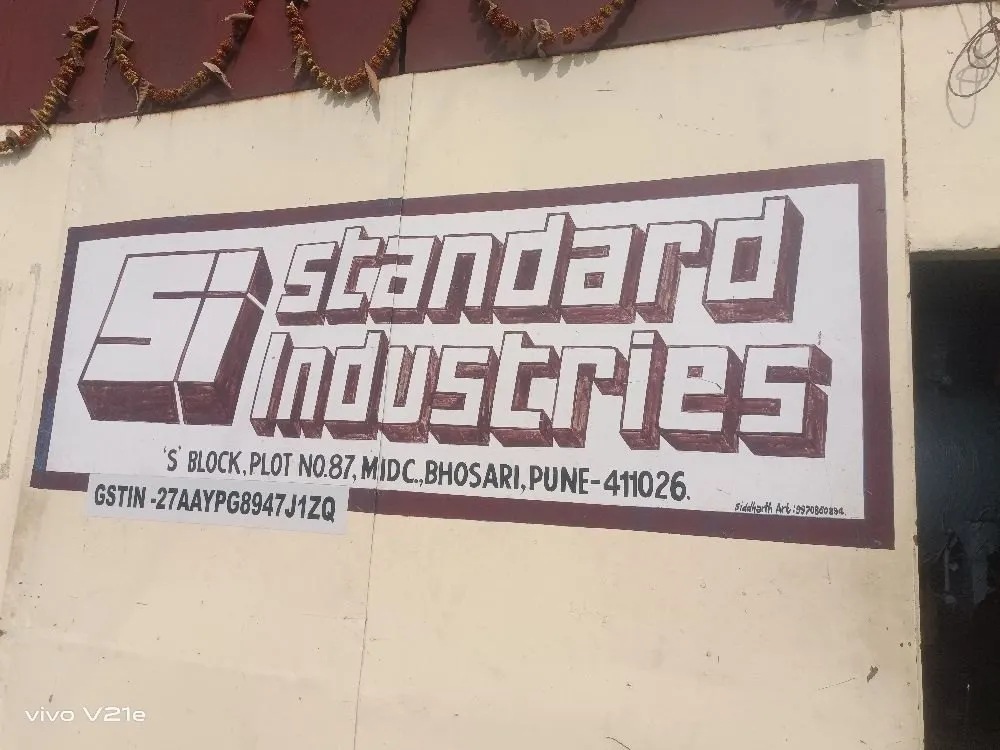
1. At a Glance – A 133-Year-Old Company Still Searching for a Business Model
₹107 crore market cap.
₹16.7 share price.
Book value ₹20.4.
Price-to-book 0.82.
ROCE: -7.81%.
ROE: -10.5%.
Debt-to-equity: 0.02 (almost debt free… because banks probably stopped answering calls).
3-month return: -6.53%.
1-year return: -25.7%.
And now the latest Q3 FY26 results:
- Revenue: ₹7.73 crore
- Net Loss: ₹4.62 crore
- EPS: ₹-0.72
- Operating Margin: -53%
Yet the company has announced:
- Interim dividend of ₹0.55 per share
- Sale gain of ₹1,954.43 lakh
Ladies and gentlemen, welcome to Standard Industries Ltd — a company founded in 1892 that has survived the British Raj, two world wars, liberalisation, demonetisation, and now… operating losses.
The real question is:
Is this a textile business? A real estate liquidation vehicle? Or a historical monument listed on NSE?
Let’s investigate.
2. Introduction – The Curious Case of a 19th Century Company in 2026
Incorporated in 1892.
When this company was formed:
- India had no stock exchanges in their current form.
- Electricity was a luxury.
- And cotton mills were the future.
Fast forward to 2026 — and Standard Industries Ltd is primarily:
- Selling property
- Trading textiles
- Holding investments
- Reporting losses
- Paying dividends
Wait… what?
The revenue mix in FY22 was:
- Sale of property (assignment of lease land): ~97%
- Sale of cloth: ~2%
- Sale of salt: ~1%
So technically, this is a real estate monetisation company that still pretends to trade fabric.
In March 2022, the company transferred leasehold land of approx. 62.25 acres for ₹427.33 crore. That was the big payday.
Since then, operational business looks like someone forgot to turn on the factory lights.
The share trades below book value.
Promoters hold only 20.3%.
FIIs hold 38.86%.
Is this a value trap? A hidden land bank story? Or just a slow-motion asset liquidation?
Keep reading.
3. Business Model – WTF Do They Even Do?
Let’s decode this puzzle.
1️ Trading Division
They trade:
- Cotton towels
- Bed sheets
- Dhoti
- Suiting
- School uniforms
School uniform trading is a major component.
Now ask yourself:
A 133-year-old company with ₹107 crore market cap… is doing school uniform trading?
Margins are negative.
Inventory days historically were in four-digit territory.
Debtor days are 571 days.
That means customers pay after nearly 1.5 years.
Would you run your kirana shop like this?
2️ Property Division
This is where the action is.
Assets in excess of business needs are liquidated “based on market conditions.”
Translation:
Sell land when price looks good.
In 2022:
They executed transfer of leasehold land for ₹427.33 crore.
Recently in Q3 FY26:
They reported sale gain of ₹1,954.43 lakh.
So effectively:
Operations lose money.
Land sales make profit.
Dividend gets paid.
It’s like a landlord who keeps selling pieces of the house to fund grocery bills.
How long can that continue?
4. Financials Overview – Quarterly Reality Check
EPS:
- Q1 FY26: -0.16
- Q2 FY26: -1.03
- Q3 FY26: -0.72
Average EPS = (-0.16 -1.03 -0.72) / 3 = -0.64
Annualised EPS = -0.64 × 4 = -2.56
Which is close to TTM EPS of -2.60.
Quarterly Comparison (₹ Crore)
| Metric | Latest Q3 FY26 | Q3 FY25 | Q2 FY26 | YoY % | QoQ % |
|---|---|---|---|---|---|
| Revenue | 7.73 | 7.72 | 6.38 | 0.13% | 21.16% |
| EBITDA | -4.11 | -1.97 | -2.84 | Deteriorated | Deteriorated |
| PAT | -4.62 | -5.62 | -6.65 | Improved | Improved |
| EPS (₹) | -0.72 | -0.87 | -1.03 | Improved | Improved |
Observations:
- Revenue flat YoY.
- Loss slightly narrower than last year.
- EBITDA margins worse YoY.
- Still structurally loss-making.
The business is not improving operationally.
Losses are just fluctuating.
Question for you:
If revenue is flat and margins are negative, where does long-term value come from?
5. Valuation Discussion – Fair Value Range (Educational)
Since earnings are negative, traditional P/E becomes meaningless.
1️ P/E Method
Annualised EPS: -2.56
Industry PE: 15.2
Negative EPS × PE = Not meaningful.
So earnings-based valuation currently breaks down.
2️ EV/EBITDA Method
Enterprise Value: ₹106 crore
EBITDA (TTM): approx. -₹13 crore
EV/EBITDA = Negative (given as -9.32)
Again — not meaningful.
3️ Asset-Based Approach (More Relevant)
Book Value = ₹20.4
CMP = ₹16.7
P/B = 0.82
If valued at 1.0x book:
Fair value ≈ ₹20
If valued at 0.7–1.1x book:
Fair value range ≈ ₹14 – ₹22
This fair value range is for educational purposes only and is not investment advice.
So effectively, the market is pricing this as a discounted asset story.
6. What’s Cooking – News, Triggers & Drama
Latest developments:
- Q3 & 9M results approved
- Interim dividend ₹0.55/share
- Record date: Feb 20, 2026
- Sale gain ₹1,954.43 lakh
Dividend despite loss.
Classic Indian holding company behaviour:
“Operations down? Sell land. Declare dividend. Maintain legacy.”
But here’s the twist:
Contingent liabilities: ₹42.9 crore.
Interest coverage: -5.26.
Debtor days: 571.
Would you lend money to this company?
Then why are institutions holding nearly 43% combined (FIIs + DIIs)?
That’s the million-rupee puzzle.
7. Balance Sheet – Latest Consolidated (Sep 2025)
₹ Crore
| Item | Mar 2024 | Mar 2025 | Sep 2025 |
|---|---|---|---|
| Total Assets | 176 | 150 | 175 |
| Net Worth | 136 | 119 | 131 |
| Borrowings | 22 | 13 | 2 |
| Other Liabilities | 18 | 18 | 42 |
| Total Liabilities | 176 | 150 | 175 |
Observations
- Debt reduced drastically to ₹2 crore.
- Net worth stable around ₹131 crore.
- Other liabilities jumped in Sep 2025.
Three quick takes:
• Debt almost gone — that’s good.
• Net worth higher than market cap — interesting.
• But liabilities rising again — suspicious.
8. Cash Flow – Sab Number Game Hai
₹ Crore
| Year | CFO | CFI | CFF |
|---|---|---|---|
| Mar 2023 | -106 | 60 | -23 |
| Mar 2024 | -6 | 21 | -14 |
| Mar 2025 | 1 | 15 | -19 |
Operating cash flow barely positive.
Investment inflows likely from asset sales.
Financing cash outflow — maybe dividend payouts.
Translation:
Business doesn’t generate cash.
Assets generate cash.
If land sale stops, cash story becomes weak.
9. Ratios – Sexy or Stressy?
| Ratio | Value |
|---|---|
| ROE | -10.5% |
| ROCE | -7.81% |
| P/E | NA |
| PAT Margin | -39% |
| Debt/Equity | 0.02 |
Verdict:
Balance sheet stable.
Business unstable.
It’s like owning a bungalow with no salary income.
10. P&L Breakdown (₹ Crore)
| Year | Revenue | EBITDA | PAT |
|---|---|---|---|
| Mar 2023 | 21 | -12 | 22 |
| Mar 2024 | 27 | -11 | 0 |
| Mar 2025 | 28 | -12 | -14 |
Notice FY23 profit was due to other income (property related).
Core operations remain negative.
Are you investing in textile growth… or real estate liquidation?
11. Peer Comparison
| Company | Revenue Qtr | PAT Qtr | P/E |
|---|---|---|---|
| Softsol India | 3.40 | 3.62 | 26 |
| P.E. Analytics | 21.68 | 7.24 | 15 |
| Justo Realfin | 36.63 | 5.99 | 11 |
| Standard Inds. | 7.73 | -4.62 | NA |
Peers profitable.
Standard… not so standard.
12. Shareholding & Promoters
Promoters: 20.31%
FIIs: 38.86%
DIIs: 4.04%
Public: ~37%
Promoter holding is low.
Stanrose Mafatlal Investments holds bulk of promoter stake.
Promoter pledge: 0%.
At least no pledging drama.
But here’s the question:
Why is promoter stake only 20% in a 133-year-old legacy company?
13. Corporate Governance – Angels or Devils?
- No pledged shares.
- Dividend declared.
- Sale gain disclosed.
- Secretarial auditor demise reported Dec 2024.
Nothing screaming red flag.
But operations remain weak.
Governance looks compliant — business looks tired.
14. Industry Roast – Textile Meets Realty
Indian textile trading is brutal:
- Low margins
- High working capital
- Intense competition
Real estate monetisation stories:
- Unpredictable
- Dependent on land bank
- Event-driven
Standard Industries sits awkwardly between both worlds.
It’s neither a growth textile brand nor a pure-play real estate developer.
It’s more like a holding structure surviving on legacy assets.
In an era where companies are building AI chips, EV batteries, SaaS platforms…
This company is:
- Trading school uniforms
- Waiting for property deals
- Reporting negative margins
The market doesn’t reward confusion.
It rewards clarity.
Which one is this?
15. EduInvesting Verdict – Asset Story or Zombie Business?
Let’s summarise.
Strengths:
- Debt almost zero.
- Trading below book value.
- Dividend paying.
- Asset monetisation history.
Weaknesses:
- Persistent operating losses.
- Negative ROE & ROCE.
- Extremely high debtor days.
- Revenue stagnant.
Opportunities:
- Further land monetisation.
- Balance sheet clean-up.
- Potential restructuring.
Threats:
- Asset base shrinking over time.
- Core business irrelevance.
- Liquidity-driven stock movements.
This is not a growth company.
It’s an asset-backed, legacy structure.
Investors here are not betting on textile expansion.
They are betting on:
Land value > Market cap.
If future monetisation exceeds expectations, valuation can re-rate.
If operations remain loss-making and asset sales slow down — stagnation continues.
So the real question:
Are you comfortable owning a company that survives more on property deals than on business strength?
Because that’s the reality here.
Written by EduInvesting Team | Date