General information and education, not investment advice. The author is not a SEBI-registered adviser or research analyst. No recommendation, no promised returns. Markets carry risk including loss of capital. Figures may not be current. Always consult a SEBI-registered adviser.
1 — At a Glance
Wakefit sells mattresses. It also sells sofas, curtains, bathrobes and yoga mats. The mattress is the thing that pays the bills. It was 65.9% of revenue this quarter, growing 27.3% over the year, per management.
Revenue for the three months to June 2026 was ₹405 crore, up 16.6%. Operating profit was ₹56 crore, against ₹44 crore a year earlier. Profit after tax came in at ₹23 crore.
That number sits beside ₹122 crore of profit after tax in the three months to March 2026. The gap is a tax entry. In that quarter the company recognised a deferred tax asset of ₹103 crore. A deferred tax asset is a future tax saving recorded in the books now. It pushed a credit of ₹98 crore through the profit and loss account. This quarter the deferred tax line ran the other way, as a charge of ₹7.3 crore. Management describes the movement as non-cash and accounting-driven, with no effect on cash tax paid. Excluding deferred tax movements, the company puts profit after tax at ₹30.7 crore, or 7.6% of revenue.
Events in the Middle East moved the price of polyol, a chemical used in foam. A mattress company in Bengaluru held two board-level conversations about it.
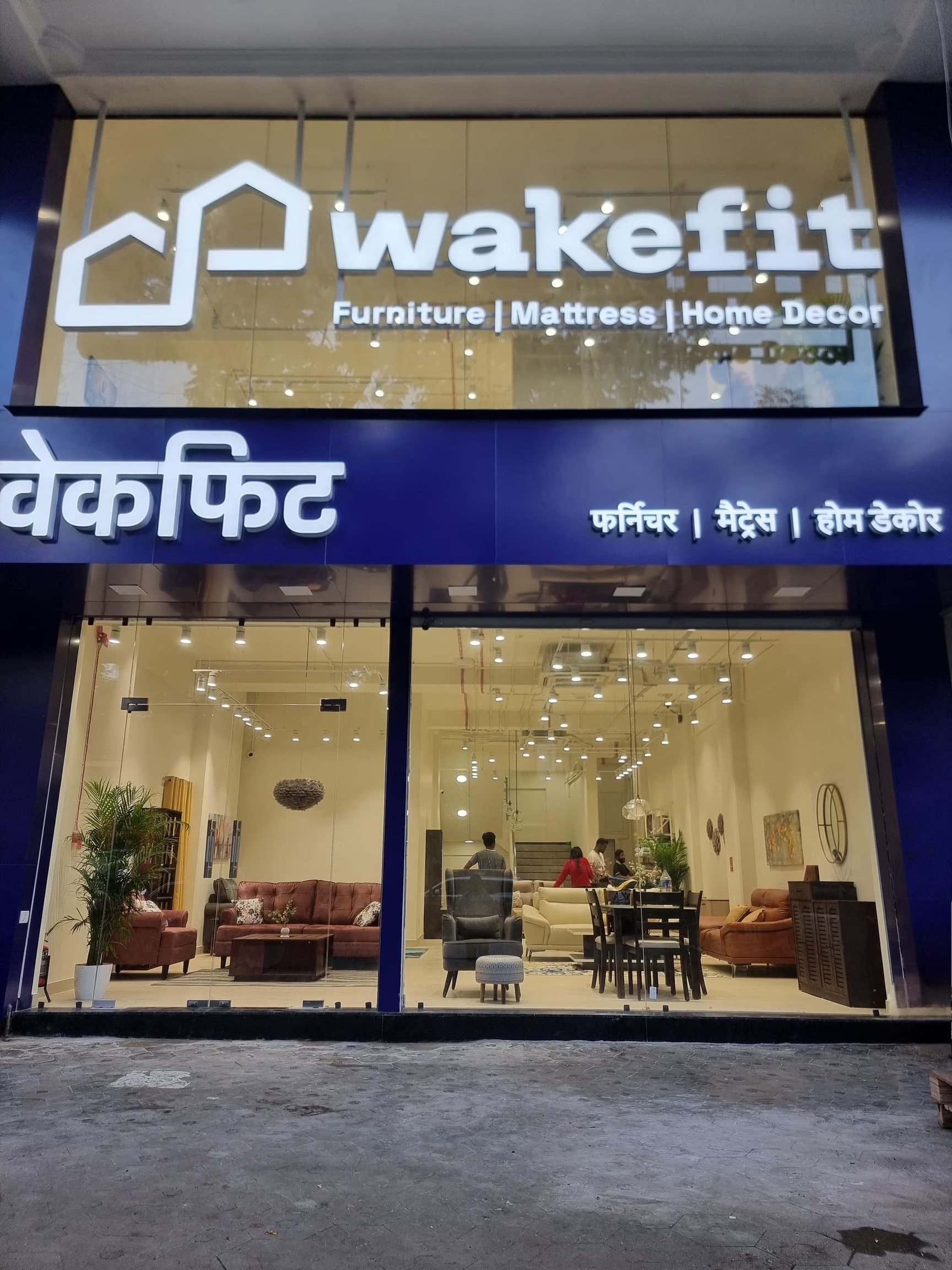
Twenty-seven new company-owned stores opened in three months. That takes the count to 165 stores across 100 cities. The whole of the year to March 2026 added 42.
2 — Introduction
Wakefit Innovations Limited was incorporated in 2016. It is an Indian home and sleep company that sells direct to households rather than through distributors. It listed on the NSE and BSE on 15 December 2025. The offer covered 66,096,866 equity shares. ₹912 crore of that was an offer for sale, where existing holders sell their own shares. A further ₹377 crore was a fresh issue, which is new money raised by the company itself. Net proceeds from the fresh issue were ₹349 crore. The company earmarked them for 117 new company-owned stores, lease payments on existing ones, equipment and marketing. General corporate purposes were also listed.
Eight months of listed life brought a run of changes at the top. Chief financial officer Navesh Gupta resigned with effect from 31 December 2025. Parul Gupta was appointed chief financial officer with effect from 10 February 2026. Her background, per the company’s disclosures, spans Syngene, Myntra and Jabong. It also covers Aircel and Airtel. In January 2026 shareholders approved turning compulsorily convertible preference shares into equity. Those are shares that must convert into ordinary shares. The same postal ballot approved changes to the Articles of Association. It also ratified 12,806,928 employee stock options, which are shares set aside for staff. Two resolutions in that ballot, numbers 4 and 5, did not pass. Nitesh Prakash joined as senior vice president, home interiors, with effect from 30 March 2026.
The equity capital line tells the corporate-structure story without anyone having to narrate it. It stood at ₹1 crore through the year to March 2025, then ₹33 crore the year after. Reserves went from ₹500 crore to ₹1,099 crore over that same year. That is a listing and a preference-share conversion landing in the same twelve months.
The tenth annual general meeting is scheduled for 9 September 2026. The company said so in a newspaper publication filed on 12 August.
US
Now live
US Stocks terminal is live
13,000+ US tickers · EDGAR fundamentals · screener and filings feed — the same terminal, for American markets.
Explore →
3 — Business Model: WTF Do They Even Do?
They make things people lie on, sit on and step out of the shower onto.
There are three categories. Mattresses come as memory foam, ShapeSense, Eco Latex and Xpert Grid. Rollup, foldable and dual comfort models sit beside them. Furniture covers sofas, beds, chairs and dining sets. Engineered wood cabinets and solid wood coffee tables are in there too. Furnishings and décor run to cushions, pillows, curtains and mats. Rugs, runners, towels and bathrobes are also sold, as are lightings. In the year to March 2026, mattresses were 61.4% of revenue and furniture 29.3%. Furnishings were 9.3%. In the three months to June 2026 the mix moved to roughly 66% and 28%, with furnishings at about 6.3%.
The model is vertically integrated, meaning the company makes most of what it sells. Five plants do that: two in Hosur, one in Sonipat and two in Bengaluru. Hosur handles wood furniture, sofas and chairs at one site, mattresses at the other. Sonipat makes mattresses and sofas, while Bengaluru covers fabrication, research and accessories. Together they run to over 6.99 lakh square feet of built-up area. Inside are robotic arms, roller belts, CNC machines and a process called ‘Every Part Every Interval’. Behind that sits a 1.6 lakh square foot mother warehouse in Hosur. The network adds 10 inventory holding points and 24 points of delivery.
Distribution is