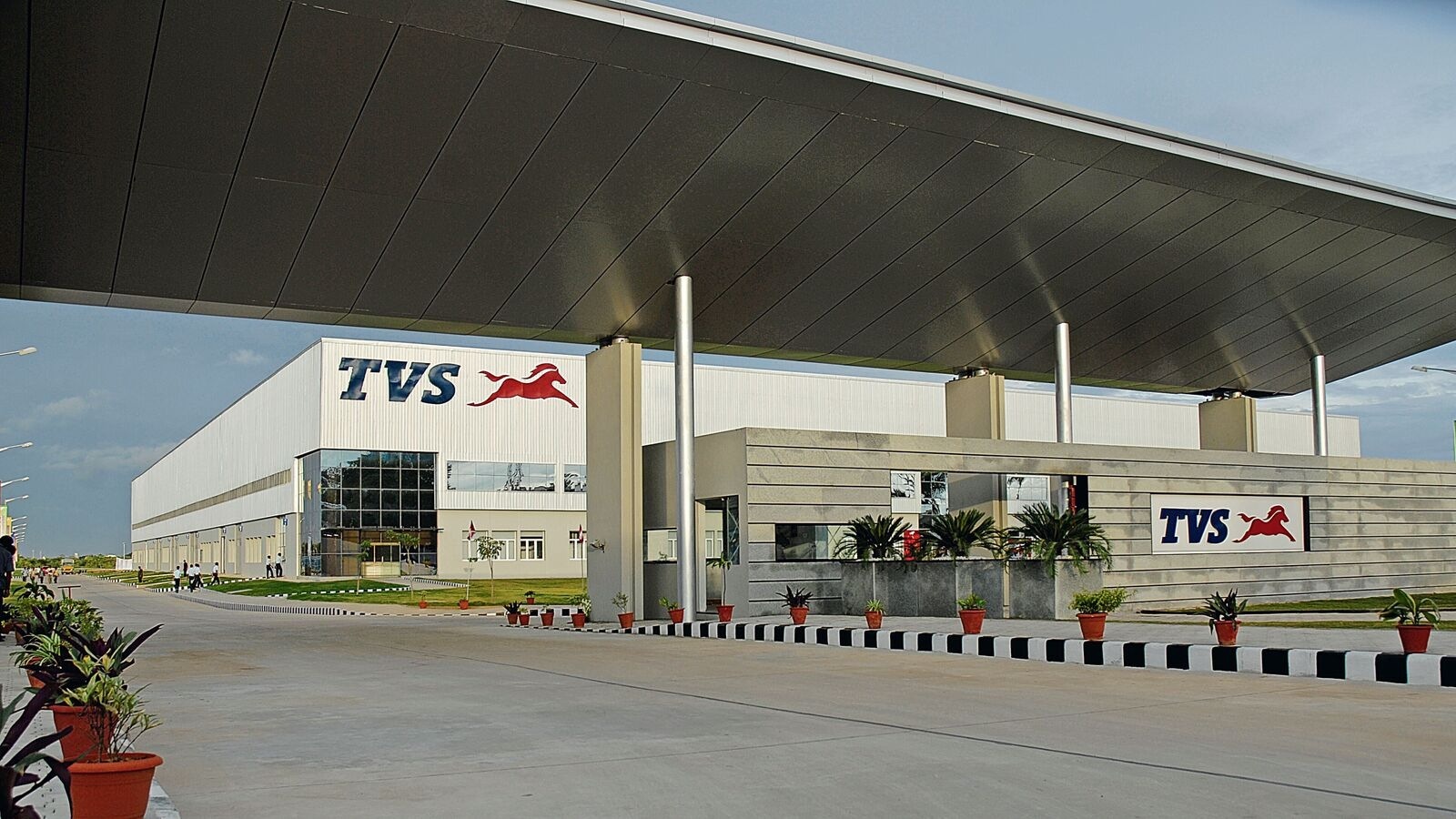
TVS Holdings Limited (TVSHL) has effectively transformed from a traditional manufacturer into a high-stakes financial powerhouse. By securing a Core Investment Company (CIC) license from the RBI, the company has officially pivoted its identity, shedding its spare parts trading skin to focus on its crown jewel: a 50.26% stake in TVS Motor Company Ltd, valued at a staggering ₹81,936 crore.
The latest numbers are hard to ignore. We are looking at a Consolidated Revenue of ₹15,588 crore for the March 2026 quarter, representing a massive 32.1% YoY growth. However, the sheer scale of the balance sheet comes with its own set of gravitational pulls. The Debt-to-Equity ratio sits at 5.59x, a number that would give any traditional auditor a minor heart attack if not for the underlying value of the TVSM stake.
Management isn’t just sitting on its laurels; they are aggressively expanding the footprint. The acquisition of an 81% stake in Home Credit India for ₹554 crore marks a definitive entry into the consumer finance segment. While the growth is sensational, the pledged promoter holding has spiked to 16.9% (down from a peak of 23.06% but still significant), signaling that the aggressive expansion is being fueled by high-leverage maneuvering.
Is this a masterpiece of financial engineering or a house of cards waiting for a market correction? With a Consolidated PAT of ₹865 crore in the latest quarter and a ROE of 30.7%, the engine is humming, but the debt levels demand a very steady hand at the wheel.
1. At a Glance
TVS Holdings is no longer just “Sundaram-Clayton” with a new name. It is a massive strategic vehicle parked at the intersection of manufacturing legacy and aggressive financial pivoting. If you look at the surface, the numbers look like a rocket ship. Revenue for FY26 hit ₹58,154 crore, up from ₹44,993 crore in the previous year. That is not just growth; that is an explosion of scale.
But here is where the intrigue turns into a warning light for the uninitiated. The company is carrying ₹36,156 crore in consolidated debt. In any other universe, a debt-to-equity ratio of 5.59 would be considered a red flag the size of a football field. The only reason the market stays calm is the “Holding Company” discount and the liquid gold it holds in the form of TVS Motor shares.
Financial Wisdom: A holding company is only as strong as the dividends of its subsidiaries and the market value of its holdings. If the subsidiary catches a cold, the holding company gets pneumonia.
We see a massive shift in the business model. The cessation of the spare parts trading business in October 2024 and the full-scale pivot to a Core Investment Company (CIC) means TVSHL is now a professional capital allocator. The acquisition of Home Credit India for ₹554 crore and subsequent capital infusions (another ₹526.79 crore in March 2026) shows a hunger for the lending business.
The promoter group, led by the VS Trust, has been playing a high-stakes game of “pledge and redeem.” Pledged shares rose to over 23% before settling around 16.9%. This volatility in encumbrance suggests that the expansion into consumer finance and the bonus NCRPS (Non-Convertible Redeemable Preference Shares) issue are stretching the promoter’s liquidity.
The company recently approved a bonus issue of 46 NCRPS for every 1 equity share, effectively moving ₹986.52 crore from reserves to debt. While this rewards shareholders, it adds to the fixed-cost repayment pressure. The intrigue here isn’t about whether they can grow—they clearly are—but whether the sheer weight of the debt and the complexity of the new finance-heavy structure will eventually slow down the momentum.
2. Introduction
TVS Holdings Limited is the ultimate “power behind the throne.” While the world looks at the sleek two-wheelers rolling off the TVS Motor assembly lines, TVS Holdings is the entity that actually calls the shots, holding more than half of the empire.
Incorporated in 1962 as Sundaram-Clayton, the company spent decades as a master of aluminum die castings. But in 2023-2024, the business underwent a “metamorphosis.” It demerged its die-casting business into a separate entity (SCL DCD) and reinvented itself as a holding company.
The strategy is clear: unlock the value of the TVS Motor stake and use it as collateral to build a new empire in Financial Services. The acquisition of Home Credit India is the first major move in this direction, moving the company from “making parts” to “financing dreams.”
However, this transition has turned the balance sheet into a complex web of intra-group transactions, bonus preference shares, and massive borrowings. For an investor, understanding TVS Holdings is less about analyzing “sales of goods” and more about analyzing the “spread of interest” and the “valuation of equity stakes.”
3. Business Model – WTF Do They Even Do?
If you asked management ten years ago, they’d say, “We melt aluminum and make parts.” Today, the answer is: “We own the best motorcycle company in India and we lend money to people who want to buy appliances.”
The Holding Fortress:
The primary “business” is owning 50.26% of TVS Motor Company. This is a cash-cow. TVS Motor is India’s third-largest two-wheeler maker and a massive exporter. TVSHL lives off the dividends and the prestige of this holding.
The Lending Pivot:
By acquiring Home Credit India (~81% stake), TVSHL has entered the cutthroat world of consumer durable loans and personal finance. They aren’t just manufacturers anymore; they are now a financial services group. The plan is to merge Home Credit with TVS Credit (another group entity) by 2027 to create a massive NBFC.
The CIC Engine:
As a Core Investment Company, they don’t trade parts anymore (that business was killed in 2024). They manage capital. They issue NCDs (Non-Convertible Debentures) to raise money at 8.10% to 8.65% and then pump that money into subsidiaries like Home Credit to earn a higher return.
It’s a classic spread game, but played with billions of rupees in debt.
4. Financials Overview
The numbers are massive, but as a Core Investment Company, the “Operating Profit” and “Sales” are now largely reflective of the consolidated performance of TVS Motor and the newly added finance arms.
Quarterly Performance Tracker (Consolidated)
| Metrics | Latest Qtr (Mar 2026) | Same Qtr Last Year (Mar 2025) | Previous Qtr (Dec 2025) | YoY Growth |
| Revenue | ₹15,588 Cr | ₹11,800 Cr | ₹15,276 Cr | 32.1% |
| EBITDA | ₹2,399 Cr | ₹1,893 Cr | ₹2,461 Cr | 26.7% |
| PAT | ₹865 Cr | ₹644 Cr | ₹969 Cr | 34.3% |
| EPS (Annualised) | ₹839.84 | ₹560.36 | ₹976.56 | 49.8% |
Note: Annualised EPS for Q4 is the actual Full Year EPS of ₹839.45.
Witty Commentary:
The revenue growth is a beast, but look at the finance costs. The company is paying nearly ₹650 crore in interest every quarter. Management “walked the talk” on growth, but the price of that growth is a permanent seat at the table for the lenders.
Wait, if the profit is growing at 34%, why did the EPS drop compared to the December quarter? (Think about the interest spike and the seasonal nature of dividend income in holding companies).
5. Valuation Discussion – Fair Value Range
Calculating the value of a holding company requires a mix of “Asset Value” and “Earnings Potential.” We will focus on the Standalone value (the holdings) and the Consolidated earnings.
Method 1: P/E Based Valuation
- Current Annualised EPS: ₹839.45
- Median Industry P/E (Financial Services/Investment): 28.4
- Applying a 40% Holding Company Discount: Effective P/E of 17x
- Value = $839.45 \times 17 = ₹14,270$
Method 2: Net Asset Value (NAV) Approach
- Value of TVS Motor Stake: ₹81,936 Cr
- Value of Home Credit Investment: ~₹1,336 Cr
- Total Debt: ₹36,156 Cr
- Standalone Debt: ₹1,600 Cr
- Net Asset Value (Market Value of Holdings – Standalone Debt) / Shares:
- Value = $(81,936 + 1,336 – 1,600) / 2.0238 \text{ Cr shares} = ₹40,356$
- Applying a standard 60% Holding Company Discount: ₹16,142
Method 3: EV/EBITDA
- Consolidated EBITDA: ₹9,122 Cr
- Enterprise Value: ₹58,774 Cr
- EV/EBITDA Ratio: 6.44x
- Applying a 7x conservative multiple: ₹15,000
Fair Value Range Summary
Based on the blend of these methods, the estimated fair value range for TVS Holdings lies between ₹14,200 and ₹16,500.
Disclaimer: This fair value range is for educational purposes only and is not investment advice.
6. What’s Cooking – News, Triggers, Drama
The kitchen at TVS Holdings is currently a scene of high-octane financial cooking.
The Bonus Debt Party:
The board recently approved a scheme of arrangement to issue bonus NCRPS worth ₹986.52 crore. Essentially, they are telling shareholders, “We won’t give you cash right now, but here is a piece of paper that pays 6% interest and we will give you the cash in 15 months.” It’s a clever way to keep the cash inside the company for the Home Credit expansion while keeping the promoters happy.
Home Credit Hunger:
On March 28, 2026, the company poured another ₹526.79 crore into Home Credit India. They are clearly in a hurry to scale up this business before the 2027 merger deadline.
Credit Rating Upgrade:
CRISIL recently upgraded the company to AA+/Stable. This is like getting a gold star from your teacher while you are deep in debt—it allows you to borrow even more money at lower rates. And they did exactly that, approving a new borrowing limit of ₹1,100 crore in May 2026.
The NCLT Drama:
The scheme of arrangement for the bonus issue just got a 99.9977% “Yes” vote from shareholders. The NCLT approval is the final hurdle.
Are you comfortable with a company that pays its “bonus” in the form of more debt?
7. Balance Sheet
The balance sheet is where the “detective” work begins. The sheer scale of the consolidated liabilities is breathtaking.
Latest Consolidated Balance Sheet (Mar 2026)
| Particulars | Mar 2026 (₹ Cr) | Mar 2025 (₹ Cr) | Mar 2024 (₹ Cr) |
| Total Assets | 64,008 | 53,895 | 44,530 |
| Net Worth | 6,466 | 4,687 | 2,840 |
| Borrowings | 36,156 | 32,489 | 26,232 |
| Other Liabilities | 21,386 | 16,718 | 15,458 |
| Total Liabilities | 64,008 | 53,895 | 44,530 |
Auditor’s Sarcastic Observations:
- Borrowings at ₹36,156 crore? That’s not a loan; that’s a lifestyle choice.
- The Net Worth is growing, but it’s still just 10% of the total assets. The rest is essentially other people’s money.
- “Other Liabilities” grew by nearly ₹5,000 crore in one year. Someone is definitely keeping the vendors and the taxman waiting in the lobby.
8. Cash Flow – Sab Number Game Hai
Cash flow is the truth serum of finance. For TVS Holdings, the consolidated cash flow shows a company that is spending faster than it can earn from operations.
Consolidated Cash Flow Summary
| Particulars | Mar 2026 (₹ Cr) | Mar 2025 (₹ Cr) | Mar 2024 (₹ Cr) |
| Operating Cash Flow (CFO) | 1,137 | 3,535 | -867 |
| Investing Cash Flow (CFI) | -3,015 | -2,857 | 961 |
| Financing Cash Flow (CFF) | 1,792 | 1,209 | 847 |
Where did the money go?
The company generated ₹1,137 crore from operations but spent over ₹3,000 crore on investments (Capex in TVS Motor and infusions in Home Credit). To bridge the gap, they borrowed another ₹1,792 crore.
Essentially, the company is a giant vacuum cleaner for debt, sucking up capital to fuel the growth of its subsidiaries.
9. Ratios – Sexy or Stressy?
The ratios tell the story of a high-performance machine running on nitro-methane debt.
| Ratio | Value (Mar 2026) | Status |
| ROE | 30.7% | Sexy |
| ROCE | 17.0% | Decent |
| P/E | 16.4 | Fair |
| Debt to Equity | 5.59 | Stressy |
| PAT Margin | 2.94% | Thin |
Witty Judgement:
The ROE looks phenomenal at 30.7%, but remember that ROE is easily manipulated by high debt. If you borrow enough money to buy assets, your return on the tiny bit of equity you started with will always look “sexy.” The 5.59x Debt-to-Equity is the ghost in the machine.
10. P&L Breakdown – Show Me the Money
Let’s look at the three-year trend of the consolidated income statement.
| Year | Revenue (₹ Cr) | EBITDA (₹ Cr) | PAT (₹ Cr) |
| Mar 2026 | 58,154 | 9,122 | 1,712 |
| Mar 2025 | 44,993 | 6,844 | 1,165 |
| Mar 2024 | 39,882 | 5,760 | 802 |
Stand-up Comedy Commentary:
Revenue went from ₹39k Cr to ₹58k Cr in two years. That’s like a teenager hitting a growth spurt and needing a whole new wardrobe every week. The EBITDA margins are holding steady at 15-16%, which is impressive given the scale. But look at the PAT—it’s growing, but the interest expense is eating a massive chunk of the pie. It’s like earning a six-figure salary but spending half of it on a Ferrari loan.
11. Peer Comparison
How does our heavy-debt giant compare to other financial and investment conglomerates?
| Name | Revenue (Qtr) | PAT (Qtr) | P/E |
| TVS Holdings | ₹15,588 Cr | ₹865 Cr | 16.4 |
| Jio Financial | ₹1,018 Cr | ₹272 Cr | 100.1 |
| Aditya Birla Cap | ₹13,459 Cr | ₹1,164 Cr | 24.6 |
| Tata Inv. Corpn. | ₹40 Cr | ₹64 Cr | 78.8 |
Sarcastic Notes:
Jio Financial is trading at a P/E of 100 on hopes and dreams, while TVS Holdings is slogging it out in the real world with a P/E of 16. Aditya Birla Capital is the real competitor here, showing much better profitability on similar revenue. Tata Investment is just a quiet vault that the market occasionally goes crazy for.
12. Miscellaneous – Shareholding and Promoters
The promoters are the “VS Trust,” representing the legendary Venu Srinivasan family.
Shareholding Pattern (Mar 2026):
- Promoters: 74.45%
- FIIs: 3.29% (Slowly increasing)
- DIIs: 9.83%
- Public: 12.43%
Promoter Roast:
The promoters hold a massive 74.45% stake, which shows they believe in the ship. However, they’ve been using their shares like a credit card. The pledged percentage was 23%, then it dropped to 16%, and now it’s back up. It’s a game of musical chairs with the banks. Also, the VS Trust recently upped its stake to 66.55% within the group, further consolidating power.
Small Promoter Roast: If you love the company so much, maybe stop pledging it at the bank every time you want to buy a new subsidiary?
13. Corporate Governance – Angels or Devils?
Corporate governance at the TVS group has historically been “Gold Standard,” but the recent flurry of complex transactions raises eyebrows.
The auditors, M/s. N.C. Rajagopal & Co, gave an unmodified opinion, which is good. But look at the “Related Party” transactions. Selling TVS Emerald (the real estate arm) to a promoter-owned entity for ₹485.85 crore in December 2024 is a classic move to clean up the balance sheet before becoming a Core Investment Company.
The board meetings are frequent, and the approvals for NCDs and NCRPS are coming in thick and fast. While legal, these are highly sophisticated financial maneuvers that favor the promoter’s ability to leverage the company’s assets. They aren’t devils, but they are certainly very smart “financial engineers.”
14. Industry Roast and Macro Context
The “Investment Company” industry in India is essentially a game of “Who has the biggest brother?” If you have a successful manufacturing arm, you become an investment company to borrow against it.
The entire sector is currently obsessed with “Consumer Finance.” Every company and their grandmother wants to lend you money to buy a phone. TVS is late to the party with Home Credit, and they are entering a market where Bajaj Finance and Jio Financial are already waiting with baseball bats.
The macro context is tricky. If interest rates stay high, TVS Holdings’ ₹36,000 crore debt becomes a heavy anchor. If the two-wheeler market slows down due to high fuel prices or rural distress, the dividend income from TVS Motor will dry up, and the whole CIC structure will feel the heat.
15. EduInvesting Verdict
TVS Holdings is a fascinating study in corporate evolution. It has successfully moved from being a component maker to a strategic giant.
Past Performance: Stellar. The stock has delivered a 59% CAGR over 3 years. You can’t argue with that kind of wealth creation.
History: Deeply rooted in the Chennai industrial belt, with high credibility.
Headwinds: Massive debt, high interest rates, and the integration risk of Home Credit India.
Tailwinds: The unstoppable momentum of TVS Motor and its dominance in the EV scooter space.
SWOT Analysis
- Strengths: 50.26% stake in a top-tier auto major (TVSM).
- Weaknesses: Extremely high consolidated leverage (5.59x Debt-to-Equity).
- Opportunities: Becoming a major player in consumer finance via Home Credit and TVS Credit.
- Threats: Market volatility affecting the share price of TVSM, which is the primary collateral for the group’s debt.
In summary, TVS Holdings is a high-conviction bet on the Venu Srinivasan family’s ability to manage a high-leverage transition. It’s a financial fortress, but the moat is filled with debt.
What do you think is riskier: A company with no debt and no growth, or a company with 5x debt and 30% growth? Let us know in the comments.