1. At a Glance
Trident Lifeline is currently orchestrating a high-stakes expansion that has caught the full attention of the market, but the numbers tell a story of both aggressive growth and mounting pressure. The company reported a consolidated revenue of ₹ 12,902.13 Lakhs (₹ 129 cr) for FY26, a massive leap from the previous year. While the top-line growth is sensational, the underlying mechanics reveal a company sprinting at a pace that is stretching its financial fabric.
Investors are flocking to this story because of the sheer scale of the pipeline. With 2,458 product registrations in process across 44 countries, the potential for future revenue is mathematically significant. However, the red flags are waving in plain sight. The company’s debtor days have ballooned to 208 days, suggesting that while sales are being booked, the actual cash is taking an eternity to hit the bank account. This creates a precarious “paper wealth” scenario where the P&L looks golden, but the cash flow is gasping for air.
The capital allocation strategy is equally bold and risky. Trident has moved away from its pure “asset-light” third-party model to a hybrid model, acquiring controlling stakes in multiple entities like TNS Pharma, TLL Wellness, and Trident Mediquip. This M&A spree has driven borrowings up to ₹ 73 cr, a significant jump that has seen interest costs spike by 66% YoY.
The “investor attention” is earned by a 62% TTM profit growth, but a seasoned eye will immediately spot the strain on the balance sheet. The company is effectively financing its global expansion through debt and delayed collections. It is a classic high-growth small-cap play where the management is “all-in” on global dominance, leaving little room for error if the registration timelines in volatile markets like Venezuela or Ghana face hiccups.
2. Introduction
Trident Lifeline Ltd (TLL) is not your average domestic pharma player. Established in 2014 and headquartered in the textile hub of Surat, it has pivoted sharply to become an export powerhouse. The company specializes in pharmaceutical formulations, operating a complex web of own brands and contract manufacturing.
The business is built on a foundation of intellectual property. Unlike companies that focus on a few blockbuster drugs, Trident’s strategy is a “volume of registrations” game. They currently have 1,070 registered products and are aggressively chasing thousands more. This is a backloaded investment model; the costs of registration are upfront, while the revenue flows in years later.
Currently, the company’s reach spans 44 countries, with a heavy concentration in Africa and South America. Ghana, Venezuela, Cambodia, and Kenya alone account for about 61% of their total registration pipeline. This geographical mix is high-reward but comes with inherent geopolitical and currency risks that the company must navigate.
The recent transition to a hybrid manufacturing model is the most significant strategic shift in its history. By acquiring manufacturing sites, they are moving closer to the supply chain, seeking better margins and quality control. However, this move also kills the “asset-light” charm that many initial investors found attractive.
Trident is at a crossroads. It is no longer just a merchant exporter; it is becoming a full-stack pharmaceutical conglomerate with subsidiaries handling everything from herbal products (TLL Wellness) to medical devices (Trident Mediquip). The complexity of managing these diverse interests while maintaining a 50% growth rate is the primary challenge facing the current leadership.
3. Business Model – WTF Do They Even Do?
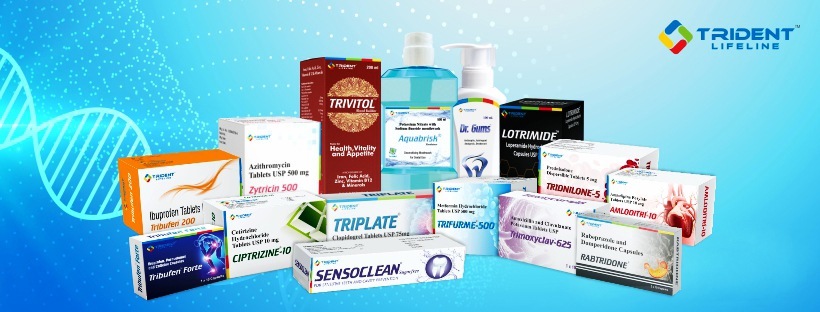
Trident Lifeline is essentially a “Registration Arbitrage” machine. They identify molecules that are widely used in emerging markets, get them registered under their own brand names, and then find the cheapest way to manufacture them—either through their own newly acquired plants or third-party partners.
Think of them as a pharma brand aggregator. They don’t spend billions on R&D for new drugs. Instead, they spend millions on Product Registrations, which are the “gatekeeper” assets in the pharma world. Once you have the registration for a