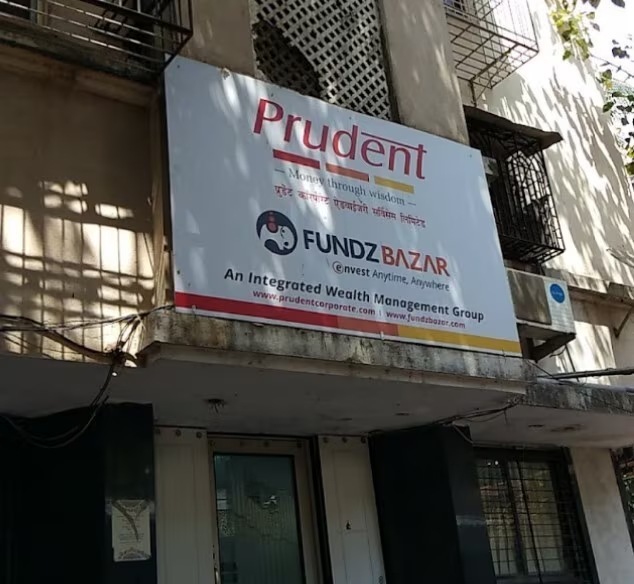
The wealth management landscape in India is witnessing a structural shift, and Prudent Corporate Advisory Services Ltd is positioning itself as the primary toll-booth for retail capital. In a year defined by fluctuating global cues and a domestic market that tested investor patience, Prudent has managed to clock a revenue of ₹1,317 crore for FY26, a growth of 19.4% YoY.
While the headline numbers suggest a steady ship, the real story lies in the “granularization” of their book. The company’s Monthly SIP book has now scaled to a massive ₹1,188 crore, effectively insulating the business from the transient whims of market mark-to-market (MTM) shocks. With a market cap of ₹11,714 crore, the company is no longer just a small-town distributor; it is an institutionalized engine of retail financialization.
However, the rapid growth comes with its own set of “auditor-style” observations. The Operating Profit Margin (OPM), which stood at 29% in Mar 2023, has gradually compressed to 24% in Mar 2026. This 500-basis point erosion over three years is a signal that while the AUM is scaling, the cost of acquisition and competitive intensity in the MFD (Mutual Fund Distributor) space is beginning to bite.
1. At a Glance – The Detective’s Notebook
If you are looking for a company that perfectly mirrors the “SIP-ification” of the Indian household, Prudent is the specimen. But as a detective, one must look past the shiny growth charts. The company’s Equity AUM now sits at a staggering 96.8% of its total portfolio. While this is great for commissions—since equity earns the highest yields—it makes the company’s P&L a slave to the Nifty 500’s performance.
Investors have been flocking to this stock, driving the Price-to-Book (P/B) ratio to a dizzying 13.3x. For a distribution business, that is a premium usually reserved for high-tech SaaS firms, not commission-based brokers. The management’s strategy of aggressive inorganic growth—evidenced by the ₹123.75 crore acquisition of Indus Capital—is clearly aimed at sustaining this valuation by buying AUM when organic growth feels the heat of SEBI’s regulatory gaze.
The red flags? Look at the Employee Costs. Including ESOP charges, the wage bill is creeping up, eating into the scale benefits. Furthermore, the Insurance vertical, while growing, saw a “commission reset” due to GST changes, proving that regulatory strokes can instantly delete profit margins. The market share in SIP flows has nudged up to 3.5%, but with the rise of “Direct” platforms, the “Regular” plan fortress that Prudent defends is under a constant siege of cost-conscious millennials.
Is this a compounding machine or a cyclically overvalued distributor? The truth lies in the persistence of those 3.5 million live SIPs.
2. Introduction – The Wealth Toll-Booth
Prudent Corporate Advisory Services is essentially a high-tech middleman. They sit between the giant Asset Management Companies (AMCs) and the millions of retail investors in Tier-2 and Tier-3 cities. Their B2B2C model is their secret sauce—they don’t just sell to customers; they empower 36,880 partners (MFDs) with digital tools to do the selling for them.
The company has successfully transitioned from a pure mutual fund distributor to a multi-product “Wealth Supermarket.” Today, they hawk everything from Life Insurance and Stock Broking to Unlisted Securities and Loan Against Mutual Funds (LAMF).
The geographical spread is impressive. With 144 locations across 21 states, Prudent has a “boots on the ground” advantage that digital-only apps struggle to replicate in the Bharat hinterland. As the Indian economy targets the “Viksit Bharat @2047” goal, Prudent is betting that per