ALL SECTIONS
The rise of the circular airport
From construction sites to terminal operations, Rome Fiumicino is applying circular economy principles to redesign infrastructure, manage resources and reduce environmental impact at scale
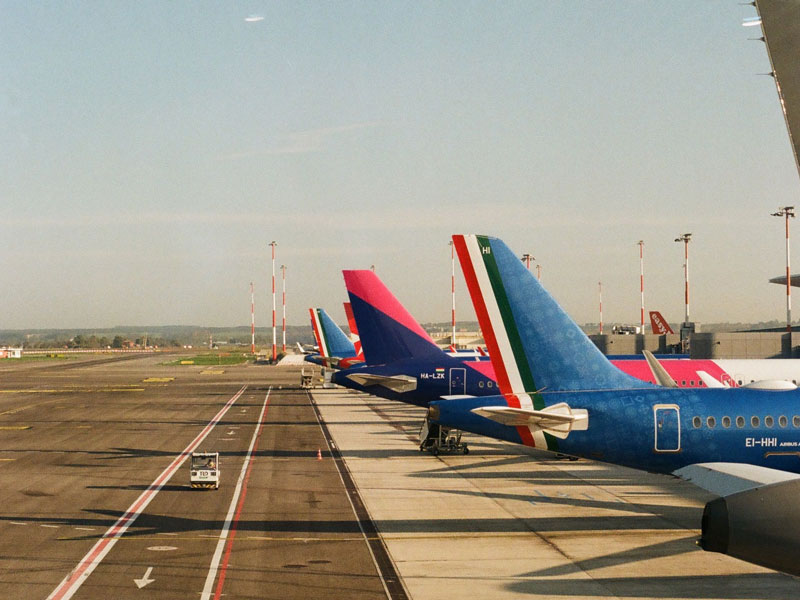 Airplanes lined up at Fiumicino Airport in Italy, Credit: Anna Holodna 
Aviation | Featured | Markets
Author: Marco Troncone, CEO & Managing director, Aeroporti di Roma
Top 5
- Top 5 female-fronted fintech firms
- Top 5 Latin American tech hubs
- Top 5 sustainability pioneers in Europe
- Top 5 keys to global economic recovery
- Top 5 WFH habits, according to the world’s most successful business leaders
- Top 5 pandemic-proof industries
- Top 5 countries to be world’s next manufacturing hubs
- Top 5 most influential and inspirational US economists
- Top 5 ways to boost employee engagement and commitment
- Top 5 financial services that are ripe for automation
- Top 5 ways that GDPR has impacted digital banking
- Top 5 emerging fintech hubs across the globe right now
- Top 5 ways that the finance industry can prepare for AI
- Top 5 economic risk factors that must be considered
- Top 5 tips for retailers looking to sell into Chinese market
Aeroporti di Roma (ADR) is one of Europe’s leading airport operators, managing and developing Rome Fiumicino and Ciampino airports. Rome Fiumicino ‘Leonardo da Vinci’ is a strategic gateway to Italy and one of the world’s leading airports, ranked in the global top 10 as well as one of only 12 airports to hold a Skytrax five-star rating worldwide. In 2025, Fiumicino exceeded 50 million passengers for the first time, further consolidating its role as a major global hub.
Within this context, circular economy has emerged as a key lever to enhance competitiveness while reducing environmental pressure, particularly for complex infrastructures such as airports, integrated systems where passenger flows, airlines, commercial activities, construction sites and operational services converge. For ADR, circular economy is therefore not a standalone