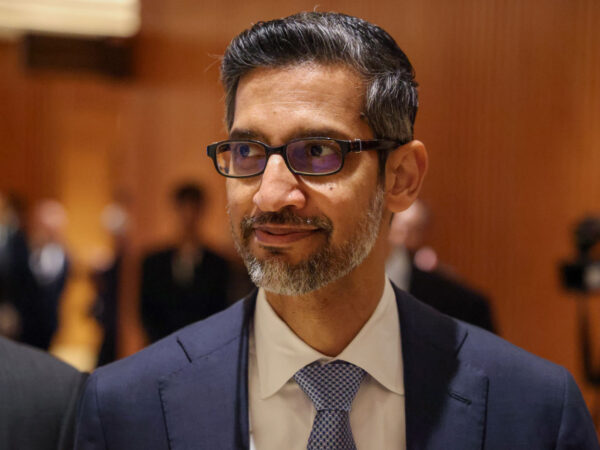
The ‘AI-first’ CEO
A tech CEO known not for dramatic predictions or wild antics but steady leadership and successful product delivery, Alphabet’s Sundar Pichai is something of a rarity in Silicon Valley. World Finance discovers how he rose through the ranks of one of the most valuable companies in the world – and why his biggest years could still be ahead of him
August 18, 2026
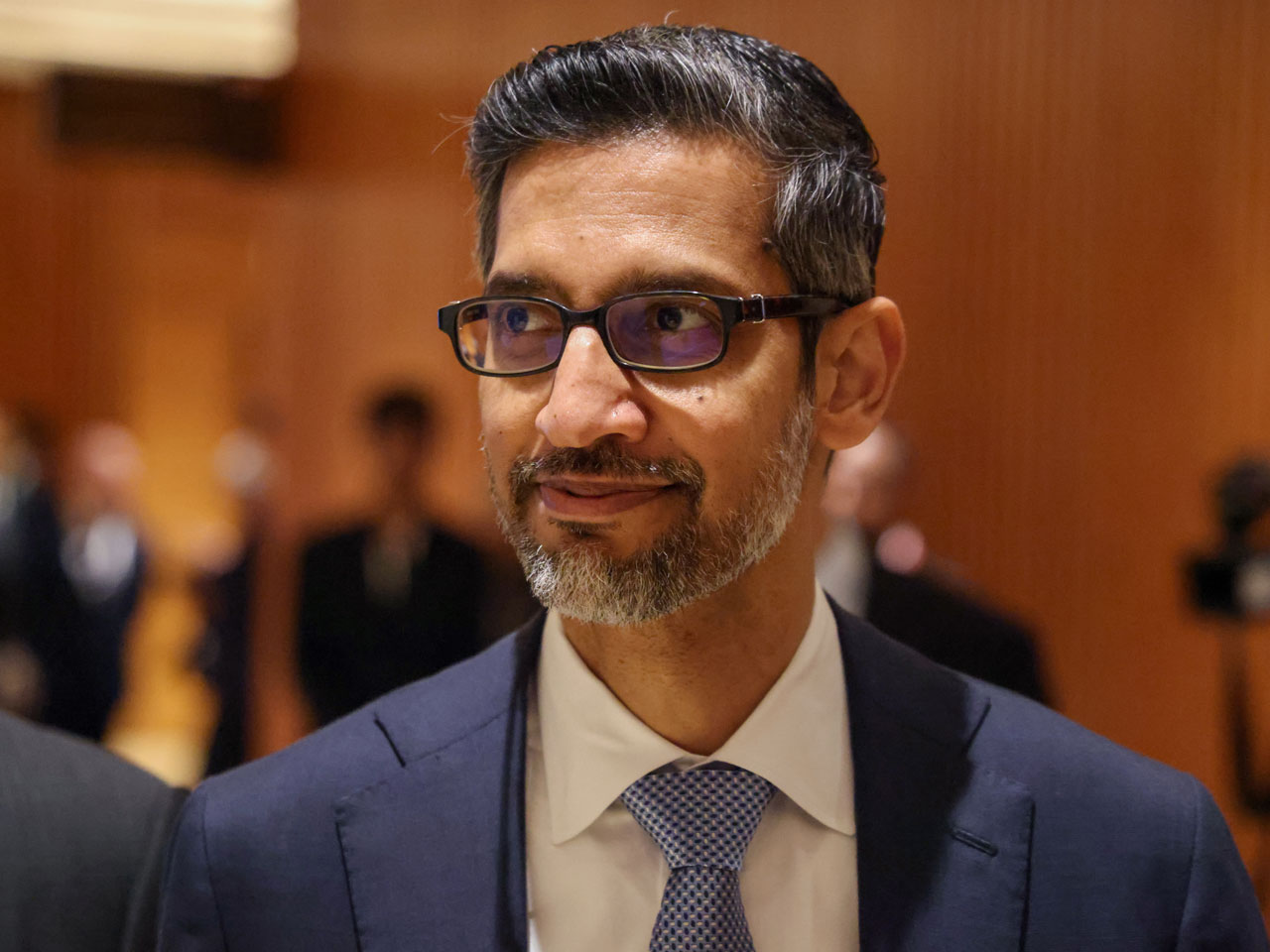
Every day, Google processes billions of search queries. As the most-visited website in the world, it owns the vast majority of global market share among search engines. But the technology behemoth is, of course, much more than a search engine alone. Google’s parent company, Alphabet, is behind several technologies that have become integral to daily life for huge swathes of people, from Google Maps and Gmail to Android and YouTube. Newer products, like Gemini, a generative artificial intelligence (AI) chatbot, and Waymo’s self-driving cars, are also taking off. In Alphabet’s first quarter earnings of 2026, the company said the number of paid subscriptions of the Gemini app had reached 350 million, while Waymo had launched in six new cities in 2026 and surpassed 500,000 fully autonomous rides per week, doubling in less than a year.
Sundar Pichai, the CEO of Google since 2015 and Alphabet since 2019, has not only led the tech giant to these incredible milestones, but he has also been the driving force behind several Google products that grew from unlikely upstarts to household names, such as Google Chrome and Drive. However, compared with the bosses of his competitors, Pichai takes a quieter, behind-the-scenes approach.
“Sundar Pichai’s career path is rooted in product leadership rather than founding mythology, and that shapes how he runs Alphabet,” Joe Crist, a cybersecurity and IT services CEO of Transform 42 Inc, which helps organisations scale sustainably, told World Finance. Crist puts Pichai’s success down to this brand of steady leadership. “He operates as a scale leader, focused on maintaining stability across a highly complex organisation rather than constantly reshaping it. That consistency gives engineering teams continuity and avoids the kind of frequent strategic shifts that can disrupt execution.”
Despite the monumental successes Pichai has overseen, the question on every investor’s lips today is whether the tech giant’s momentum can be sustained through the AI race, and whether its vast network of users will hinder its innovative potential or help it to come out on top.
Humble beginnings to tech titan
Born and raised in Chennai, southern India, Pichai arrived in the US in 1993 with a scholarship to study at Stanford University, where he earned his master’s degree in materials science and engineering. Not long after that, he obtained his MBA from the University of Pennsylvania’s Wharton School.
Pichai took up brief roles at semiconductor manufacturer Applied Materials and management consulting firm McKinsey & Co, but he had always been drawn to the allure of Silicon Valley. “I used to read about what was happening in Silicon Valley, and I wanted to be a part of it,” Pichai said in a 2014 interview at Delhi University. In 2004, he began his career at Google with a product management role. His first project was Google Toolbar, a feature that made it easier for users of Microsoft’s Internet Explorer and Mozilla Firefox web browsers to integrate Google’s search engine.
From there, he was soon promoted to vice president of product development, and he played a key role in developing Google’s own web browser, Chrome. This was no mean feat. “When we built Chrome, we had one percent market share one year after we launched,” Pichai told Time. Now, Chrome is the most used browser in the world. As the years passed, Pichai continued to climb the ranks, helped by an almost uncanny ability to create products and software that customers really wanted. “He has an exceptional sense for craft and the details in a product, all the way down to the pixels on the screen, the sound of a voice, the tactile feedback,” Clay Bavor, who worked under Pichai at Google for a decade, told Time magazine. Pichai soon became a right-hand man to Google co-founder Larry Page. “Sundar has a tremendous ability to see what is ahead and mobilise teams around the super important stuff,” Page wrote in a memo in 2014, announcing Pichai’s promotion to lead Google’s core products. “We very much see eye-to-eye when it comes to product, which makes him the perfect fit for this role.”
Pichai’s steady successes saw him reportedly pursued by tech rivals Twitter and Microsoft for leadership roles, but his loyalty to Google was rewarded with the top job in 2015, when Page and Sergey Brin created Alphabet as an umbrella company.
His work at the helm of Google, and later, after Page stepped down, Alphabet, included the creation of the Pixel smartphone; the launch of Google Home, previously known as Google Nest following the $3.2bn purchase of Nest Labs in 2014; and a strong push for AI innovations. Pichai’s achievements propelled Alphabet’s market capitalisation over the $4trn mark in early 2026 – only the fourth company to ever do so – and his own net worth to approximately $1.7bn, according to Forbes.
“Pichai’s leadership trajectory is closely tied to product execution at planetary scale,” Will Steward, who has nearly two decades of experience advising fast-growing tech employers and jobseekers as CEO and co-founder of The SaaS Jobs, told World Finance. “His early work on Chrome and later Android positioned him at the centre of Google’s distribution infrastructure, which effectively became the foundation of the company’s global reach,” he said. “That background has shaped a leadership style focused on system coherence, where success is measured by how well large platforms function together rather than isolated product breakthroughs.
“As chief executive, he has presided over a shift from single-discipline dominance in search advertising towards a multi-layered platform business,” Steward continued. “His approach has been to unify and ensure that infrastructure, advertising, devices and cloud services remain technically aligned. This has allowed Google to evolve without losing continuity across its core systems.”
While Pichai’s career has risen to dizzying heights, he came from a modest upbringing; it has been reported that he and his brother slept on the living room floor of a small family home growing up, and Pichai once said his father spent a year’s salary on his plane ticket to California so he could attend Stanford.
The journey of Sundar Pichai is one