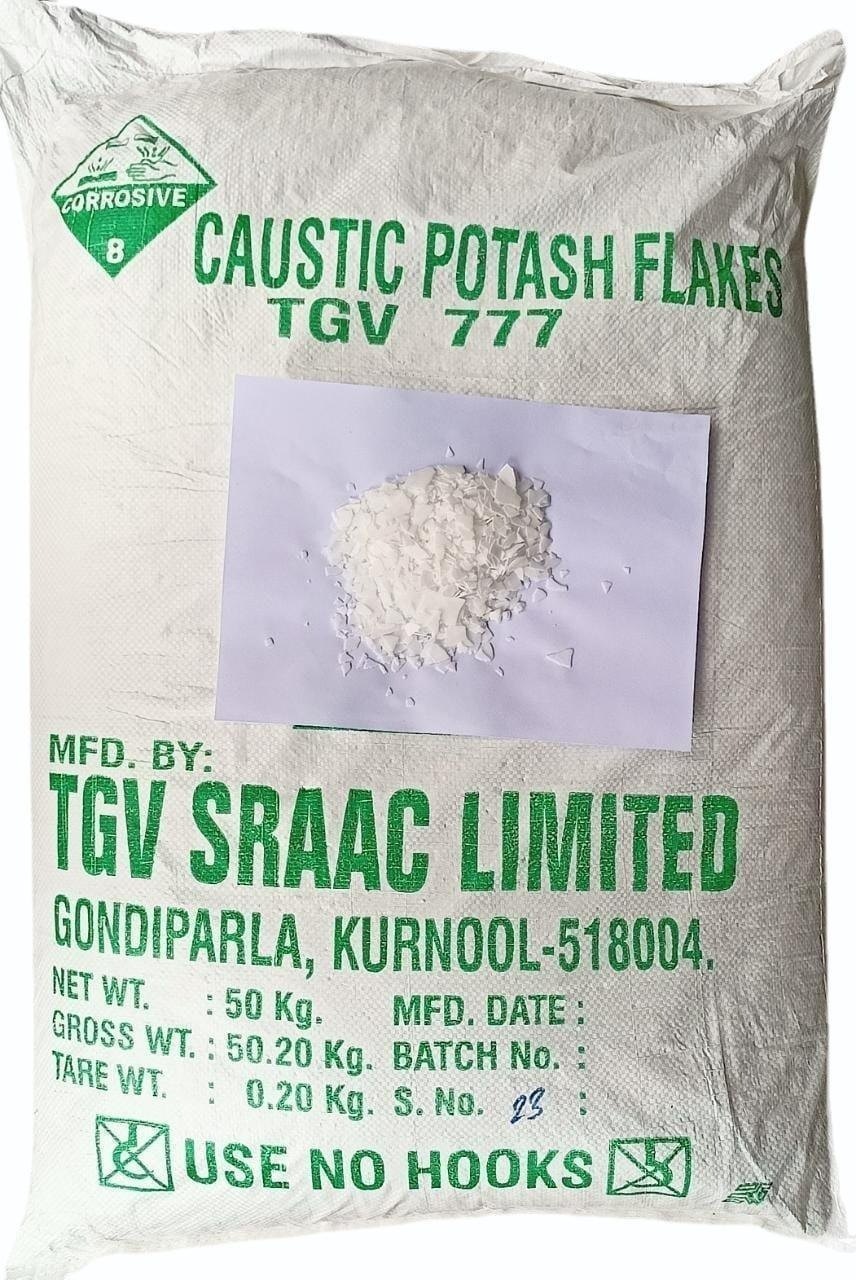
TGV Sraac FY26: The ₹1,950 Crore Chemical Cauldron is Bubbling Up
Section 1 — At a Glance
The investment landscape for commodity chemical processors often swings violently between structural capacity buildouts and cyclical supply gluts. TGV Sraac Limited finds itself navigating precisely this delicate inflection point at the close of financial year 2026. Headline revenues scaled to ₹1,950.24 crore, representing an 11.5% expansion over the preceding fiscal. Net profit performance trickled down cleanly, printing at ₹131.89 crore against a backdrop of complex local input costs and highly erratic global pricing frameworks.
While the headline top-line growth signals an operational recovery from prior multi-year lows, structural anxieties continue to linger just below the surface. Capital intensive manufacturing models are fundamentally hostage to their underlying asset utilization rates and industrial power availability. The company’s recent commissioning of major capacity expansions across its core Chlor-Alkali and Chloromethanes segments has immediately driven up structural depreciation charges, which ballooned to ₹164.10 crore in FY26.
Structural capital allocation is never validated by the scale of an expansion, but by the ultimate efficiency of the capital that was deployed.
With an intensive, largely debt-funded capital expenditure blueprint exceeding ₹1,044 crore slated across the near-term horizon, the operational cash balance sheet faces a steep climb to prevent gearing ratios from breaking out of historical comfort zones. Investors are left measuring the immediate tailwinds of rising electrochemical unit volumes against the structural headwinds of an increasingly volatile global raw material supply chain.
Section 2 — Introduction
Welcome to the world of industrial heavy lifting, where the corporate names are long, the factories are intensely hot, and the products are things you absolutely do not want to spill on your shoes. TGV Sraac Limited—originally known as Sree Rayalaseema Alkalies and Allied Chemicals, before realizing life is too short to type that out on a standard keyboard—is the specialized chemical vehicle of the southern industrial TGV Group.
Operating primarily out of its deeply integrated facilities in Andhra Pradesh, this enterprise has quietly spent the last four decades converting massive quantities of industrial salt and electric power into the unglamorous building blocks of modern manufacturing. If you have recently used paper, worn textiles, or washed your hands with commercial soap, there is a very reasonable statistical probability that some part of its chemical ancestry began its life inside a TGV membrane cell.
Section 3 — Business Model: WTF Do They Even Do?
To understand how TGV makes a living, you have to appreciate the industrial magic of doing the exact same thing for forty years until you become weirdly efficient at it. The business model is fundamentally split into two wildly unequal parts: the Chemicals powerhouse, which drives roughly 95% of operational revenue, and the Oils & Fats division, which handles the remaining 5% and is currently sitting in the corporate equivalent of an existential crisis.
At its core, TGV takes basic industrial salt, channels a small ocean of electricity through it using imported Italian bipolar membrane cell technology, and separates it into Caustic Soda, Caustic Potash, and Chlorine Gas. Because letting chlorine gas wander off on its own is generally frowned upon by local environmental agencies, TGV pipes that immediate byproduct directly into its internal Chloromethanes plant. There, it gets mixed with methanol to produce high-value industrial solvents like Methylene Chloride and Chloroform. It is a beautifully integrated loop: one process’s chemical garbage becomes the next division’s ultra-premium raw material.
Meanwhile, the Oils & Fats division has been systematically scaled down because tracking volatile palm oil and castor seed prices has turned into an excellent way to lose sleep. Management looked at the thin margins on bulk soap noodles and essentially decided that selling heavy industrial chemicals to corporate buyers via long-term B2B relationships was a much more civil way to make a profit.
Section 4 — Financials Overview
Figures are consolidated, in ₹ crore.
Quarterly Performance Trend
Metric
Latest Quarter (Mar 2026)
YoY
QoQ
Revenue
₹511.11
Up 4.99%
Up 14.02%
Operating Profit
₹84.64
Up 44.36%
Up 9.25%
PAT
₹27.99
Up 28.99%
Down 0.39%
EPS (₹)
₹2.61
Up 28.87%
Down 0.38%
The final stretch of the fiscal year showcased an elegant operational recovery, with the March 2026 quarter delivering ₹511.11 crore in revenue. More impressively, quarterly operating profit surged by over 44% year-on-year to hit ₹84.64 crore, primarily oiling the engine through structural expansions kicking into gear.
However, net profit flatlined sequentially on a quarter-on-quarter basis, acting as a subtle reminder that when you build massive industrial monuments, depreciation costs will always show up to claim their pound of flesh.
Management Commentary Insight
During recent updates, the executive suite maintained an incredibly confident posture regarding their long-term infrastructure roadmap.
“Our structural transition toward captive renewable power assets remains non-negotiable. The commissioning of our newer solar capacities is actively insulated from state discom tariff hikes.”
The performance validates this swagger to a degree—average power costs dropped from historical highs to ₹5.83 per kWh during the fiscal year, proving that owning your own sunshine is significantly cheaper than buying coal power from the grid.
Section 5 — Valuation Discussion: Fair Value Range Only
To establish a coherent valuation framework for TGV Sraac without relying on pure imagination, we have to look across three traditional accounting lenses using the full-year FY26 metrics. With a current market price of ₹113.70 and an un-annualized full-year EPS