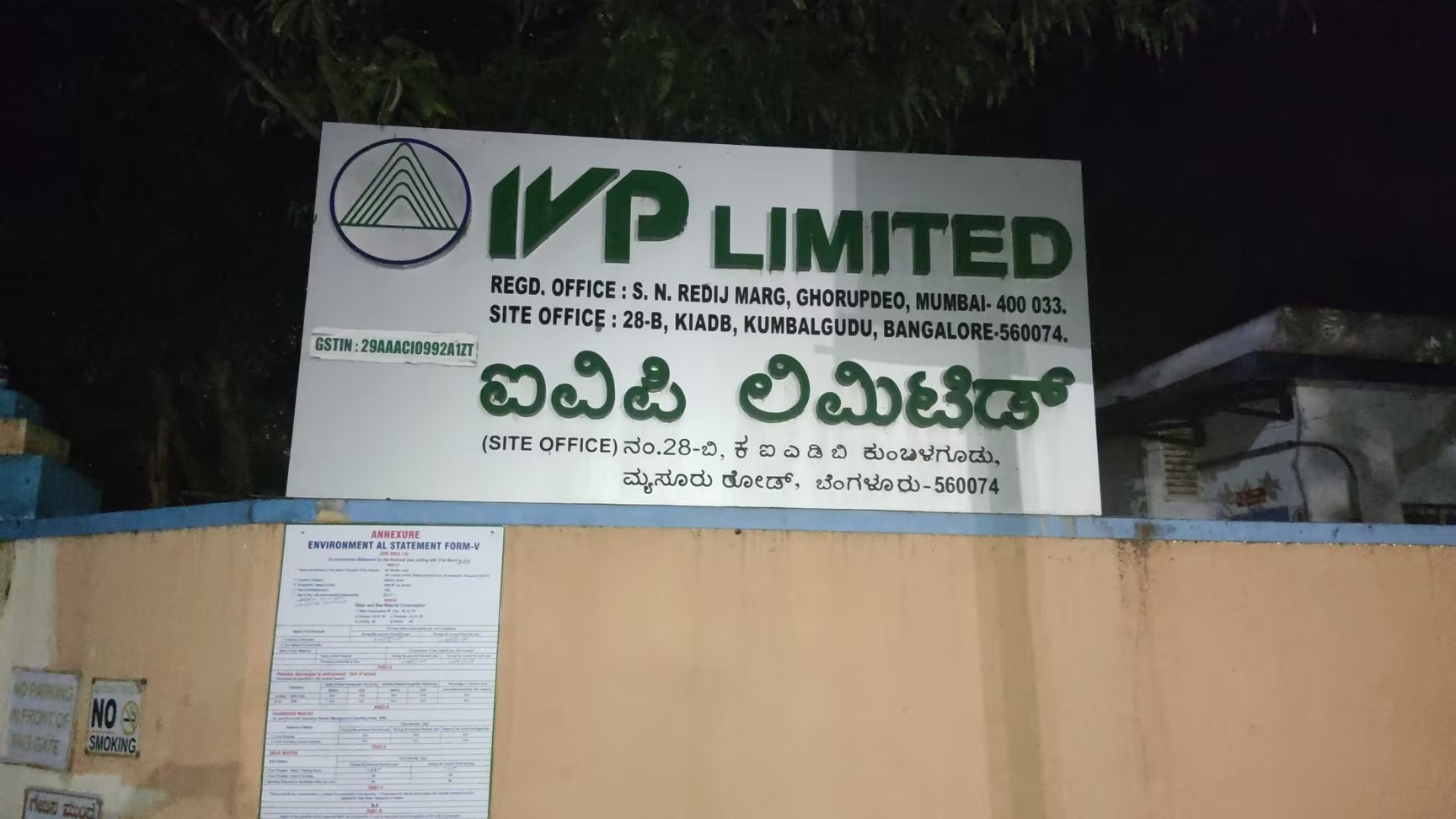
IVP Ltd Mar 2026: The ₹6.13 Crore Sales Employee Whodunit and a Sudden 131% Profit Spike
At a Glance
An evaluation of the latest full-year and quarterly reporting reveals an unusual tension between accelerating operational recovery and severe internal control lapses. The headline figures highlight a dramatic turnaround, with quarterly profit expanding by over 131% as manufacturing demand recovered. Beneath this operational acceleration, however, lies a significant governance shock: the discovery and full provisioning of a ₹6.13 crore fraud perpetrated by a sales employee who systematically falsified customer documents over multiple periods.
This corporate disruption coincides with structural leadership transitions, including the sudden resignation of the long-standing Chairman midway through the fiscal year. While the balance sheet demonstrates aggressive debt reduction and an improvement in raw capital efficiency, capital allocation remains highly constrained. Dividend distribution has been completely halted for the full year despite the apparent earnings surge, indicating management’s intent to conserve cash against background liabilities. For institutional and retail market participants alike, the core problem is evaluating whether the underlying operational improvement in specialized chemical manufacturing can outweigh the explicit internal security vulnerabilities highlighted by the police investigation.
Introduction
IVP Ltd represents one of the oldest industrial entities in the Indian corporate landscape, tracing its origin all the way back to 1929. While it began its corporate journey under the Tata Group as a basic vegetable oil manufacturer, its modern corporate identity is defined by its acquisition by the Allanas Group and its subsequent pivot into high-performance industrial chemical synthesis.
The company operates out of two primary manufacturing locations in Tarapur and Bengaluru, maintaining an aggregate production footprint designed to supply critical intermediates to industrial players. Over the past year, the organization has attempted a delicate strategic migration away from hyper-commoditized, low-margin foam binders toward highly specialized polyurethanes and advanced laminating formulations. However, this modern corporate transition has recently run headfirst into a classic operational plot twist involving forensic auditors and local police filings.
Business Model: WTF Do They Even Do?
If you have ever wondered who supplies the invisible chemical bindings that prevent your shoes from disintegrating or keep your flexible chip packets perfectly sealed, IVP is the answers to that ultra-specific question.
The company functions across two primary chemical portfolios:
Polyurethane (PU) Resins for Footwear Solutions: This is the massive core engine of the business, accounting for 55% to 60% of total revenue. They manufacture the structural foam systems that give shoe soles their cushioning.
Phenolic Resins for Foundry Applications: Generating 35% to 40% of the top line, this division produces high-thermal-stability binders utilized by heavy industrial giants like Tata Steel and Ashok Leyland to construct precision molds for molten metal castings.
Flexible Packaging Adhesives: A tiny, higher-margin niche bringing in 5% to 7% of revenue, focusing on laminating adhesives that keep plastic films, foils, and paper bonded together.
The structural irony is magnificent: while their products excel at holding industrial materials together, their internal sales documentation systems recently did the exact opposite.
Financials Overview
Figures are consolidated, in ₹ crore.
Metric
Latest Quarter (Mar 2026)
YoY
QoQ
Revenue
164.44
10.10%
13.43%
Operating Profit
13.70
55.15%
58.38%
PAT
8.86
131.33%
91.36%
EPS (₹)
8.58
131.26%
91.52%
The numbers indicate an absolute operational sprint in the final quarter of the fiscal year. Revenue hit ₹164.44 crore, up 10.10% compared to the identical period last year, while bottom-line profitability expanded exponentially to ₹8.86 crore.
Did Management Walk the Talk?
Reviewing the earlier commentary from mid-FY26, management had continuously pointed to structural margin compression, raw material price volatility, and the implementation of new labor codes as temporary headwinds that artificially suppressed earnings. The massive volume jump in Q4 indicates they did manage to pass on pricing or capture late-season industrial demand. However, the real operational story is that the core profitability numbers managed to achieve these highs despite the company simultaneously swallowing a massive financial write-off from internal employee misbehavior.
Valuation Discussion
To perform a realistic calibration of where IVP stands relative to its corporate reality, we construct a standard valuation framework using the