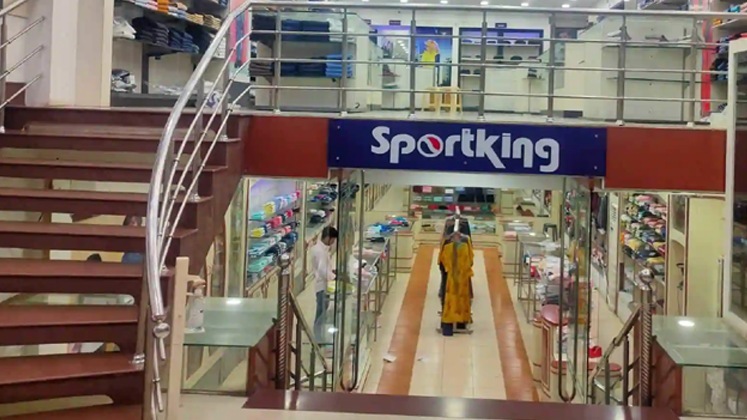
Sportking India FY26: Spinning Out of the Margin Trap with a ₹1,000 Crore Odisha Bet
Section 1 — At a Glance
Sportking India Limited closed its fiscal year 2026 with a revenue from operations of ₹2,495.86 crore, marking a modest decline of 1.1% compared to ₹2,523.64 crore in the previous fiscal year. However, the headline narrative belongs to a robust earnings recovery. The company reported an operating profit (EBITDA) of ₹286.00 crore, reflecting a expansion of 7.2% over last year’s ₹266.80 crore. This pulled EBITDA margins up by 89 basis points to 11.5%. Net profit (PAT) registered a growth of 5.8%, landing at ₹119.72 crore up from ₹113.10 crore. Consequently, reported earnings per share (EPS) improved to ₹9.42.
Investor sentiment is tightly bound to two opposing forces. On the upside, structural margin expansion is gaining momentum, fueled by stabilizing cotton raw material costs down to ₹1,707.84 crore and an aggressive transition to renewable energy. The board has also initiated a strategic pivot into downstream high-margin segments through the forward integration of fabric dyeing and garmenting assets. Conversely, the market remains anxious about immediate volume caps. With the company operating at a best-in-class capacity utilization rate of 96%, short-term organic revenue growth has hit a ceiling.
Furthermore, a significant fire incident at the Bathinda godown disrupted inventory, while a massive capital expenditure program in Odisha will heavily test balance sheet discipline over the next twelve months. Earnings acceleration cannot rely on margin optimization forever; structural top-line scaling requires raw capacity. The market is now closely tracking whether execution timelines will outrun global textile headwinds.
Section 2 — Introduction
Sportking India Limited has transitioned from a localized north-Indian yarn manufacturer into a highly organized textile powerhouse. Operating out of its traditional manufacturing clusters in Ludhiana and Bathinda, Punjab, the organization has historically focused on spinning basic and specialized industrial yarns. This coverage is crucial because the textile yarn market is notorious for intense commoditization, exposing standard operators to severe raw material pricing cycles and brutal margin squeezes.
The company is currently under structural transformation. In May 2026, the board approved two critical strategic maneuvers: a definitive forward integration through corporate mergers into downstream apparel segments, and the financial closure of a massive greenfield capacity expansion program in eastern India. This analysis is timed to break down whether these parallel high-stakes capital allocation plans will structurally de-risk the enterprise or over-leverage a strong balance sheet right at a cyclical inflection point for global trade.
Section 3 — Business Model: WTF Do They Even Do?
At its core, Sportking functions as a high-utilization factory converting raw cotton and synthetic fibers into specialized yarns. Its product matrix ranges from standard 100% compact cotton yarns to high-bulk acrylic, dyed mixtures, and value-added fancy variants like injection slub and snow yarns. Instead of relying entirely on localized garment hubs, Sportking is structurally globalized, exporting roughly 56% of its output to 39+ countries across the USA, European Union, and Australia. Its institutional client roster includes global retail giants such as Zara, H&M, Marks & Spencer, and IKEA.
The structural flaw in this setup is the low positioning on the value chain: yarn is a raw input. To fix this, the company is executing a strategic merger with Marvel Dyers & Processors (fabric printing and finishing) and acquiring the garmenting retail infrastructure of Sobhagia Sales. The long-term blueprint is to evolve from an industrial spinner into an integrated apparel house over the next decade.
Section 4 — Financials Overview
Figures are consolidated, in ₹ crore.
Quarterly Performance Matrix
Metric
Q4 FY26
YoY (%)
QoQ (%)
Revenue
₹636.78
1.27%
-1.41%
EBITDA
₹85.43
16.12%
30.23%
PAT
₹32.76
-7.30%
33.17%
EPS
₹2.58
-7.19%
32.99%
The sequential jump in operating profit from Q3 to Q4 emphasizes a sharp recovery in manufacturing spreads. While top-line growth is physically restricted by a 96% factory utilization limit, gross margins expanded significantly in the final quarter. This dynamic