SPEL Semiconductor FY26: The Microscopic Reality of an Empty Silicon Valley Dream
Section 1 — At a Glance
SPEL Semiconductor presents a stark contrast to India’s booming semiconductor narrative. While the nation builds its silicon ambitions, this microcap assembly and testing facility recorded full-year FY26 sales of just ₹6.28 crore, down from ₹7.86 crore in FY25. The top-line collapse is compounded by a net loss of ₹23.84 crore for FY26, widening from a loss of ₹21.05 crore in the previous fiscal year. The financial strain has manifested operationally, culminating in a complete suspension of factory operations since January 14, 2026, due to severe working capital shortages.
Investor interest remains driven by speculation around land monetisation and a potential revival through the India Semiconductor Mission (ISM) 2.0 Capex subsidy. However, the immediate reality involves deep institutional concerns. The statutory auditors have issued a qualified opinion, highlighting recurring losses, negative cash flows, a wave of major employee resignations, and unconfirmed trade balances. A business cannot sustain its market position on regulatory hope when its foundational operations are non-functional. The stock trades at a significant premium to its book value of ₹0.66, driven primarily by corporate restructuring themes rather than operational performance.
Section 2 — Introduction
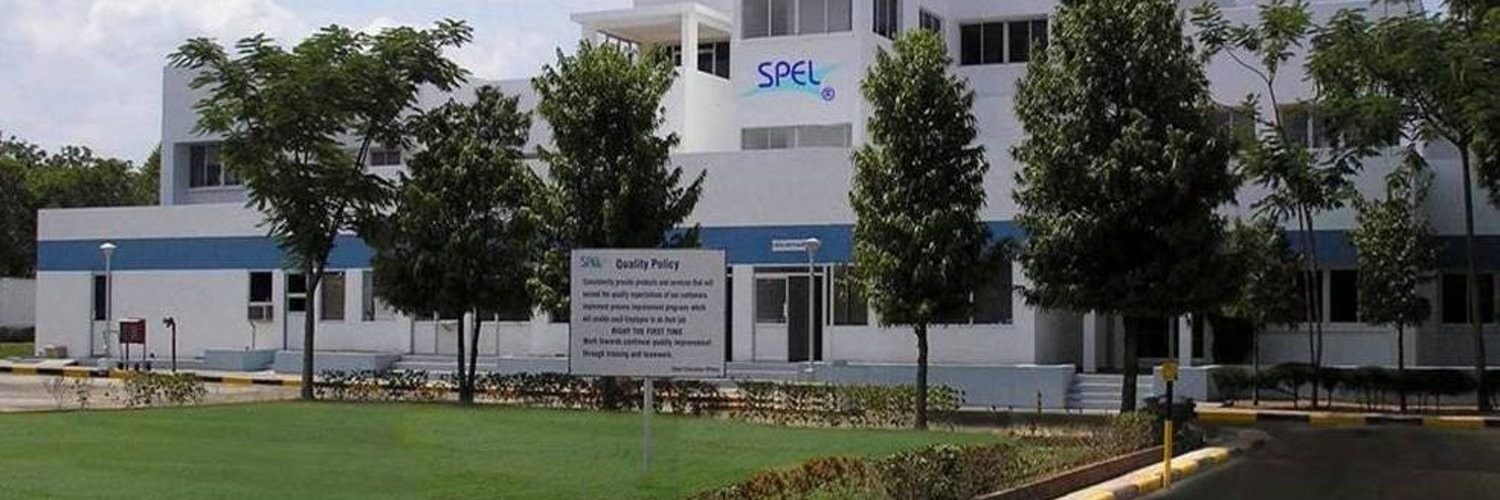
SPEL Semiconductor Ltd enjoys the historical distinction of being India’s first and only outsourced semiconductor assembly and test (OSAT) facility. Established in 1984 and based near Chennai, the company appeared well-positioned to capitalize on global technology supply chains. Instead of riding the secular tailwinds of global digitization, the company has shrunk to a near-halt.
The publication of its FY26 results marks a critical juncture. The board recently approved the termination of its Chief Financial Officer due to continuous absence, while its production floor sits entirely dark. This report examines whether the company possesses a viable path to operational recovery through asset sales, or if its public valuation has disconnected from its functional reality.
Section 3 — Business Model: WTF Do They Even Do?
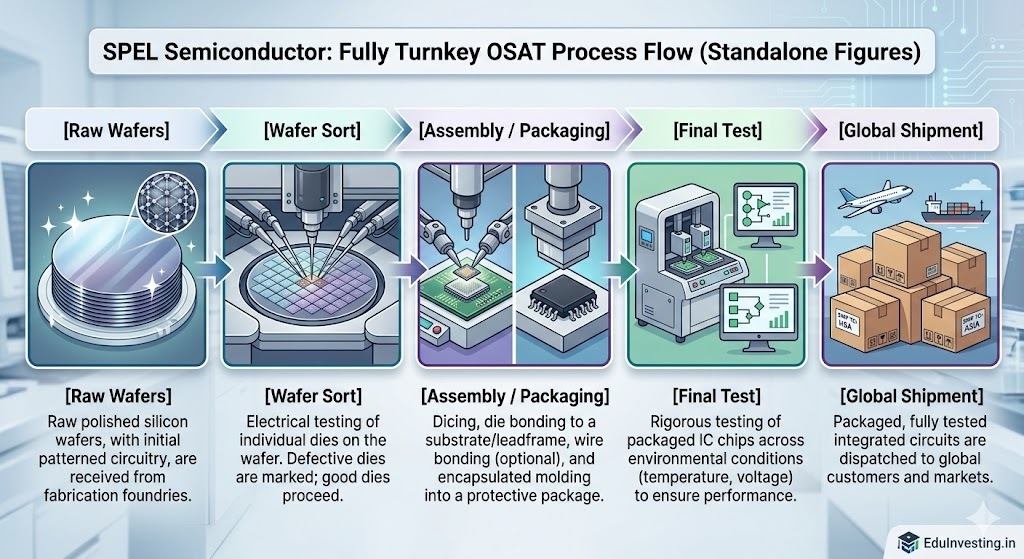
SPEL operates in the OSAT segment, offering electronic packaging solutions that include wafer sort, assembly, testing, and drop-shipment services. In theory, it takes raw silicon wafers from foreign foundries, cuts them, packages them into plastic or ceramic enclosures, tests their electrical integrity, and ships them to clients worldwide.
Historically, the business targeted international markets, with overseas clients accounting for roughly 99% of its revenue mix in FY23. Its chips are designed for mobile phones, computers, automotive systems, and industrial controllers. However, running an advanced packaging line requires constant capital investment, stable utility supplies, and highly specialized engineering talent. With its total employee strength dropping consistently over the last decade and major machinery breaking down in late FY26, the company’s capability to deliver high-reliability automotive or consumer electronics packaging is currently paused.
Section 4 — Financials Overview
Figures are standalone, in ₹ crore.
Quarterly Performance Trend
Metric
Latest Quarter (Mar ’26)
YoY
QoQ
Revenue
2.18
-8.4%
246.0%
Operating Profit
1.75
537.5%
207.4%
PAT
0.77
116.2%
111.7%
EPS (₹)
0.17
116.5%
112.0%
The positive numbers in the March 2026 quarter require careful qualification. The sequential recovery in revenue to ₹2.18 crore from a low of ₹0.63 crore in December 2025 took place despite active factory suspension. This income was supplemented by a positive other income line of ₹1.08 crore. Total expenses fell sharply to ₹0.43 crore in Q4 FY26