1. At a Glance – Dumplings, Dividends & Drama
Here’s a restaurant chain that has been feeding India since 1999 and now feeds investors with mixed emotions. Speciality Restaurants Ltd is trading at ₹103 with a market cap of ₹495 Cr. The stock is down 15% in 3 months and 25% in one year — clearly the market didn’t like the aftertaste.
But wait. Q3 FY26 numbers show Sales at ₹128.7 Cr (up 7.8% YoY), PAT at ₹8.67 Cr (up 20.75% YoY) and OPM at a tasty 22.07%. EPS for the quarter stands at ₹1.80.
Stock P/E: 20.6
Industry P/E: 71.4 (yes, seventy-one)
ROCE: 7.97%
ROE: 5.48%
Debt to Equity: 0.43
Dividend Yield: 0.97%
TTM Sales: ₹440 Cr
TTM PAT: ₹22 Cr
TTM EPS: ₹4.52
So we have a profitable restaurant chain trading at one-third of industry P/E. Is this a mispriced biryani? Or just yesterday’s leftovers reheated?
Let’s enter the kitchen.
2. Introduction – The Restaurant That Refused to Die
Most restaurant chains either expand aggressively and bleed cash, or stagnate and slowly become a wedding-anniversary-only destination.
Speciality Restaurants chose a third path: survive, restructure, and pivot.
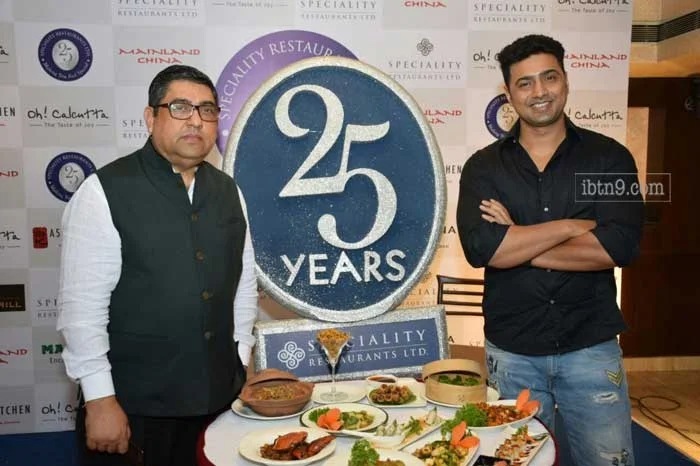
Founded in 1999, the company operates 124 outlets (112 owned + 12 franchise) across 14 Indian cities and overseas locations in London, Dubai and Oman.
Its portfolio includes:
- Mainland China
- Oh! Calcutta
- Asia Kitchen
- Sigree
- Sweet Bengal
- Haka
- Episode One
- Café Mezzuna
- And a long list of niche formats
Mainland China alone contributes 24% of Q1FY26 revenue. Asia Kitchen contributes 18%. Oh! Calcutta brings 13%.
Translation: Chinese food pays the bills.
Interestingly, 76% revenue still comes from dine-in and 24% from delivery. Unlike QSR giants, this is still an experience-driven business.
And now management is pivoting toward Italian (Siciliana) and QSR (Walters Burger). That’s like a classical dancer learning hip-hop.
Will it work? Or will it become another experimental menu that nobody orders?
3. Business Model – WTF Do They Even Do?
They sell food. But not just food.
They sell nostalgia, date nights, corporate lunches, anniversary dinners, and “Beta, placement ho gaya” parties.
Revenue comes from:
- Fine Dining (Mainland China, Oh! Calcutta)
- Casual Dining (Asia Kitchen, Sigree)
- Resto Bars (Episode One, Hoppipola)
- Confectionery (Sweet Bengal)
- Cloud Kitchens
- Upcoming QSR (Walters Burger)
City concentration is interesting:
- Mumbai: 50 outlets
- Kolkata: 30 outlets
- Bangalore: 12
- Pune: 10
- NCR: 5
Heavy Kolkata and Mumbai focus. That’s like having two strong kitchens and hoping the rest of India orders takeout.
Brand-wise, they operate:
- 35 Mainland China / Asia Kitchen
- 32 Sweet Bengal
- 11 Cloud Kitchens
- 9 Oh! Calcutta
And new expansion includes:
- 5 Siciliana units
- 3 Walters Burger outlets this quarter
- 7 Asian restaurants + 2 Italian this year
New outlets typically achieve payback in 3–6 months. Refurbishments break even even faster.
If true, that’s faster than most startup funding cycles.
But here’s the big question: Can they scale QSR margins like Jubilant? Or will they remain a premium niche player?
4. Financials Overview – The Quarter That Smelled Good
Latest Result Type: Quarterly Results (Q3 FY26 – Dec 2025)
Hence, annualisation rule for Q3 applies:
Average of Q1, Q2, Q3 EPS × 4
EPS Q1 FY26: ₹1.18
EPS Q2 FY26: ₹0.99
EPS Q3 FY26: ₹1.80
Average = (1.18 + 0.99 + 1.80) / 3 = ₹1.32
Annualised EPS = 1.32