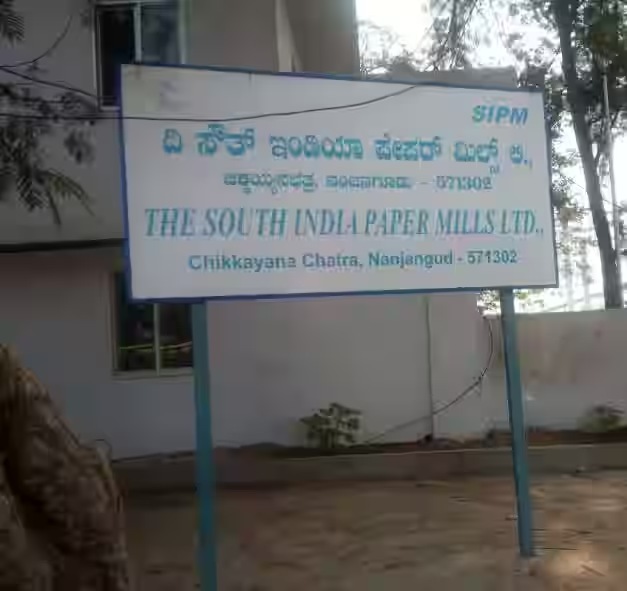
1. At a Glance – The Detective Opens the File
If there was ever a company that screams “main character energy but budget villain execution,” it is South India Paper Mills Ltd. Founded in 1959 (yes, before your mutual fund SIP was even a thought), SIPM is a Mysore-based kraft paper and packaging player trying to convince the market that it has finally exited its long probation period. Current market cap sits at about ₹174 crore, the stock trades near ₹92–93, and the 3-month return is a flashy ~32%, which looks great until you remember the 1-year return is still negative.
The latest Q3 FY26 numbers show quarterly sales of ₹101 crore (YoY +21%) and PAT of ₹2.37 crore (YoY +167%). EPS printed at ₹1.26 for the quarter, which suddenly makes the company look like it found profitability hiding behind a stack of corrugated boxes. But before you celebrate with recycled paper confetti, remember: ROE is still negative over the longer period, debt is ₹172 crore, and interest coverage is a weak 1.27x.
This is not a fairy tale yet. This is a suspense thriller. And as a funny detective-investor, my job is to ask: is this a genuine turnaround… or just one good quarter wearing a suit?
2. Introduction – From Paper King to Paper Cut
South India Paper Mills was once a respectable regional paper manufacturer supplying kraft paper and packaging to FMCG giants. Then came capacity expansion, debt-funded optimism, and the classic Indian midcap plot twist: demand slowdown, pricing pressure, and plants running at half enthusiasm.
FY23 was particularly ugly. Operating losses showed up, utilization was poor, and the shiny new kraft paper facility refused to behave like a disciplined employee. Realisations fell, volumes underperformed, and suddenly SIPM looked less like a paper company and more like a case study in “How Not to Time Capex.”
To survive, the company raised ₹45.37 crore via preferential allotment in March 2023, diluted equity, and brought in Harshad Natvarlal Modi and Rajul Harshad Modi as significant shareholders. The money was used to fund working capital and reduce term debt, basically plugging holes in a leaking ship while hoping the sea calms down.
Fast forward to FY25–FY26, and the narrative is slowly changing. Utilisation has improved, quarterly profits are back, and the market is whispering “turnaround.” But as any experienced detective knows, one confession does not close the case. Motive, consistency, and balance sheet sanity still matter.
3. Business Model – WTF Do They Even Do?
At its core, SIPM is a kraft paper and packaging company. Translation for lazy investors: they make the brown paper and boxes that your online shopping addiction depends on.
The Paper Division manufactures kraft liner substitutes, test liners, white kraft liners, fluting grades, and special application grades. GSM ranges from 70 to 400, and strength goes up to 35 BF. Basically, if it needs to hold a biscuit box without collapsing, SIPM has a product for it.
The Printing & Packaging Division converts this paper into corrugated boxes—plain brown, single-colour, four-colour, die-cut, shelf-ready, micro-fluted, the whole packaging buffet. About 40–45% of the paper produced is internally consumed here, which gives some integration benefit and protects margins when external demand is moody.
The company operates from Mysore with an installed capacity of 115,500 MT/year for paper and 36,000 MT/year for packaging, supported by an 11-MW captive cogeneration power plant. This power plant is the unsung hero—it keeps energy costs under control in a power-hungry industry.
Clients include Nestlé, Britannia, Reckitt Benckiser, and Parle Agro. That’s solid FMCG pedigree. The problem was never customers. The problem was execution, pricing, and leverage. Question for you: does having good clients automatically mean good profits?
4. Financials Overview – Numbers Don’t Lie, But They Do Smirk
Result Type Lock: Latest