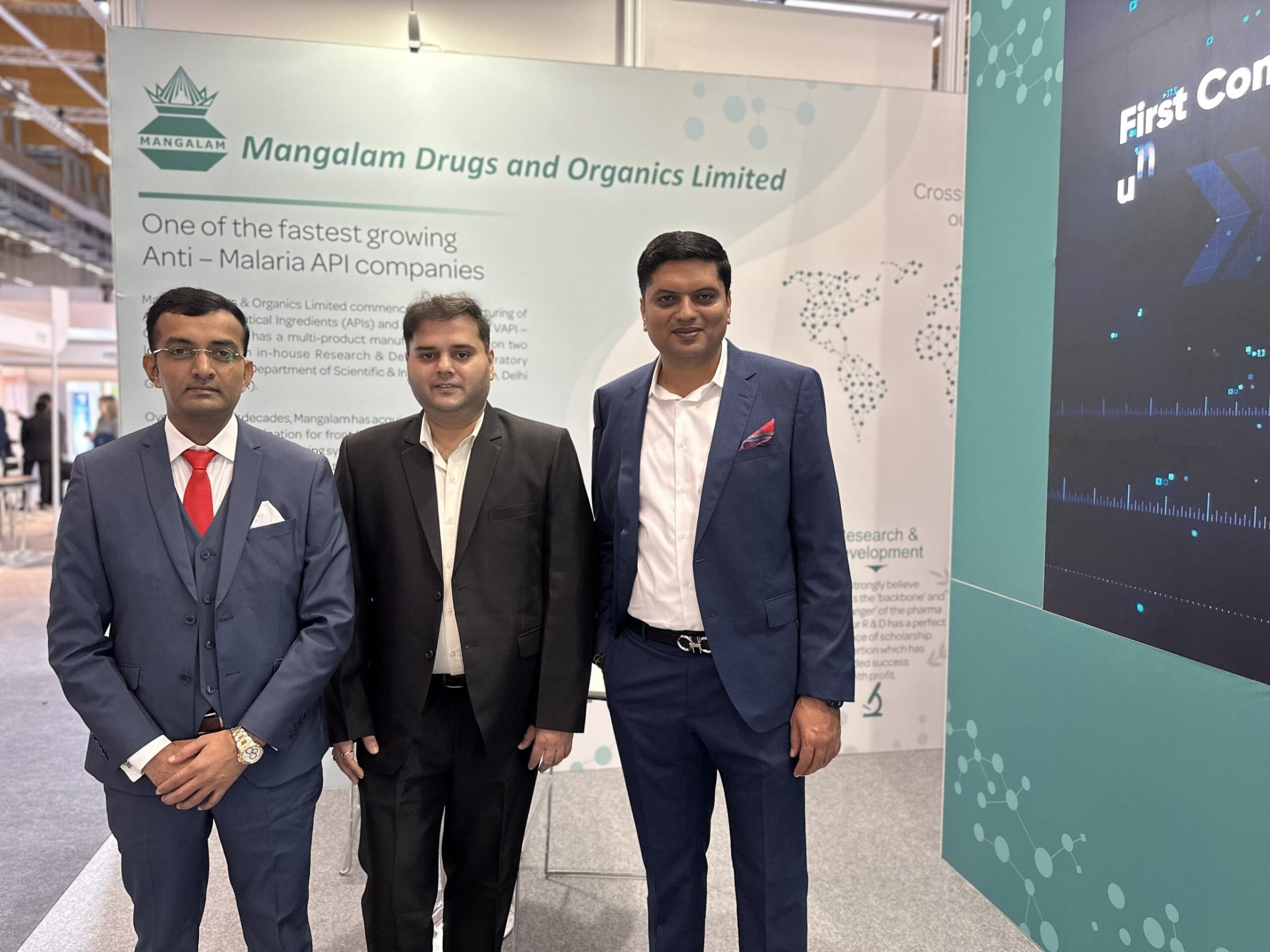
Mangalam Drugs and Organics Ltd Q3 FY26 – ₹58.5 Cr Revenue, ₹9.8 Cr Loss, Debt ₹95 Cr & EV/EBITDA 95x: A Pharma Horror Story in 12 Slides
1. At a Glance – When a WHO-Approved API Maker Meets the Real World
₹70.9 crore market cap. ₹44.8 stock price. Down ~58% in one year. Q3 FY26 sales of ₹58.5 crore with a quarterly loss of ₹9.78 crore. Operating margin? -2.5%. EV/EBITDA? 95x — not because EBITDA is booming, but because EBITDA is gasping for oxygen. Promoters own ~50.3% but have 34.6% pledged, which is never a sentence you want to read calmly. Debt stands at ~₹94.9 crore while book value is ₹80.5 and the stock trades at 0.56x P/B, screaming “cheap” to value hunters and “value trap” to everyone who reads cash flows. This is a WHO-approved, Clinton Foundation–associated anti-malarial API manufacturer that currently looks like it’s fighting its own internal virus. Curious? You should be.
2. Introduction – From Anti-Malarial APIs to Anti-Shareholder Returns
Mangalam Drugs & Organics has pedigree. Incorporated in 1977. APIs. Intermediates. Specialty chemicals. Artemisinin-based anti-malarials supplied to global pharma companies. WHO approvals. Clinton Foundation association. On paper, this should have been a boring, steady mid-cap API story.
Instead, it reads like a pharma crime thriller.
Sales have shrunk. Margins collapsed. Losses piled up. CFOs keep resigning like it’s an annual ritual. Banks have reported defaults. Inventory days have exploded. Interest coverage is negative. And yet, the company continues to announce export orders, technology transfers, and scheme-of-arrangement mergers like nothing is wrong.
Is this a temporary phase? A cyclical API downturn? Or is this what happens when working capital, leverage, and execution all decide to revolt together?
Before judging, let’s open the balance sheet and the P&L — because numbers here are louder than press releases.
3. Business Model – WTF Do They Even Do?
Mangalam Drugs manufactures Active Pharmaceutical Ingredients (APIs), intermediates, and a few specialty chemicals. Core strength lies in anti-malarial APIs like Chloroquine, Amodiaquine, Artemisinin-based compounds, along with anti-retrovirals like Tenofovir and Efavirenz.
Think of Mangalam as the chemical kitchen behind the pill. They don’t sell brands. They sell molecules. Their customers are pharma companies that compress these APIs into tablets and syrups.
Revenue mix (FY23) tells the story clearly:
Sale of products ~89%
Trading sales ~5%
Engineering service charges ~4%
Forex gains ~2%
This is not a diversified business. It lives and dies by API demand, pricing power, raw material costs, and working capital discipline. When global funding for anti-malarial programs slows, or when Chinese API pricing turns aggressive, companies like Mangalam feel it first — and hardest.
Question for you: Can a WHO-approved API supplier still bleed cash this badly? Apparently yes.
4. Financials Overview – The Quarter That Broke the Camel’s Back
Quarterly Comparison (Standalone, ₹ Crore)
(Result type detected: Quarterly Results → EPS annualised ×4)
Source table
Metric
Latest Q3 FY26
Q3 FY25 (YoY)
Q2 FY26 (QoQ)
YoY %
QoQ %
Revenue
58.49
88.71
49.54
-34.1%
+18.1%
EBITDA
-1.47
8.77
-2.83
NA
NA
PAT
-9.78
1.40
-7.25
-799%
-35%
EPS (₹)
-6.18
0.88
-4.58
NA
NA
Annualised EPS (₹): -24.7
Commentary: Revenue fell off a cliff YoY. EBITDA turned negative. Interest cost alone (~₹4 crore per quarter) is eating whatever operating profit remains. This is not a one-off bad quarter — this is structural stress