General information and education, not investment advice. The author is not a SEBI-registered adviser or research analyst. No recommendation, no promised returns. Markets carry risk including loss of capital. Figures may not be current. Always consult a SEBI-registered adviser.
1. At a Glance
Quarter revenue of ₹138.56 Cr, operating profit of ₹6.55 Cr, PAT of ₹3.68 Cr, EPS of ₹2.71. Against the June 2025 quarter, revenue is up 22.5% from ₹113.11 Cr and net profit is up 129% from ₹1.61 Cr. OPM came in at 4.73%, the highest of the nine quarters Screener carries for this company — a company whose OPM has spent most of its life doing an impression of a rounding error.
Around the results, the calendar got unusually busy for a steel distributor. The board met on 11 August 2026, approved the quarter, reappointed Agrawal Jain & Gupta as statutory auditor for FY2026-27 and FY2027-28, and resolved to apply for direct listing of the equity shares on the BSE Main Board. Separately, the 7th AGM notice carried a recommendation of a ₹12.50 dividend, from a company whose Dividend Payout % row reads 0% for every one of the twelve years on the Profit & Loss statement. That row has never had anything to do, and now it does.
Meanwhile the full-year picture points a different direction: FY26 sales of ₹534.32 Cr against ₹548.20 Cr in FY25, and net profit of ₹7.44 Cr against ₹9.67 Cr. So the year shrank and the quarter grew, which is the sort of thing that happens when your revenue arrives in truckloads rather than subscriptions.
The market caps the company at ₹611 Cr, and the November 2025 migration from SME Emerge to the NSE Main Board means it now sits on a bigger board with the same 1.36 crore shares it has had since 2020.
2. Introduction
Incorporated in 1982 and managed by Mr. Sanjay Bansal, Mr. Jatin Mehta and Mr. Krishna Mehta, per CRISIL’s July 2025 rationale, Shiv Aum Steels is engaged in trading of mild steel structural products. Three decades of promoter experience in steel trading, in CRISIL’s description — long enough that the founders were selling angles and channels before half the infrastructure they now supply had been drawn on paper.
The listing history is compressed. The shares were on the SME Emerge platform until 13 November 2025, when the company intimated that its 13,600,400 equity shares would migrate to the NSE Main Board effective 14 November 2025. Nine months later the board approved an application for direct listing on the BSE Main Board as well. For a company that has spent four decades in warehouses, the recent phase has been spent almost entirely in exchange paperwork.
CRISIL reaffirmed ‘Crisil BBB/Stable/Crisil A3+’ on ₹90 crore of bank facilities in July 2025 — ₹75 Cr cash credit split between Standard Chartered and State Bank of India, ₹15 Cr letter of credit. The rating agency’s stated reasoning is the established market position and healthy relationship with principals plus a comfortable financial risk profile, partially offset by exposure to intense competition in steel trading and a moderate working capital cycle. CRISIL also records that the company has not cooperated with India Ratings and Research, which classified it as issuer non-cooperative on 13 December 2024 for non-furnishing of information.
On the board, an intimation dated 15 April 2026 records that Bharti Manoj Daga resigned as Chairperson and Independent Director effective 31 March 2026, accepted 15 April 2026. The company filed the intimation twice on the same evening, eight minutes apart, which is either a caution about NSE upload portals or an unusually emphatic resignation.
CRISIL treats ₹15 crore of promoter unsecured loans outstanding at 31 March 2025 as debt in its analysis, and consolidates the wholly-owned subsidiary Shivoham Ventures Private Limited into the group view.
US
Now live
US Stocks terminal is live
13,000+ US tickers · EDGAR fundamentals · screener and filings feed — the same terminal, for American markets.
Explore →
3. Business Model: WTF Do They Even Do?
They buy steel in bulk. They sell it in smaller pieces. That is the whole engine, and the company is refreshingly blunt about it: it is only a distributor and not a manufacturer.
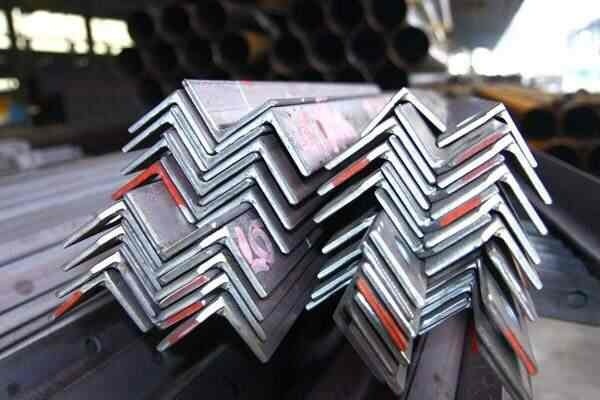
The product profile covers beams and columns, channels, angles, bars and rails, plates, coils and other structural and flat-steel products — which is to say the entire vocabulary of things that hold buildings up, sold by the tonne to people who know exactly which one they want. The economic role is listed as procurement aggregation, inventory availability, cutting and handling, logistics, customer credit and short delivery times. Six functions, and at least two of them (“customer credit,” “inventory availability”) are polite trade names for keeping money tied up so somebody else doesn’t have to — which is why this business shows up on the balance sheet more dramatically than on the P&L.
The supply side runs through the giants: products from JSPL, SAIL, VSP/RINL, Mivaan, Vandana Ispat and other secondary producers. CRISIL records the company as an authorised distributor of Jindal Steel and Power, sole distributor for western Maharashtra, and authorised dealer of RINL and SAIL among others. The Screener AI extraction puts Top 5 Supplier Concentration at 88.31% of purchases for Mar 2019 and 85.01% for Mar 2017 — a company whose purchase ledger could fit on a business card.
Customer concentration runs the other way entirely: Top 10 Customer Concentration of 20.30%, 19.97% and 21.49% across the extracted years. Customers span infrastructure, engineering, construction, petrochemicals, pharmaceuticals and industrial applications. Five suppliers, several hundred customers, and a margin that lives in the gap between them.
Physically, it all lands at the principal warehouse at Taloja/Panvel — roughly 9,500 square metres, with long-product storage of 7,000–8,000 tonnes and flat-product storage of 10,000–20,000 tonnes. Storage capacity in the extracted data moved from 18,500 tonnes to 22,500 tonnes; average inventory sits at 11,000 to 12,500 MT. So on a normal day, roughly half the shed is full of steel that has been paid for and not yet sold. That is not a metaphor for working capital. That is the working capital, standing upright in