Search for Stocks /

RRP Semiconductor Ltd FY2026: A Balance Sheet with Nothing to Hide, a Multiple with Everything to Prove

Spotted a factual error — a wrong number, date, or fact? Tell us and we will check the source.

General information and entertainment, not investment advice. The author is not a SEBI-registered adviser or research analyst. No recommendation, no promised returns. Markets carry risk including loss of capital. Figures may not be current. Consult a registered adviser before acting.


1. At a Glance

The company posted a loss of ₹7.76 crore in FY2026 on near-zero sales of ₹−6.82 crore, a sharp reversal from FY2025’s profit of ₹8.46 crore on revenues of ₹31.59 crore.

The stock trades at a market cap of ₹12,489 crore on zero earnings, making the P/E ratio undefined. Debt sits at ₹5.87 crore against a net worth that has flipped from positive to negative.

The company is in a state of flux: a preferential allotment of 1.35 crore shares issued in May 2024 saw its listing approval revoked in April 2025, and an appeal remains pending before SEBI’s Securities Appellate Tribunal.

Management changed hands multiple times in FY2025—the CFO resigned in May, the MD resigned the same month—and a new MD was appointed in July 2025. The company claims it is pivoting toward semiconductor and OSAT (Outsourced Semiconductor Assembly and Test) manufacturing.

The puzzle: if the business is burning and the story has cracks, why does the stock’s behaviour suggest otherwise?


2. Introduction

RRP Semiconductor Ltd was incorporated in 1989 as GD Trading and Agencies Limited. For decades it existed as a dormant shell, filing negligible sales, holding old investments, and earning minimal returns.

In May 2024, the company issued 1.35 crore equity shares at a preferential rate, raising ₹16.23 crore. This marked a management change: Rajendra Chodankar and associates took a controlling stake via the preferential allotment and pledged to pivot the business into semiconductor and OSAT manufacturing.

The company renamed itself RRP Semiconductor Limited and announced grand plans: setting up manufacturing facilities through a group company, RRP Electronics Limited, to “manufacture, process, trade and market” semiconductors and advanced digital chips.

By November 2025, however, most of those shares entered a lock-in period. By April 2025, the BSE revoked the listing approval for the 1.35 crore shares citing regulatory concerns tied to the promoter’s other holding, Shree Vindhya Paper Mills. An appeal was filed. Interim relief from SEBI’s Appellate Tribunal keeps the status quo.

Simultaneously, the prior management exited. The CFO and MD both resigned in May 2025. A new MD, Manas Ranjan Palo, took charge in July 2025.


3. Business Model: WTF Do They Even Do?

The stated mission is semiconductor and OSAT manufacturing through RRP Electronics Limited (a group company). The company claims it won a ₹439.90 crore “Solar Material Order” and set up ₹12 crore in OSAT facilities.

The reality: in FY2026, the company recorded a sales reversal. It booked ₹31.59 crore in FY2025 but reversed ₹6.82 crore of it in FY2026, landing at negative revenues.

In raw terms: Q4 FY2026 (Jan–Mar 2026) showed zero sales; Q3 FY2026 (Oct–Dec 2025) showed a ₹6.82 crore sales reversal. This implies the earlier orders or contracts were either cancelled, disputed, or reversed due to non-performance.

The auditor’s report flags a ₹12 crore security deposit dispute with a counterparty (Telecrown Infratech Pvt Limited) and notes the company holds a post-dated cheque worth ₹212 crore against that deposit. This cheque has not been honoured and likely never will be.

The company also disclosed it filed insolvency proceedings against this counterparty in March 2026 to recover the deposit.

In the most recent quarterly commentary, the auditor reported that “the market price of the Company’s equity shares is not commensurate with its financial performance” and flagged that this mismatch has persisted despite the financial deterioration. Management’s response: markets are determined by market forces, not by the company.

So: the business is not manufacturing semiconductors. It is a shell company pivoting narratives while disputing old receivables and sitting on worthless cheques.


4. Financials Overview

Figures are consolidated, in ₹ crore.

MetricFY2026FY2025YoY
Revenue−6.8231.59−121.6%
Operating Profit−7.2511.33−164.0%
PAT−7.768.46−191.8%
EPS (Annualised)−5.706.21−191.8%

The company turned a profit in FY2025 on ₹31.59 crore in sales. That was anomalous. In FY2026, it reported a reversal of ₹6.82 crore and losses of ₹7.76 crore, implying the business never generated sustainable earnings—only disputed invoices and reversals.

Operating profit margin in FY2025 was 35.87%; in FY2026, the entire model inverted.

The company has incurred losses or near-zero earnings in 9 of the past 10 years. The one profitable year (FY2025) was built on sales that were subsequently reversed.


5. Market Expectations & Historical Multiples

This section describes how the market is currently pricing the company and how that compares with its own history and peer group. It is descriptive, not predictive.
MetricCurrentHistorical Avg (5Y)Peer Median
P/EUndefinedN/A29.04
EV/EBITDA−1,745×N/AN/A
P/B1,382×N/A3.22

The market prices the company at ₹12,489 crore (market cap) on a book value of ₹9.04 crore (equity share capital ₹14.02 cr + reserves −₹4.98 cr). The price-to-book ratio is 1,382×.

This is not a valuation multiple. It is a signal that the equity is either of no real value or the market price is untethered from the fundamentals.

The company trades at a market cap 1,381 times its book value, versus the peer median of 3.22×. Among listed financial services peers (CRISIL, Onemi Technology, Colab Platforms, LKP Finance, etc.), even high-flying growth companies trade at P/B ratios of 10–100×.

The extraordinary multiple suggests the market is not pricing equity value at all—it is pricing volatility, illiquidity, or narrative momentum.


6. What’s Cooking

May 2026 (Latest): The audited FY2026 results were approved on 29 May 2026 with an unmodified audit opinion. The auditor noted the mismatch between stock price and financial performance but placed no qualification on the accounts themselves.

April 2025: BSE revoked listing approval for the 1.35 crore preferential shares, citing regulatory concerns tied to the promoter holding in Shree Vindhya Paper Mills (which itself faced delisting notices). This triggered an appeal to SEBI’s Securities Appellate Tribunal (Appeal No. 221 of 2025).

May 2025: Both the CFO and MD resigned. The CFO departed 21 May; the MD resigned 30 May and transitioned to Non-Executive Director. New auditors (Pams & Associates) were appointed.

July 2025: Manas Ranjan Palo was appointed Executive MD for three years.

November 2025: The company filed a police complaint alleging false YouTube claims that it had ₹6.15 crore in ASIC exports. The company denied the claim.

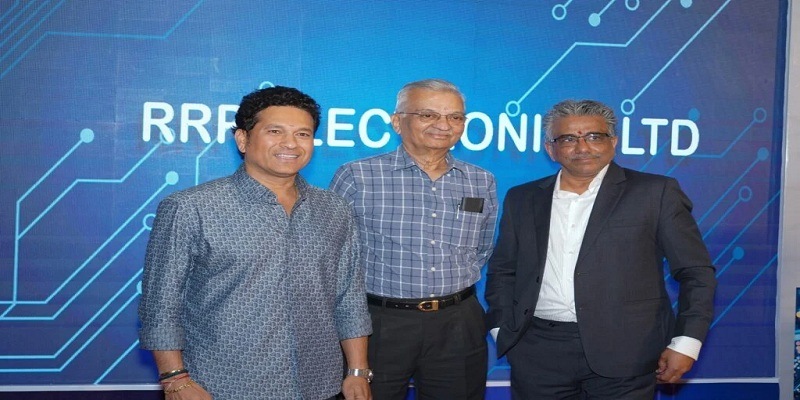
January 2026: The company continues to deny investment rumours (e.g., Sachin Tendulkar backing) and notes that 99% of the preferential allotment shares remain locked-in until 31 March 2026 (extended to 30 September 2026 as of the latest filings).


7. Balance Sheet

ItemFY2024FY2025FY2026
Total Assets0.4240.3316.25
Equity Capital0.113.6214.02
Reserves−8.392.78−4.98
Borrowings8.512.545.87
Other Liabilities0.2111.391.34

Assets = Liabilities: 0.42 = 0.42 (FY2024); 40.33 = 40.33 (FY2025); 16.25 = 16.25 (FY2026). ✓

The balance sheet swung violently. FY2024 was a baseline: assets of ₹0.42 crore, mostly old investments. In FY2025, assets ballooned to ₹40.33 crore (thanks to the ₹16.23 crore equity raise and borrowed funds), but reserves improved to ₹2.78 crore thanks to that year’s ₹8.46 crore profit.

In FY2026, the loss of ₹7.76 crore wiped out reserves, landing it at −₹4.98 crore. Assets fell to ₹16.25 crore, suggesting that either cash was deployed (unlikely given no capex) or receivables/payables shifted dramatically.

Debt has fallen from ₹12.54 crore to ₹5.87 crore—the only positive signal. But this does not erase the fact that equity is negative and the company is burning cash.


8. Cash Flow: Sab Number Game Hai

YearOperatingInvestingFinancing
FY2024−0.210.24
FY2025−18.7820.27
FY20264.94−0.15−6.28

The company has bled cash from operations for three consecutive years. In FY2024 and FY2025, operating cash flow was deeply negative. In FY2026, operating cash flow swung to a positive ₹4.94 crore—but this is arithmetic sleight of hand.

The cash came from non-cash reversals (the ₹6.82 crore sales reversal added back working capital) and tax refunds, not from real business. Investing activity was near-zero (₹−0.15 crore). Financing was negative (₹−6.28 crore), meaning the company repaid borrowed funds.

Net cash flow in FY2026 was ₹−1.48 crore. The company is not self-sustaining.


9. Ratios: Sexy or Stressy?

RatioFY2026FY2025
ROE−61.0%104.76%
ROCE−32.66%80.21%
D/E0.654.51
PAT MarginN/A26.77%

ROE (return on equity) turned from 104% (inflated by the small equity base after the preferential allotment) to −61%. The loss of ₹7.76 crore on a small equity base amplified the negative return. This ratio is a no-op.

ROCE (return on capital employed) dropped from 80% to −33%. Negative returns on invested capital mean the business is destroying value.

Debt-to-equity improved slightly from 4.51× to 0.65× due to debt reduction and the equity raise, but negative equity makes the ratio meaningless.

PAT margin cannot be calculated when there are sales reversals and losses.


10. P&L Breakdown: Show Me the Money

YearRevenueOperating ProfitPAT
FY20240.380.11−0.02
FY202531.5911.338.46
FY2026−6.82−7.25−7.76

The P&L trajectory is unambiguous: a one-year spike in FY2025 followed by a crash in FY2026.

FY2024 recorded minimal sales of ₹0.38 crore; the company was dormant. FY2025 saw sales of ₹31.59 crore—a 83-fold jump. Operating margin hit 36%.

In FY2026, ₹6.82 crore of that FY2025 revenue was reversed (implied from the negative sales figure). The company fell back into loss, with operating losses of ₹7.25 crore and net losses of ₹7.76 crore.

The business never stabilised. The FY2025 spike was a transaction or arrangement that later collapsed.


11. Peer Comparison

CompanyRevenue (₹ Cr)PAT (₹ Cr)P/E
CRISIL3,893.49839.4333.92
RRP Semiconductor−6.82−7.76Undefined
Onemi Technology2,179.25281.4516.32
LKP Finance380.2621.8162.05
Median (34 cos)89.88.0429.04

RRP Semiconductor operates at a scale orders of magnitude smaller than even the smallest profitably-listed peer. CRISIL’s PAT is nearly 109 times larger.

The nearest peer by profitability loss is Centrum Capital (PAT of −₹222.60 crore), but even it trades at a more rational multiple.

RRP is priced at ₹12,489 crore while generating losses. Its peers generate earnings and trade at single-digit P/E multiples. The price disconnect is not explained by any peer comparison.


12. Miscellaneous: Shareholding & Promoters

Holder% (FY2026)
Promoters1.28%
Institutions0.00%
Public98.72%

The shareholding pattern inverted sharply. In March 2024, promoters held 74.50%; by June 2024, this fell to 1.28%. This shift occurred when the preferential allotment (1.35 crore shares) was issued and locked-in, changing the public float.

Ira Mishra (0.55%) and Sumita Mishra (0.73%) are the largest named promoter shareholders. Rajendra Chodankar holds 74.50% of the public float.

The promoter holding is extremely low for a company this size. Institutional ownership is zero. Retail investors own 98.72%, but they are largely locked-in until 30 September 2026.

In prior years, the promoters were Shekhar Somani and the Ruia family, who have now exited. The current promoters took control via the preferential allotment and a management takeover but own very little.


13. Corporate Governance: Angels or Devils?

The auditor’s report flags several governance concerns without disqualifying the accounts:

  • The preferential allotment shares’ listing approval was revoked by the BSE in April 2025, and the matter is under appeal before SEBI’s Appellate Tribunal (Appeal No. 221/2025).
  • The company holds a ₹212 crore post-dated cheque from Telecrown Infratech Pvt Limited (against a security deposit) that has not been honoured and is the subject of insolvency proceedings initiated by the company in March 2026.
  • The company reported a ₹12 crore dispute with the same counterparty in Q3 FY2026.
  • The prior MD and CFO both resigned within days of each other in May 2025, signalling internal instability.
  • The auditor flagged “unconfirmed” balances from counterparties in the financials, meaning confirmations from counterparties were not received.
  • A related-party loan of ₹3.66 crore is outstanding to RRP Electronics Limited (a group company) as of FY2026.

None of these facts resulted in audit qualifications, but they reveal a company entangled in disputes, dependent on group entities, and turbulent at the board level.


14. Industry Roast & Macro Context

The semiconductor industry globally is consolidating around large, capital-intensive manufacturers (TSMC, Samsung, Intel) and a few sub-contract assembly players (ASM, Amkor). India has announced production-linked incentive schemes (PLI) to attract domestic manufacturing, but few startups have succeeded.

RRP’s narrative is that it will supply OSAT (assembly and test) services for Indian semiconductor design companies. This is a real gap in India’s ecosystem, but it requires:

  • Capex of ₹500 crore+ for a credible fab or assembly plant,
  • Technical talent (rare in India),
  • Long-term contracts (RRP has none),
  • Regulatory approvals and customs duty advantages (uncertain).

RRP claims it has a ₹12 crore OSAT facility and a ₹439.90 crore order. The facility has not been built (no capex in the financials). The order has been reversed (₹6.82 crore in reversals).

The company is selling a narrative without assets, earnings, or credibility. In a real OSAT business, gross margins are 40–50%. RRP’s OPM in its “profitable” year was 36% and immediately inverted to −106%.


15. EduInvesting Verdict

StrengthsWeaknesses
Debt reduced from ₹12.54 Cr to ₹5.87 Cr. Auditor issued unmodified opinion.Sales reversed ₹6.82 Cr in FY2026. No sustainable revenue. Negative reserves.
Large capital raise (₹16.23 Cr) available for operations.Preferential allotment listing approval revoked; appeal pending. Promoter holds only 1.28%.
Semiconductor / OSAT narrative aligns with PLI push.Zero engineering capex; ₹212 Cr cheque from counterparty unpaid. Insolvency case filed.
OpportunitiesThreats
If OSAT order revives and contract is honoured, business could re-list at profit.BSE appeal outcome determines share tradability. Retail investors locked-in until Sep 2026.
Debt reduction creates room for future leverage if business stabilises.Management continuity questioned; MD changed in Jul 2025. CFO/MD resigned May 2025.
PLI scheme could provide tariff cover for domestic assembly.Auditor flagged persistent gap between stock price and financial reality. Market may mean-revert.

A balance sheet with nothing to hide—the auditor confirmed the accounts—and a multiple with everything to prove. The company has raised capital, trimmed debt, and assembled a narrative around India’s semiconductor opportunity. But it has erased revenues through reversals, burned cash year after year, and entangled itself in a regulatory dispute that has frozen 99% of its float.

Does ₹12,489 crore in market value reflect a semiconductor play, a comeback story, or a shell that the market has priced on momentum and illiquidity?

The data says the last one. The outcome depends on whether the appeal to SEBI moves the float and whether the company ever delivers a real order.

Leave a Reply
