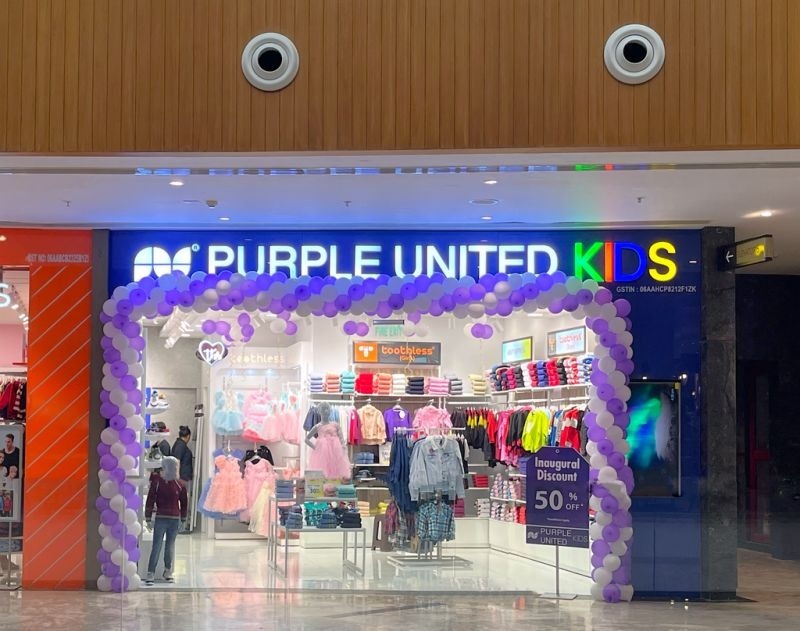
Purple United Sales Ltd Q2FY26 – From Toddlers to Trendsetters: When Baby Fashion Earns ₹12 Crores in Profit
1. At a Glance
Purple United Sales Ltd — the company that made kidswear so profitable it could pay for your kid’s MBA someday. Listed in December 2024, this infant fashion powerhouse now struts with a market cap of ₹502 crore, and a stock that’s up 89.5% in six months. Trading at ₹522, with a P/E of 41.1x, it’s clearly not your average diaper-level startup.
In Q2FY26 (September 2025), the company reported sales of ₹60.7 crore and PAT of ₹5.05 crore, marking a jaw-dropping 99% YoY growth in sales and 53.5% growth in profits. ROE at 26.9%, ROCE at 26.2%, and zero pledges — this baby is walking strong.
And if you thought “kidswear” was too cute to be serious business — Purple United’s ₹133 crore TTM sales and ₹12.2 crore profit say otherwise. The company’s 63.8% promoter holding ensures the family’s fully invested, and the balance sheet’s growing faster than a toddler in a growth spurt.
But before you get starry-eyed, here’s the catch — 214 days debtor cycle, high EV/EBITDA of 20.9, and zero dividends. Basically, they’re fashionable, profitable, but love hoarding cash.
So, can this kiddie couture brand keep growing like it’s on a sugar rush? Let’s find out.
2. Introduction
If you thought kids only spend money on candy, think again — Purple United Sales Ltd has built an entire empire convincing parents to splurge on party gowns, rompers, sandals, and strollers for their tiny emperors.
Founded in 2014, this Gurugram-based fashion company started with one vision: to make every kid look like a brand ambassador for Instagram before they can even spell “fashion.” Today, its products are sold in 24 exclusive stores, 14 shop-in-shops, 44 retail partners, and online through Myntra, Amazon, Flipkart, FirstCry, Nykaa, Ajio, and their own website.
The flagship brand, Purple United Kids, offers lab-tested clothing and footwear for children aged 0–12 years. Because nothing says “responsible parent” like ensuring your child’s T-shirt has passed more lab tests than your college thesis.
From ₹15 crore sales in FY21 to ₹103 crore by FY25 — that’s a 7x jump in four years. Profits climbed from a loss of ₹3 crore in FY21 to a solid ₹12 crore now. The IPO in December 2024 raised ₹32.9 crore, which they’re using to open new stores and fuel working capital.
In the words of every Indian parent: “If we’re spending this much on kids, it better have resale value.” Turns out, Purple United made that wish come true — in share form.
3. Business Model – WTF Do They Even Do?
Purple United isn’t just making cute clothes — it’s building a mini fashion economy for the pint-sized population.
The company designs, sources, manufactures, and sells clothing, footwear, and accessories for children. Think of it as a H&M-meets-FirstCry hybrid, minus the chaos of returns. Their products range from T-shirts, jackets, and party wear to footwear, caps, and even strollers — because branding starts at birth.
They operate primarily through four channels:
Retail stores (29%) – The company’s own exclusive brand outlets (EBOs) spread across 17 cities.
Distributors (60%) – The real engine, pushing products nationwide.
Online (9%) – Through e-commerce platforms and their website.
Key Accounts & Others (2%) – Shop-in-shops and miscellaneous sales.
They’ve cleverly built three sub-brands:
Toothless – For free-spirited kids who prefer their T-shirts loud and fearless.
That’s Her Style (THS) – Dresses and gowns for girls who want to outshine their moms.
That’s His Style (THS) – Premium boys’ partywear that could make even a best man jealous.
With 650 SKUs (400 apparel + 250 footwear) expanding to 690 next year, this brand isn’t slowing down. They plan 33 stores by FY25 and already touched 79 by Nov 2025 — apparently, expansion is the only word in their baby dictionary.
If Purple United were a child, it would be that overachiever who aces every subject and still runs the school fashion show.
4. Financials Overview
(Data Type: Half-Yearly Results, Figures in ₹ crore)
Yup, fashion comes at a premium — this is more Gucci than Bata on valuation.
Commentary: YoY growth is solid — doubling revenue and 67% jump in profit. QoQ softness suggests seasonality (kids don’t shop for woollens in September). But hey, if your profit margins are still over 20% while