Prozone Realty FY26: The ₹1,242 Cr Liquidation Bet
General information and entertainment, not investment advice. The author is not a SEBI-registered adviser or research analyst. No recommendation, no promised returns. Markets carry risk including loss of capital. Figures may not be current. Consult a registered adviser before acting.
1. At a Glance
For a decade, Prozone Realty looked like it was slowly drowning in its own complexity—two shopping malls, three residential projects in different cities, ₹658 crore in debt, and returns so low (2.31% ROE, 6.1% ROCE) they barely beat Treasury paper.
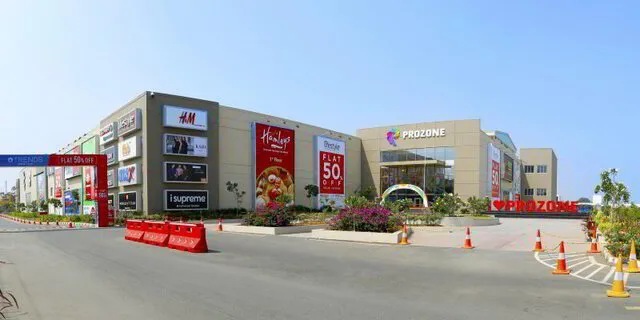
Then in June, the board did something unexpected: it put the two operating malls on the market for ₹1,242.5 crore.
Net profit flipped from a ₹543.6 crore loss in FY25 to ₹10.7 crore profit in FY26. That’s not recovery—that’s noise from accounting, mostly tax adjustments the finance ministry gifted to property deals. Strip out the noise and operating reality remains thin: operating cash generated ₹40 crore, down from ₹60 crore a year prior.
The market is pricing this as a reset. At ₹47.78, the stock trades at 68.3x earnings (annualised from FY26 EPS of ₹0.70). The peer set averages 25.37x.
Central tension: Is the company monetizing assets at peak, or exiting before cash generation gets worse?
2. Introduction
Prozone Realty incorporated in 2007. For fifteen years it attempted the classic Indian real estate play: build shopping malls (retail = recurring lease income), marry them to residential (high margin, lumpy, timing-dependent cash flow), finance it all on debt, and compound returns.
Occupancy improved dramatically. Ch Sambhaji Nagar (Aurangabad) hit 94% in Q4 FY26—up from 73% three years ago. Coimbatore Mall reached 96%, up from 85%. Footfalls and consumption climbed year-on-year.
And yet the company remained unprofitable for most years, then barely profitable in others. Interest ate ₹44 crore in FY26 (23% of revenue). Depreciation cost another ₹23 crore. Together they left ₹28 crore for tax and shareholders on ₹195 crore in sales—a margin so thin that a single large transaction or accounting timing shift could erase years of work.
In April 2026, management announced the sale of the malls to Inorbit Retail. Shareholders approved it on June 2. The deal is structured as sale of 100% ownership of subsidiaries housing the malls, with expected gross consideration of ₹1,242.5 crore, to be deployed into premium assets in Mumbai—specifically office and retail platforms in high-value locations.
The strategic pivot signals management’s admission: running malls as a long-term hold isn’t generating value anymore. Liquidity at peak occupancy is the trade.
3. Business Model: WTF Do They Even Do?
Before the sale closes, the company operates two shopping malls (retail lease model, ~25% of development strategy) and three residential projects (build-and-sell, ~75%).
Malls: Ch Sambhaji Nagar (Aurangabad, ~5.5 lakh sq. ft.) and Coimbatore (~4.8 lakh sq. ft.). Both are now mostly full. Coimbatore collects ₹1,303 crore annually in lease rental and related income from tenants. Ch Sambhaji Nagar contributes a large portion of that. Tenants range from Shoppers Stop and Lifestyle to smaller regional chains. Both malls also host multiplexes, which drive footfall.
Residential: Three projects—Coimbatore (~1,152 apartments across 7 towers), Nagpur (~1,080 units planned across phases), and Indore (43.5 acres of plotted development). Coimbatore has already sold 402 out of 540 Phase 1 units for ₹2,167 crore; collections are at ₹1,375 crore. Nagpur is slower—254 units sold of 336 launched, for ₹1,780 crore sales value, ₹1,595 crore collected. Indore is in early phases.
Revenue model: flat sales (lump-sum on handover) plus pre-handover collections. Gross margins are high (40–50% once you subtract land, construction, and carrying costs). But cash timing is lumpy—it depends on construction completion rates and customer collections.
Land bank: The company owns 15.3 million sq. ft. of land across India. Of that, 2.1 million has been developed so far. The balance 13+ million sq. ft. is a pipeline of future projects, mostly residential.
The structural tension: Malls are cash-positive but low-return on a consolidated basis. Residences are margin-rich but cash-negative until handover. Debt costs are high. The company has been stuck in a slow-motion cycle of development and debt servicing with insufficient equity returns to justify the balance sheet risk.
The sale breaks that cycle. The company liquidates two productive, fully-occupied assets and redeploys into office/retail in Mumbai—where yields are expected to be lower (higher quality) but capital appreciation and rents may be stronger long-term.
4. Financials Overview
Figures are consolidated, in ₹ crore.
Metric
FY26
FY25
YoY Change
Revenue
195.2
178.7
+9.2%
EBITDA
939.0 (excl. other income: 767.3)
576.2
+63% / +70%
PAT
10.7
-54.0
+₹64.7 Cr turnaround
EPS
₹0.70
-₹2.49
Annualised
Q4 FY26 snapshot:
Sales hit ₹52.6 crore, nearly flat vs. Q4 FY25 (₹52.8 crore). Operating profit surged to ₹18.1 crore (34.5% margin). EBITDA stood at ₹267.5 crore for the quarter, up 109% from ₹127.7 crore a year prior. But net profit in Q4 was only ₹3.9 crore, held back by ₹17.5 crore in interest (unusually high, likely reflecting timing of refinancing or FY-end numbers).
Where the revenue came from:
Lease rental: ₹1,303 crore (67% of total)
Real estate project sales: ₹649 crore (33%)
Profitability narrative:
FY25 was a disaster. The company posted a ₹54 crore loss, driven by tax changes (the 2024 Finance Act revised LTCG treatment for real estate, requiring revaluation of deferred tax assets—a paper hit of ₹52 crore). FY26 reversed that by simply not incurring the same tax penalty. So the ₹10.7 crore profit is partly real (genuine operational improvement in margins), partly accounting noise (absence of a prior-year loss accrual).
Strip it down: EBITDA margin (excluding other income) was 39.3% in FY26, up from 25.2% in FY25. That’s real, and it reflects strong occupancy and collections from the malls.
But operating cash flow tells a different story: it fell to ₹40