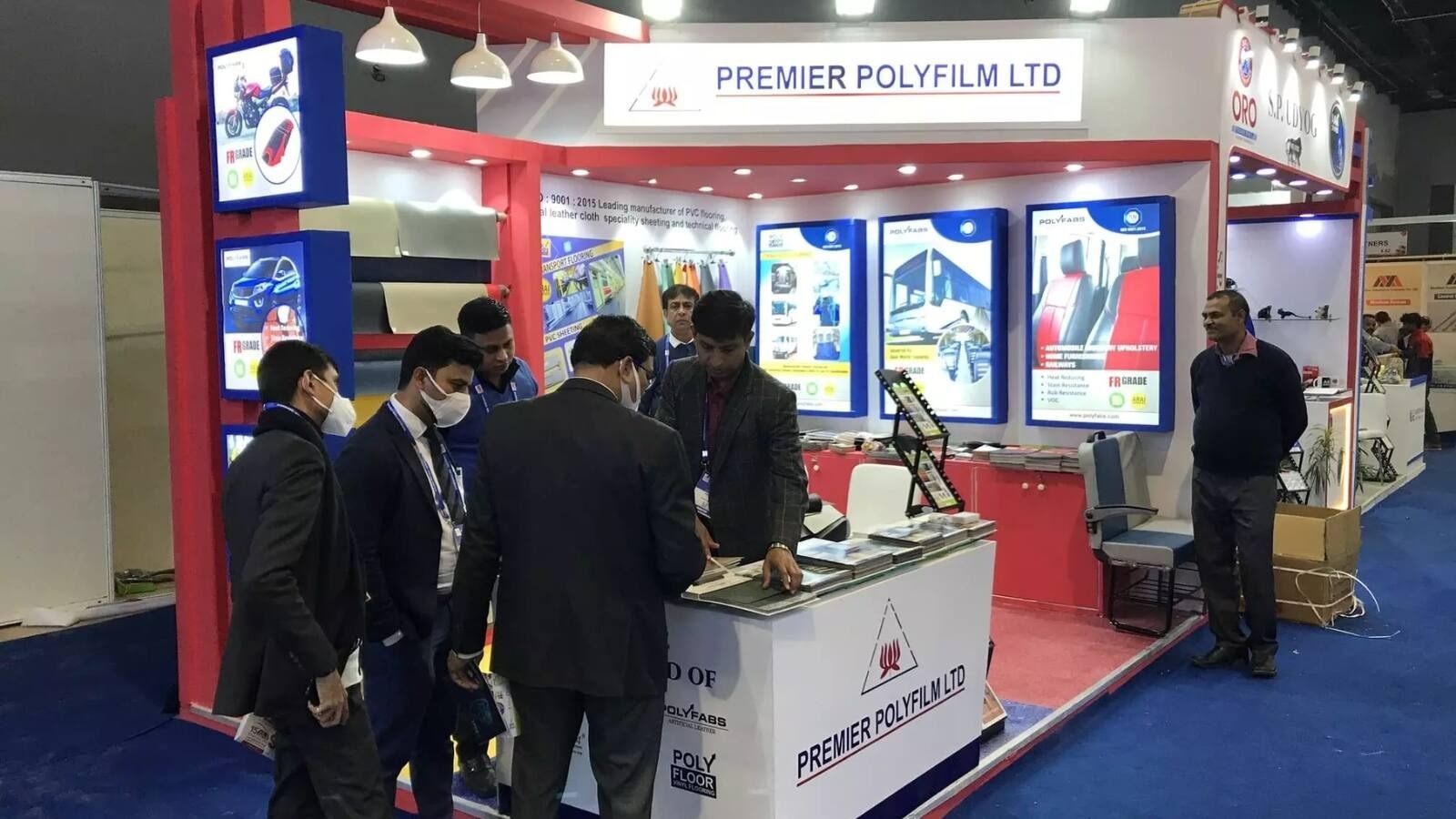
Premier Polyfilm Limited (PPL) is making a loud statement in the specialty calendared films market. The company has just reported its audited financial results for the quarter and year ended March 31, 2026, and the numbers are hard to ignore. We are looking at a business that has managed to expand its bottom line by 53.5% YoY in the latest quarter, even while navigating a complex regulatory and expansionary phase.
With a market capitalization of ₹ 579 Cr, this isn’t a giant, but its efficiency ratios are starting to look like one. The company reported an ROE of 24.0% and a ROCE of 30.8%, signaling that it is squeezing significant value out of its capital. However, it’s not all sunshine; the auditors have highlighted a persistent GST dispute involving a ₹ 98.58 Lakh demand, and the rating agency ICRA has moved the company to the “Issuer Not Cooperating” category due to lack of information.
Is this a hidden gem scaling up via its new SIPCOT facility, or is the “Non-Cooperating” tag a red flag that investors should fear? Let’s peel back the layers of this PVC manufacturer.
1. At a Glance
Premier Polyfilm is currently at a critical junction. The numbers suggest a high-growth trajectory, with Net Profit jumping from ₹ 21 Cr in FY24 to ₹ 32 Cr in FY26. This is a massive 52% growth in PAT over just two years. Investors have clearly noticed, as the stock has delivered a 46.1% return over the last six months.
The Red Flags You Can’t Ignore
Before you get blinded by the profit growth, look at the regulatory friction. ICRA recently moved PPL’s ratings to the “Issuer Not Cooperating” category. This usually happens when a company stops providing the necessary data to the credit agency. In a transparent market, “silence” is often viewed as a risk. Why would a company with such stellar ROCE choose not to cooperate with a rating agency?
Furthermore, there is a lingering GST dispute regarding tax classification (HSN 3921). While the Appellate Authority set aside the “fraud” invocation, they upheld a tax demand restricted to ₹ 98.58 Lakhs. The company is treating this as a contingent liability, refusing to make a provision.
Growth Levers
On the flip side, PPL is aggressively expanding. They have taken possession of an 18.13-acre plot at SIPCOT Industrial Park, with commercial production expected in FY26. Production volume has steadily climbed from 23,414 MT in FY23 to 28,383 MT in FY25. They are also diversifying into warehousing and logistics, amending their Memorandum of Association to build logistics parks.
The company is virtually debt-free (Debt to Equity of 0.00), which is a rarity for a manufacturing firm undergoing greenfield expansion. They are funding their growth through internal accruals and a massive cash pile. But is the management being too aggressive with diversification?
2. Introduction
Premier Polyfilm Limited was incorporated in 1992, and for decades, it remained a relatively quiet player in the PVC flooring and artificial leather segment. Fast forward to 2026, and it has evolved into an ISO 9001-2015 certified powerhouse of specialty calendared films.
The company operates two primary plants in Sikandarabad and Sahibabad, Uttar Pradesh. These facilities aren’t just simple workshops; they handle coating, calendaring, printing, lamination, and embossing. They even manufacture their own fabric in-house, which gives them a significant edge in cost control.
Their client list is their biggest strength. If you’ve traveled on an Indian Railways coach recently, there’s a high chance you were walking on PPL’s PVC membrane flooring. They are also deep into the automotive supply chain, providing artificial leather to Tier-2 and Tier-3 suppliers for major OEMs.
The most intriguing part of the current narrative is the SIPCOT expansion. By moving into Southern India, PPL is looking to de-risk its geographical concentration and tap into new export markets. Currently, exports stand at 11% of revenue, down from 14% the previous year. The management seems focused on reclaiming that export share while doubling down on the booming domestic infrastructure and automotive demand.
The recent appointment of Mr. Mayank Goenka as Whole Time Director in July 2025 suggests a generational