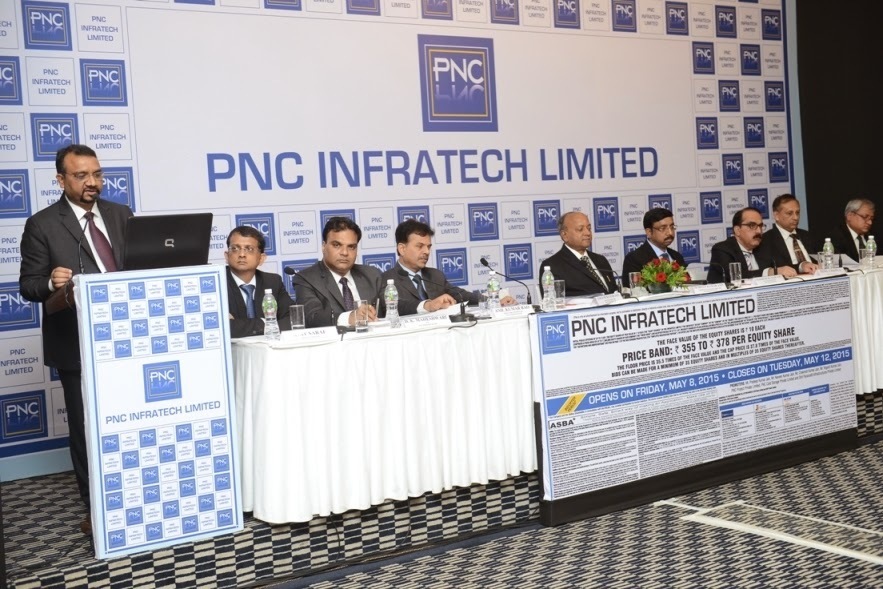
PNC Infratech Limited Mar 2026: The ₹9,006 Crore Asset Flip Meets a 20% Top-line Haircut
Section 1 — At a Glance
PNC Infratech Limited has completed a massive capital-recycling operation, executing a Master Securities Purchase Agreement to divest 12 operating road assets to KKR-affiliated Vertis Infrastructure Trust at an enterprise value of ₹9,006 crore. This transaction unlocked an equity value of ₹2,517 crore against an invested equity base of ₹1,736 crore. The monetization has radically transformed the company’s balance sheet, sparking strong investor attention due to a consolidated net cash flow surge from a massive ₹4,593 crore operational cash generation in FY26. This was driven by the realization of these divestment proceeds and a massive reduction in consolidated borrowings from ₹9,364.49 crore to ₹5,169.85 crore.
However, beneath the balance sheet euphoria lies an acute top-line bottleneck that is causing significant friction. Consolidated annual sales fell 20.68% year-on-year to ₹5,368.10 crore in FY26 from ₹6,768.68 crore in FY25 , while net profit remained flat at ₹831.77 crore , heavily supported by a spike in other income to ₹633.77 crore. The engineering, procurement, and construction (EPC) execution base faced structural execution challenges stemming from a two-year industry award slowdown by the National Highways Authority of India (NHAI). Delays in securing right-of-way (RoW) clearances and land acquisitions have left a sizeable portion of its core road portfolio in an unexecuted state. While asset flipping can artificially inflate accounting metrics and clear out liabilities for a brief period, sustained operational survival demands actual physical execution on the ground. The market is now closely monitoring whether PNC can successfully transition its newly unlocked liquidity into its non-road diversification pipeline before its legacy infrastructure margins lose operational leverage entirely.
Section 2 — Introduction
PNC Infratech Limited has transitioned from a localized infrastructure builder into a highly diversified construction and asset-management player across 16 states. For over two decades, the company’s primary identity has been tied directly to high-speed asphalt , acting as a key construction contractor for national and state highway authorities. The company operates through a complex corporate structure of wholly-owned subsidiaries, project-specific special purpose vehicles (SPVs), and joint ventures specifically created to build, operate, and transfer infrastructure assets.
This analytical review comes at a critical structural turning point for the firm. The company’s core road portfolio has faced a macro-driven slowdown in new project awardings, pushing management to aggressively deploy capital away from its historical core. Over the past fiscal year, the corporate strategy has shifted toward rapid monetization of seasoned annuity and Hybrid Annuity Model (HAM) projects, paired with major entry into alternative segments like rural water supply networks under the Jal Jeevan Mission, solar powered energy storage systems, and commercial coal mining projects. This transformation makes a forensic evaluation of its current cash position, execution pipeline, and margin sustainability essential for evaluating its underlying intrinsic valuation.
Section 3 — Business Model: WTF Do They Even Do?
At its core, PNC operates a twin-engine business model that combines pure-play EPC contracting with public-private partnership (PPP) infrastructure development. Under the EPC model, the company acts as a general contractor, taking raw project blueprints from central or state authorities and transforming them into finished highways, airport runways, and bridge structures. Under the PPP framework, it steps into the role of a financial developer via HAM and Build-Operate-Transfer (BOT) models. Here, PNC puts up its own equity, secures long-term bank financing, constructs the asset, and then collects periodic annuity or toll payments over a 15-to-25-year horizon.
To make this complex machine run efficiently, the company utilizes a completely integrated operational setup. It runs an in-house engineering and design cell, owns its own strategic stone quarries to control raw material sourcing, and maintains an extensive internal equipment bank valued at ₹1,609 crore to avoid paying premium rental rates to third-party providers.
The underlying business mix has actively shifted over the last year. In FY26, roads and highways accounted for 76% of consolidated revenue, while water supply infrastructure brought in 11%, and long-term toll/annuity collections contributed the remaining 13%.
Section 4 — Financials Overview
Figures are consolidated, in ₹ crore.
The company’s performance trajectory is captured across the last four quarters of execution.
Quarterly Performance Trend
Metric
Mar 2026
Dec 2025
Sep 2025
Jun 2025
YoY (%)
QoQ (%)
Revenue
1,616.98
1,200.68
1,127.64
1,422.80
-5.11%
+34.67%
EBITDA
277.12
239.11
253.02
367.42
-23.49%
+15.89%
PAT
107.85
76.75
215.76
431.41
-72.76%
+40.52%
EPS (₹)
4.20
2.99
8.41
16.82
-72.78%
+40.47%
The numbers reveal an acute loss of operational leverage. While sequential revenue grew 34.67% into the March 2026 exit quarter due to a standard year-end construction push , the longer-term year-on-year trend is highly strained. March quarter revenue dropped 5.11% against the prior year’s fourth quarter , while quarterly EBITDA contracted by a more severe 23.49% to ₹277.12 crore. This compression highlights