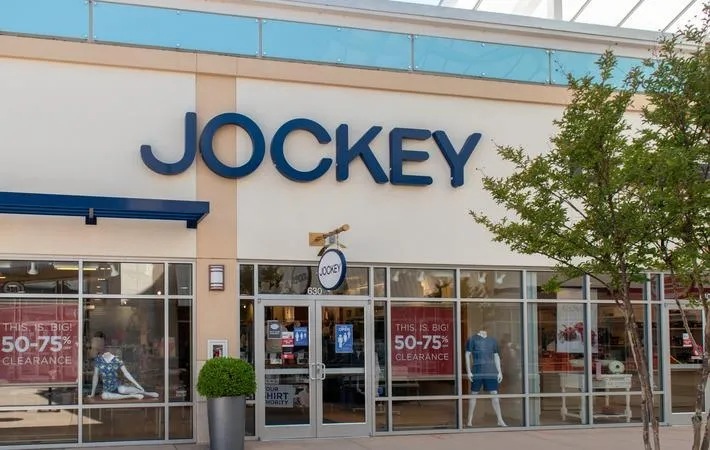
01 — At a Glance
The Innerwear Duopoly That Raised Prices By Not Raising Prices
- 52-Week High / Low₹50,590 / ₹30,575
- FY25 Full Year Revenue₹4,935 Cr
- FY25 Full Year PAT₹729 Cr
- Full-Year EPS (FY25)₹653.71
- Q3 FY26 EPS (Annualised)₹679.72
- Book Value₹1,263
- Price to Book24.6x
- Dividend Yield2.85%
- Debt / Equity0.19x
- 1-Year Return-21.1%
Auditor’s Opening Note: Page Industries ended 9M FY26 with ₹39,942 crore revenue (+4.1% YoY), ₹5,851 crore PAT (+3.5% YoY), and a fortress balance sheet. Q3 delivered ₹1,387 crore revenue (+5.6% YoY)—the highest ever in the company’s history. But management walked into the concall and immediately told investors: “The current elevated EBITDA margin at ~22% is unlikely to be maintained going forward.” Translation: Don’t get excited. We’re going back to 19–21%. Meanwhile, the stock has crashed 28.9% in six months. The irony of delivering record quarterly numbers while trading at 52-week lows is not lost on anyone. Jockey remains the largest-selling innerwear brand in India. It still prints cash like a monopoly. But the street is rewriting expectations faster than management can defend them.
02 — Introduction
Jockey: The Premium Innerwear Monopoly That Won’t Admit How Good It Has It
Page Industries manufactures, distributes, and markets the Jockey brand of innerwear and athleisure in India and South Asia. That’s it. That’s the business. No metaverse, no AI, no platform. Just premium underpants and socks, sold through 1.5 lakh retail touchpoints across the country, with a 59% ROCE and the highest brand recall in its category bar none.
The company is incorporated in 1995 and holds an exclusive license from Jockey International Inc. (USA) for the Indian subcontinent and Middle East. License valid till 2040. The brand has been in India for roughly 30 years. It has never posted a loss. 10-year sales CAGR stands at 12%. The last decade saw the stock deliver 11% annualized price appreciation plus cumulative dividends that would make dividend aristocrats weep.
Then came the stock price crash. In just one year, Page shed 21% of shareholder value while reporting record revenue, record margins, and cash accruals in the billions. The February 2026 concall revealed why: management is terrified of being held accountable for margins they themselves achieved. They walked into Q3 FY26 results — the highest quarterly revenue in company history — and immediately tamped down expectations like a CFO whose bonus is docked for beating guidance.
The real story isn’t in the macro numbers. It’s in the details: Jockey Groove (athleisure) is scaling from 50 EBOs to 500 EBOs by summer. Men’s innerwear is struggling. Women’s and premium are on fire. General trade is gasping while e-commerce gallops. And management just signed up for Saudi Arabia, Kuwait, and Bahrain — converting the Middle East into a licensed growth vector. The monopoly is evolving. The street is skeptical. Let’s dissect.
Concall Note (Feb 2026): “We are not chasing a percentage increase in EBITDA. We want to actually improve the absolute EBITDA.” — Page Industries Management. Translation: Margins at 22.9% are too good to last. We will reinvest them and muddy the story further. Enjoy the volatility.
03 — Business Model: WTF Do They Even Do?
Premium Innerwear In Bottles. Except They’re Not Bottles. But The Monopoly Part Is Real.
Page Industries operates as the exclusive Indian licensee of Jockey International Inc., a US-headquartered premium innerwear and leisurewear brand present in 147+ countries. The company manufactures, markets, and distributes Jockey products across India, Sri Lanka, Bangladesh, Nepal, Oman, Qatar, Maldives, Bhutan, UAE, and — as of FY25 — Saudi Arabia, Bahrain, and Kuwait. They also license Speedo (swimwear) for India, though its contribution remains negligible at <2% of revenues.
Revenue composition: Jockey contributes ~99% of sales. Men’s innerwear is the largest segment but slipped from 54% of sales (FY19) to 45% (FY25) due to diversification into women’s innerwear, socks, athleisure (JKY Groove), thermals, and accessories. The company operates 1,556 exclusive brand stores (EBOs), 113,600 multi-brand outlets (MBOs), 1,778 large format stores (LFS), and 1.5 lakh total touchpoints, making distribution the moat.
Manufacturing capacity: 280 million pieces per annum (26 manufacturing units across Karnataka, Tamil Nadu, and the new Odisha facility that commenced production in Q2 FY26). Roughly 70% of output is manufactured in-house; 30% is outsourced — a split that gives operational flexibility and plays a role in margin management and cost optimization.
Men’s Innerwear45%of Sales Mix
Women’s Innerwear~28%Growing Segment
Athleisure & Other~25%Includes Groove
Speedo<1%Negligible
Licensing Reality: Page pays a royalty to Jockey International Inc. for the brand name. In FY25, this was ₹239 crore. On ₹4,935 crore revenue, that’s ~4.8% of sales going to the licensor. Expensive, but the brand moat justifies it. Entry barriers? Sky-high. You need 30 years of brand-building, OEM approvals, and distribution density. Page has it. You don’t.
💬 Have you bought Jockey innerwear at your local hosiery store and wondered why it costs 3x the generic stuff next to it? That premium-to-unbranded spread is Page’s economic moat. Drop a comment if you’ve experienced it.
04 — Financials Overview
Q3 FY26: Record Revenue Meets Record Uncertainty
Result type: Quarterly Results | Q3 FY26 EPS: ₹169.93 | Annualised EPS (Q3×4): ₹679.72 | Full-year FY25 EPS: ₹653.71
| Metric (₹ Million) |
Q3 FY26
Dec 2025 |
Q3 FY25
Dec 2024 |
Q2 FY26
Sep 2025 |
YoY % |
QoQ % |
| Revenue | 13,868 | 13,131 | 12,910 | +5.6% | +7.4% |
| EBITDA | 3,181 | 3,028 | 2,863 | +5.2% | +11.1% |
| EBITDA Margin % | 22.9% | 23.1% | 22.2% | -20 bps | +70 bps |
| PAT | 1,895 | 2,047 | 1,948 | -7.4% | -2.7% |
| EPS (₹) | 169.93 | 183.49 | 174.61 | -7.4% | -2.7% |
The PAT Headwind Is One-Time (Really): Q3 FY26 PAT was hit by a ₹350 million exceptional provision for gratuity and earned leave due to newly notified labor codes (effective Nov 2025) that redefined wage computation for retirement benefits. Without this provision, PAT would have grown ~8% YoY. Management confirmed on the concall: “This is expected to benefit our employees, while also simplifying compliance requirements.” It’s genuinely a one-off, not a chronic margin issue. EBITDA growth of 5.2% YoY and 11.1% QoQ is real. Annualised Q3 EPS (₹169.93 × 4 = ₹679.72) sits above FY25’s full-year EPS of ₹653.71, signaling underlying operational resilience.
9M FY26 Snapshot
9-Month revenue: ₹39,942 million (+4.1% YoY). PAT: ₹5,851 million (+3.5% YoY). EBITDA: ₹8,923 million (+7.9% YoY). Volumes: 173.8 million pieces (+1.9% YoY). The growth is steady, not explosive, but the margin resilience is noteworthy.
05 — Valuation: Fair Value Range
What’s This Jockey Monopoly Actually Worth?
Join 10,000+ investors who read this every week.