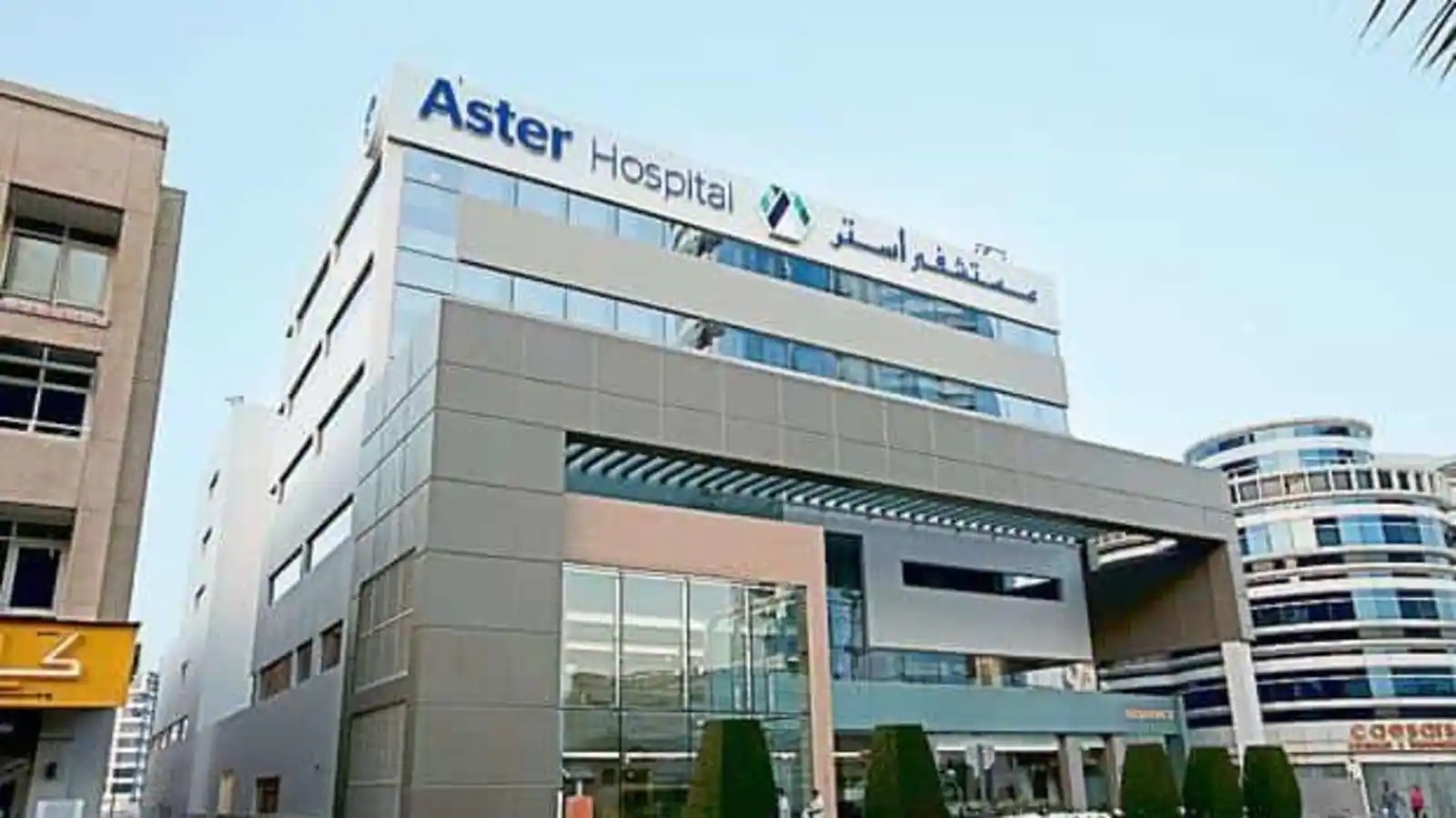
01 — At a Glance
The Hospital Merger That Wall Street Actually Cares About
- 52-Week High / Low₹732 / ₹415
- Q3 FY26 Revenue (Aster Standalone)₹1,186 Cr
- Q3 FY26 Operating EBITDA₹224 Cr
- Operating EBITDA Margin18.9%
- Q3 FY26 EPS (Annualised)₹4.04
- Book Value₹87.5
- Price to Book7.54x
- Dividend Yield0.74%
- Debt / Equity0.46x
- ICRA Credit RatingA+ (Upgraded)
Opening Auditor’s Note: Aster DM closed Q3 FY26 with ₹1,186 crore revenue (+13% YoY), operating EBITDA of ₹224 crore, and 18.9% margins. The standalone business performed. But here’s what’s actually interesting: the company is merging with Quality Care India—a Blackstone portfolio company with 19 hospitals and three brands—to create a 10,600+ bed behemoth. Expected close: Q1 FY27. Shareholder approval crossed 99.998%. NCLT says yes. Stock trades at 94.9x P/E. Make of that what you will.
02 — Introduction
When Healthcare Meets Private Equity (And Nobody Gets Fired)
Aster DM Healthcare is doing something rare in Indian healthcare: it’s merging with a major competitor backed by Blackstone capital, and both sides are explaining it as a win. No doomsday narratives. No “PE will strip assets and leave.” Just two reasonably-run hospital platforms saying, “Hey, if we sit together, we can negotiate better drug prices and stop paying each other’s salaries.”
The company started in the GCC region over three decades ago, pivoted aggressively into India in recent years, sold off the GCC business for ₹7,767.7 crore in FY2025 (of which ₹5,148.1 crore was gain), and is now using that war chest to acquire or merge with domestic players. The latest: Quality Care India Limited (CARE Hospitals, KIMSHEALTH, Evercare). Post-merger, inter-se shareholding will be 57.3% (Aster) and 42.7% (Quality Care).
Dr. Azad Moopen continues as Executive Chairman. A Blackstone executive joins governance. Two MD-level exits to avoid. The NCLT has approved the scheme. Shareholder vote is locked. And management is already operating the combined entity on a proforma basis in earnings calls—which tells you either (a) they’re confident the deal closes, or (b) they’re quietly hoping analysts ignore their standalone numbers and focus on the prettier combined picture. Probably both.
Let’s unpack this hospital narrative, because healthcare in India is about to get messier, more consolidated, and way more expensive for private equity limited partners to understand.
Concall Highlight (Feb 2026): “The quick answer will be the material… negotiating a INR 2,000 crore procurement… that’s a no-brainer.” — CFO Sunil Kumar on merger synergies. Translation: bulk drug procurement is the only low-hanging fruit executives are publicly admitting to right now.
03 — Business Model: WTF Do They Actually Do?
Beds. Doctors. Pills. Repeat.
Aster runs hospitals. 19 of them in India, across 5 states. Primarily South India (Kerala, Karnataka, Maharashtra, Andhra Pradesh, Telangana). The company admits ~53% of FY2025 revenues came from Kerala alone, which is both strength (brand loyalty, proven economics, clinician supply) and single-cluster concentration risk. Specialty-driven case mix: cardiac, neuro, oncology, gastroenterology, orthopedics. Not a commodity hospital. Quality premium brand.
Post-merger, the combined entity operates 36 hospitals across 9 states under four brands (Aster DM, CARE, KIMSHEALTH, Evercare). Total bed capacity: 10,600+ beds, planned to grow to 14,710+ beds by FY29. Revenue mix for hospitals: inpatient stays, outpatient consultations, pathology/labs. Newer play: immersion cooling fluids for data centres (yes, really—some Aster labs pilot immersion testing).
The merger is being pitched as a procurement-synergy + overhead-reduction play. Management’s own guidance: medium-term operating margin aspiration of 24–25% for combined entity, vs. current 18–20% range. Synergy potential claimed at 10–15% of EBITDA over 2–3 years. Key levers: bulk drug negotiation, shared back-office, clinician resource pooling, vendor consolidation. Not revolutionary stuff. But in fragmented hospital India, scale helps.
Patient Volumes+10%Q3 YoY Growth
Inpatient ARPP+9%Q3 YoY Growth
CONGO Mix54%Combined Entity
Occupancy Rate64%Combined Post-Merger
Specialty Concentration: Aster’s top 5 specialties account for ~65% of revenue. Cardiac (14%), OP Pharmacy & Anaesthesia (14%), Neuro (11%), Gastro (8%), Oncology (11%). No single specialty dominates beyond 15% — which is actually healthy diversification in Indian hospital land.
💬 Would you trust a Blackstone-backed hospital merger to improve care, or are you betting they just optimize the spreadsheet? Drop your hot take.
04 — Financials Overview
Q3 FY26: The Quarterly Numbers
Result type: Quarterly Results | Q3 FY26 EPS: ₹1.01 | Annualised EPS (Q3×4): ₹4.04 | FY2025 Full-Year EPS: ₹107.66 (includes special dividend impact; normalized ~₹2.59)
| Metric (₹ Cr) |
Q3 FY26
Dec 2025 |
Q3 FY25
Dec 2024 |
Q2 FY26
Sep 2025 |
YoY % |
QoQ % |
| Revenue | 1,186 | 1,050 | 1,197 | +13.0% | -0.9% |
| Operating EBITDA | 224 | 202 | 236 | +11.0% | -5.1% |
| EBITDA Margin % | 18.9% | 19.2% | 19.7% | -30 bps | -80 bps |
| PAT (Reported) | 59 | 64 | 121 | -9.7% | -51.2% |
| EPS (₹) | 1.01 | 1.14 | 2.12 | -9.9% | -52.3% |
Margin Softness Explained: Q3 margin compression of ~80 bps QoQ was driven by (i) upfront clinician hiring at newly commissioned capacity (Kasargod), (ii) seasonal volume dip, and (iii) mix shift toward higher-material-cost specialties (oncology, robotics). Core hospitals ex-Kasargod ran 22.8% EBITDA margins. Labor code provision of ₹27.9 crore also hit PAT. Management expects normalization by Q4. Normalized PAT (ex-Kasargod, ex-one-time items) was +22% YoY—the real operational story.
05 — Valuation Discussion: Fair Value Range
What’s A Hospital Chain Worth When It’s Becoming Bigger Tomorrow?
Join 10,000+ investors who read this every week.