Orkla India Mar 2026 : Pure Spice Deflation Masking 10% Volume Muscle
Section 1 — At a Glance
Orkla India Limited wrapped up its fiscal year 2026 with an operational performance that highlights the classic divergence between volume velocity and value realization. The headline numbers indicate a steady but seemingly modest top-line expansion, with revenue from operations growing by 4.78% to reach ₹2,509.14 crore, compared to ₹2,394.71 crore in the previous fiscal year. Profit after tax (PAT) jumped by 11.72% to ₹285.67 crore. However, looking at the top line in isolation misses the core story: a dramatic over 30% multi-year deflationary cycle in key raw materials, led by a massive 50% crash in chili mandi rates, forced the company to pass on 7% price reductions to stay competitive in its pure spices segment.
What is capturing intensive investor attention is the robust underlying volume muscle. In an environment where peers are struggling with sluggish consumption, Orkla’s pure spices volume expanded by a stellar 10.1% year-on-year, indicating deep market share gains and structural penetration across its core southern strongholds. Furthermore, digital commerce grew at 43.4%, now accounting for nearly 10% of domestic sales.
On the flip side, worries persist over a sharp escalation in operational working capital days, which stretched from 17 days to 111 days, trapping cash on the balance sheet. This capital stagnation highlights a fundamental market truth: volume is vanity if your working capital cycle locks up your liquidity. Investors are left parsing whether this volume velocity can withstand the imminent reversal of the spice commodity cycle as acreage reductions point to a return of inflation.
Section 2 — Introduction
Orkla India Limited, incorporated in 1996, has quietly engineered an expansive branded packaged foods business out of its headquarters in Bengaluru. While the company itself might sound European—owing to its ultimate listing under Norwegian consumer giant Orkla ASA—its operational DNA is completely rooted in the Indian kitchen.
The company went public with a ₹1,667 crore Offer For Sale (OFS), listing on the exchanges on November 6, 2025. This transition from a closely-held multinational subsidiary to a publicly traded enterprise comes at a time when regional food preferences are turning highly institutionalized. The packaged spice industry, long dominated by unorganized local mills, is rapidly transitioning to trusted, unadulterated national brands, making Orkla’s execution a prime case study for the formalization of Indian consumer plates.
Section 3 — Business Model: WTF Do They Even Do?
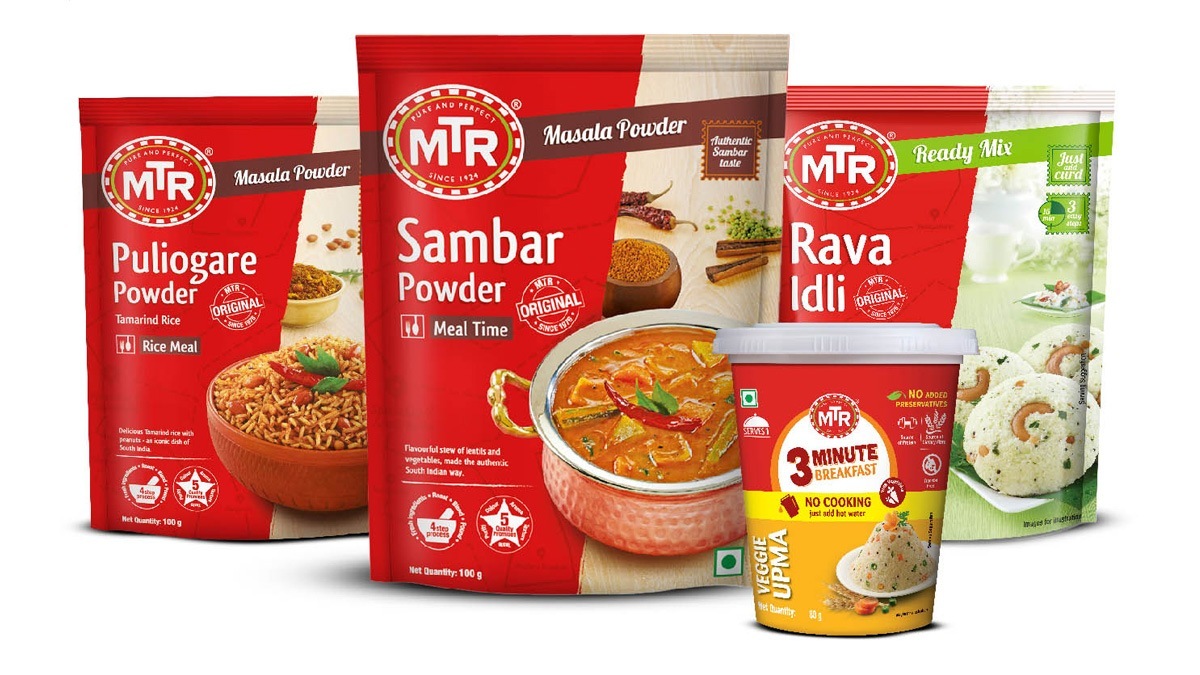
Orkla India operates a multi-category packaged food business structured across two heritage operating engines: MTR (established in 1924, acquired in 2007) and Eastern (founded in 1983, acquired in 2021). The product split is straightforward but asymmetric. Spices and core condiments command 67% of the total revenue, while Convenience Foods, including South Indian breakfast mixes, ready-to-eat meals, and traditional sweets, bring in the remaining 33%.
Geographically, the domestic market generates 79.4% of top-line sales, heavily anchored in the high-per-capita-spend states of Karnataka and Kerala, where it holds dominant market shares of 31.2% and 41.8% respectively. The remaining 20.6% comes from an international export funnel targeting the global South Asian diaspora across 45 countries, alongside a growing penetration among local Arab households in the GCC region using dedicated Arabic masala formulations.
Section 4 — Financials Overview
Figures are consolidated, in ₹ crore.
Quarterly Performance Comparison
Metric
Latest Quarter (Mar 2026)
YoY
QoQ
Revenue
625.80
4.97%
-1.61%
EBITDA / Operating Profit
97.01
2.10%
-6.15%
PAT
73.43
108.37%
33.18%
EPS (₹)
5.36
108.37%
29.78%
The sharp triple-digit spike in reported quarterly PAT is primarily distorted by a highly unfavorable base effect in the previous year’s matching quarter (March 2025), which was severely dragged down by tax adjustments and high operational provisioning. Sequentially, revenue dropped by 1.61%, highlighting the volatility