Nirlon Q4 FY26: When Your Landlord Becomes a Fixed Deposit Addict
1. At a Glance
Nirlon’s FY26 results present a fascinating contradiction: an impeccably managed prime real estate asset attached to a deeply puzzling capital allocation strategy. The company closed the year with ₹669.17 Cr in revenue, a respectable 5.2% YoY growth, driven by scheduled rental escalations across its 3.06 million square feet of chargeable area. However, the headline Net Profit of ₹345.98 Cr—a massive 59% jump—is a mirage. Strip away a one-time ₹69.5 Cr deferred tax liability reversal following a shift to the new tax regime, and the underlying PAT growth normalises to a still-healthy 27%.
What demands investor attention isn’t the park’s 99.7% occupancy, but the balance sheet’s structural friction. Management is currently sitting on nearly ₹300 Cr in cash and equivalents, much of it parked in short-term bank fixed deposits yielding roughly 5.5%. Simultaneously, they continue to service a ₹1,146.90 Cr Lease Rental Discounting (LRD) loan costing approximately 7.75%. A pristine asset generates cash effortlessly; poor capital allocation squanders that exact advantage. Management’s reluctance to either aggressively pay down debt or commit to special dividends sets up a classic standoff between a conservative board and yield-hungry minority shareholders. The park is thriving, but the treasury desk is asleep.
2. Introduction
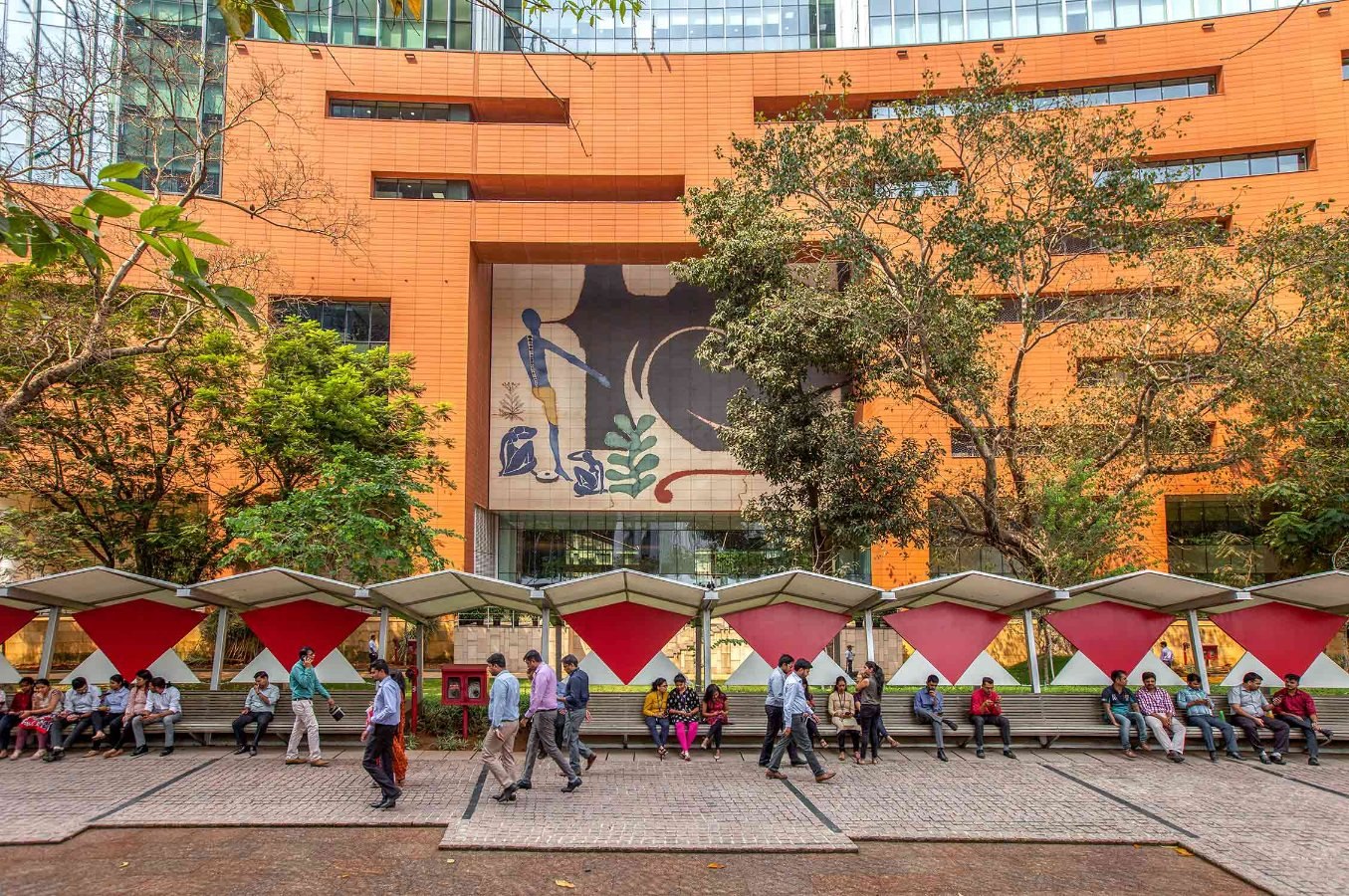
If you ever need proof that corporate reincarnation exists, look at Nirlon. Once a pioneer in synthetic yarns and industrial rubber products, the company spent the period from 1988 to 2006 navigating bankruptcy restructuring. From the ashes of that industrial past rose Nirlon Knowledge Park (NKP)—a sprawling 23-acre IT park in Goregaon East, Mumbai. Today, the company is majority-owned by Singapore’s sovereign wealth fund GIC (through Reco Berry Pvt Ltd), quietly operating as a premium toll bridge for global banking and financial services firms looking to house their backend operations in India.
3. Business Model: WTF Do They Even Do?
They are a landlord. That’s it. But they are a landlord to Wall Street. Nirlon owns NKP, which houses the likes of JP Morgan, Morgan Stanley, Citibank, Deutsche Bank, and Barclays. They sign 4-to-10-year leave-and-license agreements with in-built 15% rent escalations every 3 to 5 years.
Instead of dealing with the chaos of residential tenants complaining about plumbing, Nirlon collects massive cheques from global conglomerates that lock in spaces for a decade at a time. JP Morgan alone leased the entirety of NKP’s Phase V (1.16 million sq ft) for 10 years. It’s a 23-acre money printer wrapped in a corporate facade.
4. Financials Overview
Figures are consolidated, in ₹ crore.
Metric
Q4 FY26
YoY (Q4 FY25)
QoQ (Q3 FY26)
Revenue
170.94
158.02 (+8.1%)
169.93 (+0.6%)
Operating Profit
132.34
123.01 (+7.5%)
131.73 (+0.4%)
PAT
70.59
53.54 (+31.8%)
69.32 (+1.8%)
EPS (₹)
7.83
5.94 (+31.8%)
7.69 (+1.8%)
Note: FY26 Annual EPS stands at ₹38.39.
Concall Handling: Walk the Talk & Promises
The May 2026 earnings call was a masterclass in bureaucratic deflection. When pressed about the glaring negative carry—borrowing at ~7.75% while earning ~5.5% on nearly ₹300 Cr in FDs—management noted, “As of now, there is nothing concrete… to pay back any debt from the existing cash balances.” They also flagged that FY26 expenses grew 11% against a 5.9% total income bump, mildly compressing EBITDA margins from 79.33% to 78.36%.
Management promised they would “take a look” at the rising costs, which is corporate shorthand for changing the subject. On dividends, they championed consistency over special payouts, calling the proposed ₹15 final dividend a “conservative start.” Consistency in capital returns is admirable, right up until it becomes an excuse for hoarding cash without a mandate.
5. Valuation Discussion: Fair Value Range Only
With an FY26 EPS of ₹38.39 and a CMP of ₹608.65, Nirlon trades at a