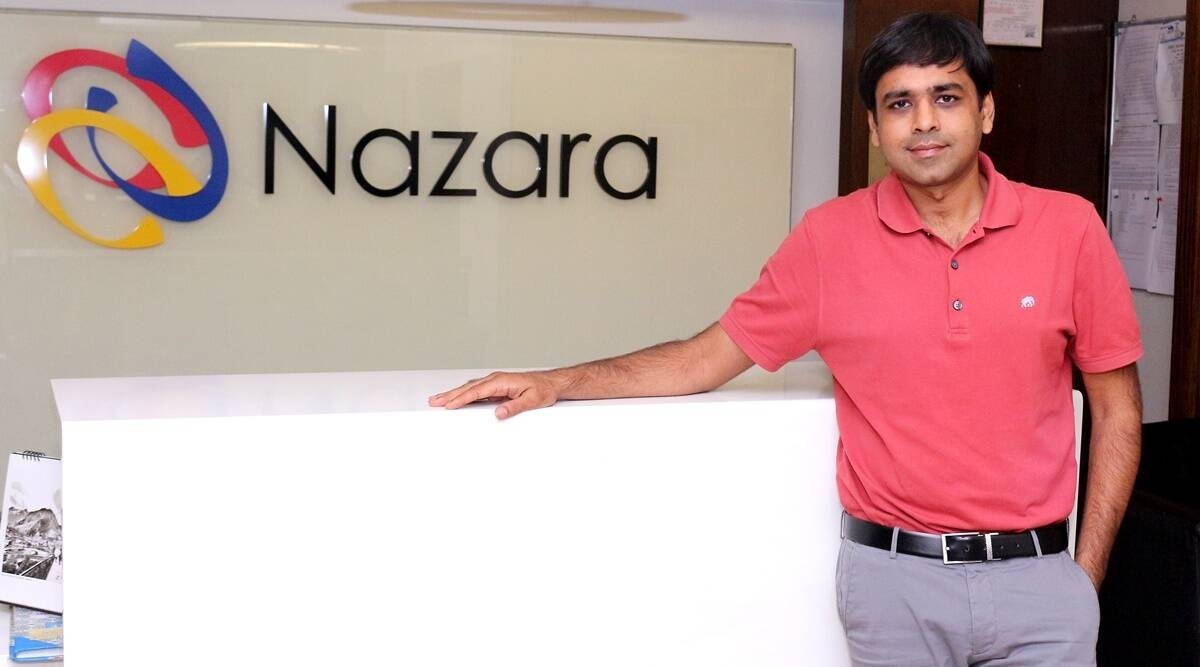
The story of Nazara Technologies in FY26 is a classic tale of creative destruction. On one hand, the company has hit a massive revenue milestone of INR 1,829 Crore, representing a steady climb in its quest to become a global gaming powerhouse. On the other hand, the financial statements are currently screaming for attention due to a colossal INR 914.7 Crore (INR 9,147 million) impairment loss.
This isn’t just a number; it’s a surgical removal of a business segment—Moonshine Technology (PokerBaazi)—following the government’s hammer blow on online money gaming. By writing off nearly INR 915 Crore, management is effectively clearing the deck. They are telling investors that the “old” Nazara, which flirted with the regulatory risks of real-money gaming, is being buried to make way for a “new” Nazara focused on high-margin IP-based gaming.
The market is witnessing a paradoxical situation where a massive bottom-line loss is actually masking an operational strengthening. While the net profit is decimated by these non-cash charges, the core EBITDA is showing signs of life, expanding as the company sheds low-margin “managed services” in its Ad Tech business and deconsolidates the heavy-spending NODWIN Esports unit.
1. At a Glance
Nazara Technologies is currently a battlefield between ambitious expansion and regulatory reality. To understand the current state, one must look past the headline “Profit After Tax” of INR 966 Crore, which is heavily skewed by a one-time fair value gain of INR 1,098.5 Crore from the deconsolidation of NODWIN. Without these accounting gymnastics, the picture is much grittier.
The red flags are flying high and cannot be ignored. The company is facing contingent liabilities of a staggering INR 11,921 Crore, primarily driven by GST Show Cause Notices (SCNs) that haunt the entire gaming industry. While management remains “badass” and defiant, claiming these demands are arbitrary, the sheer scale—nearly INR 9,066 Crore for one associate alone—is enough to give any auditor a heart attack.
Furthermore, the balance sheet reveals a concerning trend in efficiency. Working capital days have ballooned from 21 days to 75.4 days. In a fast-moving digital economy, having your cash tied up for nearly three months is a sign of friction. The promoters have also pledged 55.9% of their holding, a classic “detective” red flag that suggests personal leverage or liquidity needs at the top level.
Despite these scares, the revenue engine is firing. Sales grew 12.6% to INR 1,829 Crore, and the company is sitting on a massive cash pile of ~INR 700 Crore. They are using this war chest to pivot. The recent INR 918 Crore acquisition of Bluetile and BestPlay signals a move toward AI-driven, casual gaming where they control the distribution. The teaser? Management is now gunning for a 20% EBITDA margin within the next few quarters. Can a company plagued by tax ghosts and impairment storms really transform into a lean, high-margin machine?
2. Introduction
Nazara Technologies isn’t just a company; it’s a portfolio of digital addictions. From the toddlers playing Kiddopia to the cricket fans on World Cricket Championship, Nazara has successfully diversified itself so broadly that it’s hard to pin down. It operates across three main pillars: Gaming (63%), Ad Tech (28%), and eSports (8%).
The company’s DNA is built on “M&A” (Mergers and Acquisitions). They don’t just build games; they buy them. This strategy has allowed them to scale rapidly but has also created a complex web of 84 subsidiaries and associates across the globe, from the UK and USA to Turkey and Serbia. This complexity is both their greatest strength and their biggest accounting headache.
In FY26, the company underwent a massive structural shift. They decided to treat NODWIN Gaming as an associate rather than a subsidiary. Why? Because eSports is a cash-guzzler. By moving it off the consolidated books, Nazara’s margins suddenly look much sexier, even if the “share of loss from associates” still bites them in the end.
The leadership is also evolving. The founder, Vikash Mittersain, is moving to a ‘Founding Chairman’ role, handing the steering wheel completely to Nitish Mittersain. This transition marks the “institutionalization” of Nazara—moving away from a family-run setup toward a professional global gaming platform.
The narrative is clear: Nazara is tired of being a “jack of all trades” with low margins. They are buying their way into high-margin segments like Casual Social Games and using AI to cut down development time by 50%. The question for the smart investor is: Are they buying growth at too high a price, or is this the masterstroke that finally justifies their valuation?
3. Business Model – WTF Do They Even Do?
If you think Nazara is just about people playing games on their phones, you’re only seeing the tip of the iceberg. They are a Gaming & Sports Media Platform. Essentially, they own the digital “real estate” where young people spend their time and attention.
Gaming (The Cash Cow): This includes Kiddopia (gamified learning for kids) and IP-led games like Fusebox (Love Island). The goal here is simple: get users to subscribe or buy in-game items. It’s high-margin because once the game is built, the cost of adding one more user is almost zero. They are currently focusing on “LTV” (Lifetime Value) guardrails—ensuring every dollar spent on ads brings back a profit within two years.
eSports (The Hype Machine): Through NODWIN, they own the tournaments and the media rights. It’s the “IPL” of video games. While it brings in massive revenue and prestige, it’s expensive to run. Nazara’s current strategy is to keep the brand but reduce the financial drag on their own P&L by keeping NODWIN as a minority stake.
Ad Tech (The Engine): Datawrkz is the technical backend that helps brands target gamers. Think of it as the “toll booth” for digital advertising within their ecosystem. They are currently cutting out low-margin services to focus on “tech-enabled” offerings. If you’re a brand and you want to reach a 20-year-old gamer in India, you likely have to talk to Datawrkz.
The New Pillar: AI-Native Casual Gaming:
With the Bluetile acquisition, they are moving into “Social Puzzles” (Yatzy, Mahjong). These are the digital equivalent of “comfort food”—simple, addictive, and played by millions. By using AI to write 80% of the code, they are trying to turn game development into a high-speed assembly line.
Is the business model truly scalable, or are they just a collection of expensive hobbies?
4. Financials Overview
The financials are a tale of two realities: the “reported” numbers and the “operational” truth.
| Metric (INR Cr) | Latest Quarter (Mar 26) | Same Qtr Last Year (Mar 25) | YoY Var | Previous Qtr (Dec 25) | QoQ Var |
| Revenue | 397.8 | 520.2 | -23.5% | 406.0 | -2.0% |
| EBITDA | 44.0 | 39.1 | +12.5% | 68.4 | -35.7% |
| PAT | 55.7 | 18.8 | +196% | 2.7 | +1962% |
| EPS (Annualised) | 5.08 | 0.40 | +1170% | 1.08 | +370% |
Author’s Wisdom: The revenue drop of 23.5% YoY looks scary, but it’s a “good” scary. It’s primarily because they stopped consolidating NODWIN. Look at the PAT Margin; it’s actually improving. However, the Dec 25 quarter was significantly better operationally than the Mar 26 quarter.
Management “walked the talk” on margin expansion. In the Feb 2026 concall, they promised a shift to high-margin IP gaming, and we see the Gaming segment EBITDA margins sitting pretty at 25%. They are culling the “low-margin” waste. But wait—the PAT is inflated by “Other Income” and accounting adjustments. The true test will be if they can sustain EBITDA growth without these one-off boosts.
5. Valuation Discussion – Fair Value Range
Calculating the fair value for a company with a negative OPM (Operating Profit Margin) of -1.61% and a massive impairment loss is like trying to value a house that’s currently on fire but has a gold mine in the basement.
1. P/E Method:
The current P/E is 10.2x. The Industry P/E is 19.9x.
If we use the FY26 EPS of INR 2.59 and apply a conservative 15x multiple (given the regulatory risks), we get:
$2.59 \times 15 = \text{INR } 38.85$
However, the P/E is currently distorted by the one-time gain from NODWIN deconsolidation.
2. EV/EBITDA Method:
Reported EBITDA for FY26 is INR 255 Crore. Enterprise Value (EV) is INR 9,809 Crore.
Current EV/EBITDA = 38.4x.
For a growth company in the tech space, a “fair” EV/EBITDA range is typically 20x to 25x.
$255 \text{ Cr} \times 22.5 = \text{INR } 5,737 \text{ Crore}$
Dividing by 37.05 Crore shares = INR 154.8
3. DCF Method (Back-of-the-envelope):
Assuming a 15% growth rate for the next 5 years (post-pivot) and a terminal growth of 5%, with a discount rate of 12%.
Projected Cash Flows and terminal value suggest a value in the range of INR 190 – INR 220.
Fair Value Range: INR 160 – INR 210
Disclaimer: This fair value range is for educational purposes only and is not investment advice.
6. What’s Cooking – News, Triggers, Drama
The “Drama” at Nazara is enough to fuel a Netflix documentary.
The PokerBaazi Bloodbath:
Nazara had to recognize an impairment of INR 914.7 Crore on its investment in Moonshine Technology. Why? Because the “Promotion and Regulation of Online Gaming Act, 2025” basically killed real-money gaming. Nazara’s investment went from a potential goldmine to a digital graveyard overnight.
The GST Ghost:
One subsidiary (Halaplay) and four associates of Moonshine received Show Cause Notices totaling a mind-numbing INR 10,643 Crore. Nazara’s response? They basically said, “We aren’t paying, and we haven’t even made an adjustment in our books.” Talk about nerves of steel. They are betting that the courts will strike these demands down. If they lose, the “Net Worth” of the company vanishes instantly.
The War Chest:
While dealing with tax ghosts, Nazara raised INR 500 Crore via warrants at INR 260 per share. This is a bold move—raising money at a premium when the stock was under pressure. It shows that institutional “big boys” like Plutus Wealth and Mithun Sacheti are still willing to back the vision.
The “Paper Boat” U-Turn:
In a classic case of “changed my mind,” Nazara withdrew the merger of Paper Boat Apps (Kiddopia). They realized the restructuring plan needed a rethink. It’s a bit of a mess, but at least they aren’t forcing a bad merger.
Are the GST notices a real threat or just a government bargaining chip?
7. Balance Sheet
| Component (INR Cr) | Mar 2026 (Consol) | Mar 2025 (Consol) | Mar 2024 (Consol) |
| Total Assets | 4,371 | 4,418 | 2,753 |
| Net Worth | 3,473 | 3,237 | 2,003 |
| Borrowings | 215 | 192 | 282 |
| Other Liabilities | 683 | 989 | 468 |
| Total Liabilities | 4,371 | 4,418 | 2,753 |
- The company is “almost debt-free,” but they still carry INR 215 Crore in borrowings just to keep the bankers interested, I guess.
- Net Worth grew despite the massive write-off, thanks to the INR 1,098 Crore “accounting magic” gain from NODWIN.
- Total Assets actually shrank slightly YoY. For a growth company, a shrinking balance sheet is usually a sign that you’re cleaning out the attic.
8. Cash Flow – Sab Number Game Hai
| Year | Operating Cash Flow (INR Cr) | Investing Cash Flow (INR Cr) | Financing Cash Flow (INR Cr) |
| Mar 2026 | 149 | -542 | 361 |
| Mar 2025 | 166 | -1,139 | 805 |
| Mar 2024 | 149 | -612 | 468 |
Where did the money go? In FY26, they burned INR 1,055 Crore on “Investments Purchased” and another INR 232 Crore on “Acquisition of Companies.” Nazara is an acquisition machine that eats cash for breakfast.
Where did it come from? They raised INR 495 Crore from issuing shares/warrants. Operationally, they generated INR 149 Crore, which is barely enough to pay for their global office coffee at this rate.
Author’s Wisdom: The Free Cash Flow is a disastrous -INR 823 Crore for FY26. You can’t survive on “Investments Sold” forever. Eventually, the core business has to start spitting out real cash to fund these global adventures.
9. Ratios – Sexy or Stressy?
| Ratio | Mar 2026 | Mar 2025 | Mar 2024 |
| ROE (%) | 30.5% | 12.7% | 13.0% |
| ROCE (%) | 27.2% | 2.0% | 6.0% |
| Debt to Equity | 0.06 | 0.06 | 0.14 |
| PAT Margin | 52.8% | 11.2% | 6.6% |
| Debtor Days | 75 | 129 | 88 |
The Verdict: The ROE of 30.5% looks “sexy” until you realize it’s driven by that one-time deconsolidation gain. The real hero is the Debtor Days, which dropped from 129 to 75. It seems someone finally started calling the clients and asking for the money. The Debt to Equity of 0.06 is the only thing keeping the auditors from jumping off the roof.
10. P&L Breakdown – Show Me the Money
| Year | Revenue (INR Cr) | EBITDA (INR Cr) | PAT (INR Cr) |
| Mar 2026 | 1,829 | 255 | 966 |
| Mar 2025 | 1,624 | 115 | 182 |
| Mar 2024 | 1,138 | 99 | 75 |
Stand-up Commentary: Revenue grew by INR 205 Crore, but Expenses grew by INR 349 Crore. In any other world, that’s called “losing money.” But in the land of Nazara, we call it “Strategic Reinvestment.” They spent INR 481 Crore on Advertising and INR 314 Crore on Platform Fees. They are basically paying Google and Apple to stay in business.
How long can you keep “reinvesting” before the investors demand a dividend?
11. Peer Comparison
| Company | Revenue (INR Cr) | PAT (INR Cr) | P/E |
| Nazara Tech | 1,829 | 966 | 10.2 |
| B.A.G. Converge | 184 | 22 | 21.6 |
| Bodhi Tree | 131 | 39 | 18.2 |
The Roast: Nazara is the big brother in a room full of toddlers. While B.A.G. Converge is struggling to cross the INR 200 Crore mark, Nazara is playing in the billions. However, B.A.G. has a P/E of 21.6, which means the market trusts their “real” earnings more than Nazara’s “accounting magic” earnings. Nazara is winning the revenue war but losing the “valuation trust” battle.
12. Miscellaneous – Shareholding and Promoters
| Category | Mar 2026 (%) | Dec 2025 (%) | Sep 2025 (%) |
| Promoters | 35.45% | 35.45% | 35.45% |
| FIIs | 13.30% | 11.98% | 12.63% |
| DIIs | 2.16% | 3.62% | 7.18% |
| Public | 49.08% | 48.95% | 44.73% |
Promoter Roast: The promoters own 35.45%, but as mentioned, 55.9% of that is pledged. It’s like owning a Ferrari but having the bank’s name on the steering wheel.
Rekha Jhunjhunwala holds 8.08%, providing the “celebrity investor” backing that keeps the retail public excited. Mithun Sacheti (the CaratLane guy) just joined as a director and put his money where his mouth is.
If the DIIs (Domestic Institutions) are running away (dropping from 7% to 2%), what do they know that the public doesn’t?
13. Corporate Governance – Angels or Devils?
Nazara’s corporate governance is a mix of high-profile names and complex structures. Having Mithun Sacheti and Muraarie Rajan (ex-JPMorgan, ex-Piramal) on the board adds some serious “Wall Street” credibility.
However, the Audit Report contains some heavy “Emphasis of Matter” paragraphs. When your auditors have to point out INR 914 Crore write-offs and INR 11,921 Crore in tax uncertainties, you aren’t exactly in “Angel” territory.
The decision to withdraw the Paper Boat Apps merger after years of talk also suggests some internal flip-flopping. On the bright side, they are appointing MAKK & CO. as internal auditors to perhaps clean up the “subsidiary spaghetti” that has been cooking for years.
14. Industry Roast and Macro Context
The Indian gaming industry is currently being treated like a naughty child by the regulators. One day they are the “sunshine sector,” and the next day they are hit with 28% GST on the full bet value.
The global context isn’t much better. Google and Apple are the real “kings” here, taking a 30% cut of every dollar Nazara makes on their platforms. Nazara’s move into BestPlay is a desperate (and smart) attempt to build their own distribution and bypass the “App Store Tax.”
While everyone is shouting “Gaming is the future,” the reality is that monetization in India is bottom-tier. We have the most downloads in the world, but we don’t like paying for “extra lives.” Nazara is trying to solve this by focusing on US/UK markets for revenue while using Indian engineers for cheap code.
15. EduInvesting Verdict
Nazara Technologies is a high-stakes gamble dressed up as a diversified tech company.
Past Performance: They have delivered a 155% CAGR profit growth over 5 years, but much of that is driven by acquisitions and revaluations, not organic game hits.
Expected Tailwinds:
- AI Integration: If they can truly ship 5 games in 6 months using AI, their margins will explode.
- BestPlay Network: If they can move users between their games without paying Google/Facebook, they save millions.
- Consolidation: As smaller players die under the weight of GST, Nazara (with its INR 700 Cr cash) can buy their corpses for cheap.
Expected Headwinds:
- GST Litigation: A single bad court ruling could bankrupt the company.
- Promoter Pledge: If the stock price falls further, we might see forced selling.
- Platform Dependence: They are still at the mercy of Apple/Google algorithm changes.
SWOT Analysis:
- Strengths: Only listed gaming player in India; massive cash pile; global footprint.
- Weaknesses: Low operational margins; high promoter pledge; complex accounting.
- Opportunities: AI-led development; own distribution network; US/UK market expansion.
- Threats: Massive GST liabilities; unpredictable regulatory changes in India.
Nazara is currently a “work in progress.” They are burning the old house to build a mansion. Whether they finish the mansion before the taxman arrives is the billion-dollar question.
Do you believe management can pivot to 20% margins, or is this just another ‘Level’ they can’t beat?